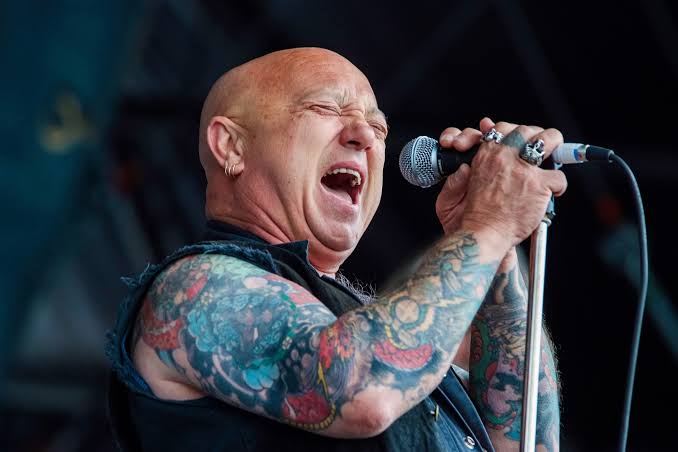
Angry Anderson was an Australian rock singer, songwriter, actor and television personality best known as the legendary lead vocalist of Rose Tattoo.
Renowned for his powerful, gravelly voice, tattooed appearance and commanding stage presence, Anderson became one of the most recognisable figures in Australian hard rock. His remarkable career also included the hit love song “Suddenly,” an acting role in Mad Max Beyond Thunderdome, television appearances, youth advocacy and involvement in Australian politics.
Early Life and Musical Beginnings
Angry Anderson was born Gary Stephen Anderson on August 5, 1947, in Melbourne, Australia. Growing up in the Melbourne suburb of Coburg, he developed an interest in music that would eventually lead him towards a career in rock.
Before becoming a professional performer, Anderson worked as a fitter and turner. His early musical interests included blues and the work of influential singer-songwriters such as Bob Dylan and John Lennon.
The nickname “Angry” originated during his younger years. Initially known as “Angry Ant,” Anderson acquired a name that reflected his fiery personality and willingness to stand his ground. The shorter nickname eventually became his professional identity.
Rather than pursuing a conventional pop career, Anderson gravitated towards blues-based rock music. His rough-edged voice, imposing appearance and intense performances made him particularly suited to the developing Australian pub-rock scene. These early experiences helped establish the distinctive character that would later make him one of Australia’s best-known rock frontmen.
Gary Anderson and Buster Brown
Angry Anderson’s early professional breakthrough came with Buster Brown, a Melbourne hard-rock band formed in 1973. As lead vocalist, he developed his stage presence and explored the blues-rock sound that would become central to his later work with Rose Tattoo.
Buster Brown released the album Something to Say in 1974. The group also featured drummer Phil Rudd, who subsequently joined AC/DC and became internationally famous. Although Buster Brown eventually disbanded, the experience provided Anderson with valuable experience in the Australian rock industry. By the time the band ended, he had established himself as a powerful vocalist with the potential to lead a major rock act.
His next musical chapter would prove to be the defining one.
Rose Tattoo: The Band That Defined His Career
In 1976, Angry Anderson became the lead singer of Rose Tattoo, the Australian hard-rock band formed by guitarist Peter Wells. The partnership proved transformative. Rose Tattoo combined heavy guitar riffs, blues influences and a raw, energetic performance style that captured the spirit of Australian pub rock.
Anderson’s voice became the band’s signature. His forceful delivery complemented the group’s gritty instrumental sound, while his distinctive appearance made him an instantly recognisable figure on stage.
Rose Tattoo released its self-titled debut album in 1978. The record established the band as a major force in Australian hard rock and introduced songs that would remain popular for decades. Among the band’s best-known tracks were “Rock ‘n’ Roll Outlaw”, “Bad Boy for Love”, “Nice Boys”, “We Can’t Be Beaten” and “Scarred for Life”. These songs captured the rebellious attitude and working-class energy associated with Australian pub rock. Anderson’s performances gave them an identity that distinguished Rose Tattoo from many other rock groups of the period.
The band’s early albums were produced by Harry Vanda and George Young, two influential figures in Australian rock music.
Rose Tattoo subsequently developed an international following, particularly among fans of traditional hard rock and blues-driven guitar music.
International Influence and Guns N’ Roses
Although Rose Tattoo did not achieve the same level of mainstream international commercial success as AC/DC, the band developed a devoted following outside Australia. Its influence became particularly apparent when American rock band Guns N’ Roses recorded “Nice Boys.” The cover helped introduce Rose Tattoo’s music to a new generation of international listeners.
Guns N’ Roses also toured with Rose Tattoo during the Australian leg of their 1993 Use Your Illusion tour. This connection highlighted Anderson’s importance within the wider hard-rock community. Rose Tattoo’s uncompromising approach had influenced musicians who went on to become international superstars.
The band’s music continued to attract fans long after its original recordings were released, reinforcing Anderson’s reputation as one of Australia’s enduring rock performers.
“Suddenly”: Angry Anderson’s Unexpected Hit Song
One of the most surprising achievements of Angry Anderson‘s career was his solo single “Suddenly,” released in 1987. Unlike the aggressive hard rock associated with Rose Tattoo, “Suddenly” was a romantic ballad that revealed a softer side of the singer’s musical personality.
The song became a significant commercial success, reaching number two on the Australian singles chart and number three in the United Kingdom. Its popularity increased dramatically after it was used during the wedding of Scott Robinson and Charlene Mitchell, the characters played by Jason Donovan and Kylie Minogue in the Australian television series Neighbours. The wedding became one of the most memorable moments in the show’s history, and “Suddenly” became closely associated with the storyline.
For Angry Anderson, the song represented an extraordinary crossover achievement. An artist celebrated for his rough-edged rock persona had delivered a romantic hit that reached audiences far beyond the traditional hard-rock scene.
“Suddenly” remains one of the most recognisable songs of his career and a defining example of his versatility as a performer.
.
Angry Anderson in Mad Max Beyond Thunderdome
Angry Anderson also developed a career in acting, with his most famous film appearance coming in the 1985 science-fiction action movie Mad Max Beyond Thunderdome.
Directed by George Miller and George Ogilvie, the film starred Mel Gibson as Max Rockatansky and Tina Turner as Aunty Entity. Anderson played Ironbar Bassey, a formidable character in the film’s harsh post-apocalyptic world. His imposing appearance and intense screen presence made him a natural fit for the role.
The film introduced Anderson to international movie audiences and demonstrated that his talents extended beyond music. He subsequently made additional television and entertainment appearances, including work associated with the Fat Pizza franchise.
Although music remained his principal career, acting added another dimension to his public profile and helped establish him as a recognisable figure across Australian popular culture.
Television Career and Public Recognition
Angry Anderson became a familiar face on Australian television, appearing on programs including The Midday Show with Ray Martin and A Current Affair.
His television appearances helped broaden his appeal beyond rock audiences. Rather than being known exclusively as Rose Tattoo’s frontman, he became a media personality who discussed entertainment, community issues and social concerns. His public image was often associated with strong opinions and a willingness to speak openly. This approach sometimes generated controversy, but it also ensured that he remained a prominent figure in Australian public life.
Television offered Anderson another platform through which to communicate with audiences and participate in discussions about issues affecting Australian society.
Youth Advocacy and the Order of Australia
Beyond music and entertainment, Angry Anderson devoted time to youth advocacy and community work. He used his public profile to support causes involving young people and became involved in charitable activities throughout his career.
In 1993, Anderson was appointed a Member of the Order of Australia (AM) in recognition of his service to the community, particularly his work as a youth advocate. The honour reflected a less familiar side of the musician’s life. Although his stage persona was associated with rebellion and confrontation, he also developed a reputation for community involvement.
His youth advocacy demonstrated that his interests extended beyond performing and recording music.
For many Australians, this aspect of his life added complexity to the public image created by his nickname and hard-rock appearance.
Political Career and Public Controversies
Angry Anderson also entered politics, becoming involved with Australian political parties and standing as a political candidate. His political associations included the National Party and the Australian Liberty Alliance. His participation in political life reflected his willingness to express his views on issues beyond music and entertainment.
Some of his public comments, particularly those concerning Islam and asylum seekers, attracted criticism and controversy. These episodes became part of the wider discussion surrounding his public life.
Anderson’s political involvement was distinct from his musical achievements, but it illustrated the breadth of his interests and his continuing presence in Australian public debate.
Rose Tattoo’s Reunion and Later Albums
Rose Tattoo experienced several changes in its lineup and periods of inactivity over the years. The original band broke up in 1987 before reuniting in the early 1990s. A further reformation followed in 1998, with Angry Anderson continuing as the group’s central figure.
As time passed, the deaths of several musicians associated with Rose Tattoo’s early years made Anderson an increasingly important link to the band’s original era.
In 2006, Rose Tattoo was inducted into the ARIA Hall of Fame, recognising its contribution to Australian music. The induction confirmed the band’s lasting significance within the country’s musical history.
Rose Tattoo continued recording and performing in later years. The band released Outlaws in 2020, demonstrating that its members remained committed to their music rather than relying exclusively on nostalgia.
Angry Anderson continued appearing on stage into his seventies, performing for longtime fans and introducing the band’s catalogue to younger audiences.
The Final Tour and Rose Tattoo’s 50th Anniversary
In 2026, Rose Tattoo embarked on a tour intended to celebrate the band’s 50th anniversary and mark a final chapter in its performing career. The tour represented a major milestone for a group that had survived lineup changes, reunions and decades of evolution within the rock industry. However, the European leg was cut short after Anderson suffered a cardiac arrest while the band was touring Germany in August 2026.
He was hospitalised and subsequently returned to Australia. The planned farewell performances could not proceed as originally intended. The circumstances cast a shadow over what had been intended as a celebration of five decades of music.
For Angry Anderson and his bandmates, the anniversary represented the culmination of a remarkable journey that began in the Australian rock scene of the 1970s.
Gary “Angry” Anderson’s Death at 79
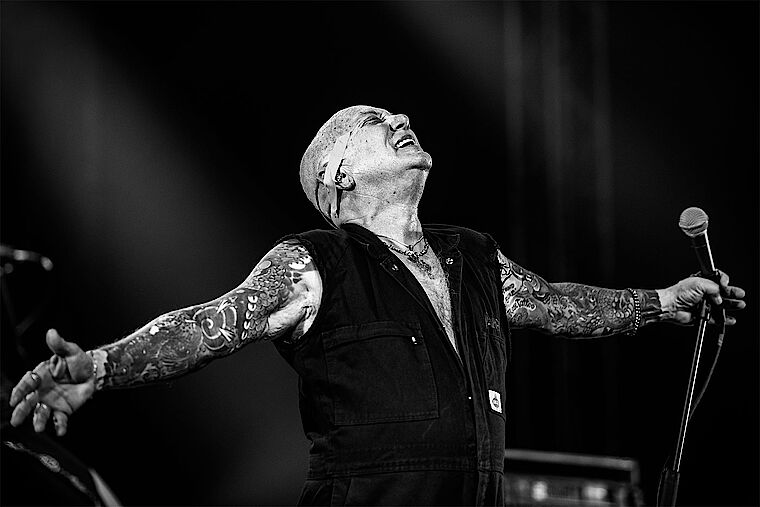
Angry Anderson died on September 21, 2026, aged 79.
His family and Rose Tattoo announced his death on September 23, confirming that he had died surrounded by loved ones. The announcement described him as a devoted father and a much-loved bandmate, friend and member of the wider entertainment community. His family requested privacy as they mourned his passing.
His death came only weeks after the cardiac arrest he had suffered during the band’s European tour. Although reports connected the events, the family’s public announcement did not provide a detailed medical cause of death.
The Legacy of Gary “Angry” Anderson
Angry Anderson left behind a legacy that extended far beyond his role as Rose Tattoo’s lead vocalist. His performances helped establish the band’s place in Australian rock history. Songs such as “Rock ‘n’ Roll Outlaw,” “Bad Boy for Love” and “We Can’t Be Beaten” remain associated with the energy and attitude of classic Australian hard rock.
At the same time, “Suddenly” demonstrated that Anderson could reach a completely different audience through a romantic ballad. His appearance in Mad Max Beyond Thunderdome brought him international recognition as an actor, while his television work made him a familiar personality to Australian audiences.
His community involvement and youth advocacy revealed another side of his life, culminating in his appointment as a Member of the Order of Australia.
Anderson’s career was not without controversy. His political views and public comments occasionally attracted criticism, illustrating the complexity of a public figure who rarely avoided expressing strong opinions. Nevertheless, his musical contribution remains central to his legacy.
Rose Tattoo helped shape the Australian hard-rock sound, and Anderson’s voice became inseparable from the band’s identity. His influence reached beyond Australia through international touring, cover versions and the continuing popularity of the band’s classic recordings.
Check out Angry Anderson on Amazon by clicking here.
Check out Rose Tattoo on Amazon by clicking here.
If you found this interesting please share it with your friends and family, and check out some of our other articles on Musicians who Died in 2026.
.
