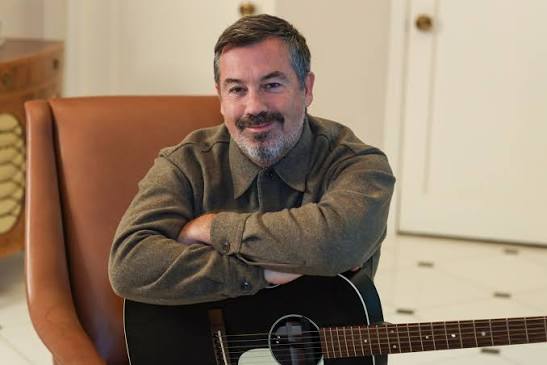
Duncan Sheik was an American singer-songwriter, composer and actor whose career crossed the worlds of alternative pop, adult contemporary music, film and, most significantly, musical theater. He first became widely known for the understated 1996 hit “Barely Breathing”, a song that established him as one of the distinctive singer-songwriters of the 1990s.
More than a decade later, he achieved an entirely different kind of recognition as the composer of Spring Awakening, the acclaimed rock musical that earned him two Tony Awards in 2007.
Early Life and Musical Beginnings
Duncan Scott Sheik was born on November 18, 1969, in Glen Ridge, New Jersey. He grew up in a musical environment and developed an interest in music from an early age. He eventually attended Phillips Academy in Andover, Massachusetts, before studying at Brown University, where he earned a degree in semiotics.
His education was an indication of the intellectual curiosity that would remain part of his artistic identity. Sheik was never simply a singer interested in producing straightforward pop songs. His interests extended into literature, theater, philosophy and experimental music, and those influences became increasingly visible as his career developed.
While at Brown, he played in an early band with singer-songwriter Lisa Loeb. He eventually moved toward Los Angeles and began developing himself as a professional musician and songwriter. By the early 1990s, he was working toward a recording career, eventually signing with Atlantic Records.
The young Sheik was not an obvious example of the traditional rock star. His music was generally restrained and melodic, with an introspective quality that contrasted with much of the louder alternative rock dominating American radio at the time. That quality would become one of his defining characteristics.
The Breakthrough of “Barely Breathing”
Duncan Sheik’s career changed dramatically in 1996 with the release of his self-titled debut album, Duncan Sheik. The album produced his signature song, “Barely Breathing.”
The song became an important crossover success. Rather than relying on aggressive guitars or the grunge aesthetic that had dominated the early 1990s, “Barely Breathing” offered a polished but intimate sound built around Sheik’s soft vocal delivery and carefully constructed songwriting.
The single reached No. 16 on the Billboard Hot 100 and remained on the chart for an extraordinary 55 weeks. The debut album eventually achieved gold certification in the United States. “Barely Breathing” also earned Sheik a Grammy nomination for Best Male Pop Vocal Performance.
For a young singer-songwriter, it was an enormous introduction to the public. The success also created an interesting tension in Sheik’s career. He had suddenly become associated with mainstream pop stardom and the image of a young male heartthrob, while his own artistic interests were considerably broader and more introspective.
In later interviews, Sheik discussed how uncomfortable he could be with the expectations surrounding pop fame. The success of “Barely Breathing” was genuine, but it did not necessarily represent the entirety of what he wanted to accomplish as a musician. That distinction would become increasingly important.
A Different Kind of Singer-Songwriter
Following his debut, Duncan Sheik continued releasing albums rather than attempting to simply reproduce the formula of “Barely Breathing.” His second album, Humming, arrived in 1998 and demonstrated a more experimental direction. He subsequently released Phantom Moon in 2001, Daylight in 2002 and White Limousine in 2006.
Phantom Moon was particularly important because it marked an early collaboration with Steven Sater, the writer and lyricist who would later become Sheik’s most significant theatrical collaborator. The album had a more orchestral and atmospheric character, with contributions from musicians including guitarist Bill Frisell and the London Session Orchestra.
This period demonstrated that Sheik was interested in much more than conventional radio songwriting. His music became increasingly sophisticated in its arrangements and subject matter. He experimented with different forms of production and explored alternative approaches to recording. White Limousine, released in 2006, even included software that allowed listeners to remix individual tracks, reflecting his interest in technology and interactive music. He also had success with the 2002 single “On a High” which reached No. 1 on the U.S. Dance chart.
Rather than being defined exclusively by one hit, Duncan Sheik’s career was becoming increasingly varied.
Exploring Film and Composition
Duncan Sheik gradually expanded beyond his own albums and began composing music for film, television and theater. Among his film work was the score for the 2004 drama A Home at the End of the World. He also contributed music to the documentary Through the Fire.
His songs and performances also appeared in numerous films and television programs, including The Saint, Teaching Mrs. Tingle, Three to Tango, What a Girl Wants, Transamerica and other productions. His screen credits also reflected his willingness to participate in different aspects of entertainment. Although music remained his principal field, he accumulated acting and performance credits as well. Yet it was theater that ultimately provided the setting for the most important transformation of his career.
“Spring Awakening”
Duncan Sheik’s name became permanently connected with Spring Awakening, the musical was based on Frank Wedekind’s controversial 1891 play Spring Awakening, which explored adolescence and the difficulties experienced by young people in a restrictive society.
Duncan Sheik worked with Steven Sater on the musical over a period of years. Their goal was not to reproduce conventional Broadway musical theater but to create something that combined the emotional directness of rock music with a serious dramatic narrative. The result was a musical that sounded radically different from many traditional Broadway productions.
The score incorporated elements of rock, alternative music and singer-songwriter traditions. Instead of separating musical numbers from the story, the songs often expressed the inner thoughts and emotional lives of the characters. The themes were also unusually direct. Spring Awakening dealt with teenage sexuality, repression, abuse, abortion, suicide, family conflict and the consequences of young people being denied honest information about their lives. The musical’s contemporary sound created a striking contrast with its 19th-century setting.
That contrast became one of its defining artistic characteristics.
Tony Award Success
Spring Awakening became a major Broadway success, and at the 2007 Tony Awards it won eight awards, including Best Musical.
Duncan Sheik personally won Best Original Score, sharing the award with Steven Sater, and Best Orchestrations. The official Tony Awards records list Sheik as the winner in both categories. The recognition was particularly significant because it demonstrated that Sheik had successfully moved from being known primarily as a 1990s pop singer to being recognized as a serious composer for musical theater.
The production also became an important launching point for several young performers, including Lea Michele, Jonathan Groff, Skylar Astin and others. The original cast recording subsequently won the Grammy Award for Best Musical Show Album in 2008.
For Duncan Sheik, the success of Spring Awakening represented a second major chapter in his career. His first breakthrough had come through pop radio, his second came through Broadway.
A Lasting Collaboration With Steven Sater
The partnership between Duncan Sheik and Steven Sater was one of the most important creative relationships of Sheik’s career. Their collaboration began before Spring Awakening and continued for many years afterward.
They worked together on Alice by Heart, a musical inspired by Lewis Carroll’s Alice’s Adventures in Wonderland. The project explored Alice’s imagination against a darker historical backdrop and eventually reached the stage in New York.
Duncan Sheik and Sater also collaborated on American Psycho, the musical adaptation of Bret Easton Ellis’s controversial novel. The musical premiered at London’s Almeida Theatre before transferring to Broadway in 2016. Sheik wrote the music and lyrics, creating a score that deliberately moved beyond traditional musical-theater conventions.
The Broadway production of American Psycho was commercially unsuccessful, but the project illustrated Sheik’s continued willingness to experiment with difficult and unconventional material. That willingness was arguably one of the most consistent features of his career.
Duncan Sheik did not remain tied to the sound or identity that had made him famous in 1996.
“Whisper House” and Other Theater Work
Another notable theatrical project was Whisper House, which further demonstrated Duncan Sheik’s interest in atmospheric and unusual storytelling.
His theater work extended beyond Broadway as well. He composed for productions including Twelfth Night and worked on projects involving writers, directors and performers from different parts of the theatrical world. He also collaborated on works inspired by literary figures and historical characters. This part of his career is important because it shows how wide his artistic interests had become.
Someone discovering Duncan Sheik through “Barely Breathing” might have expected him to spend his career making polished adult-pop records. Instead, he increasingly became a composer interested in theater, literature, experimental arrangements and challenging dramatic subjects.
Later Music
Although theater became a major part of his professional life, Duncan Sheik never completely abandoned recorded music. His discography continued with projects including Whisper House, Covers 80s, Legerdemain and, ultimately, Claptrap in 2022.
His later recordings were considerably removed from the commercial pop environment of his 1990s breakthrough. They reflected the interests of an artist who had spent decades exploring songwriting, composition, theater and alternative forms of musical expression. The contrast between his early career and later work is striking.
In 1996, millions of listeners knew him for one beautifully crafted pop song. By the 2010s and 2020s, his reputation extended far beyond that song.
A Quiet and Intellectual Artistic Identity
Duncan Sheik was often described as introspective and cerebral. His academic background in semiotics, interest in literature and philosophical outlook all contributed to an artistic identity that seemed somewhat unusual for a mainstream pop performer.
He was also a practicing Buddhist, and his spiritual interests informed some of his thinking about art and human experience. In interviews, he spoke about the importance of portraying the complexity of human emotions rather than reducing characters or experiences to simple categories.
That philosophy can be seen in Spring Awakening, where young characters experience desire, fear, confusion, rebellion, love, grief and isolation. It can also be heard in Sheik’s recorded music, where emotional ambiguity often mattered as much as conventional pop hooks. His work was rarely about presenting simple answers, instead, he seemed interested in questions.
His Final Years
Duncan Sheik continued working during the final years of his life.
On September 16, 2026, his family announced that he was receiving medical care and was in critical but stable condition.
Duncan Sheik died on September 17, 2026, in Manhattan at the age of 56. His mother, Suzanne Sheik, confirmed his death, with reports identifying cardiac arrest and, in other accounts from his family, organ failure as the cause. His family said that he died surrounded by loved ones. (Los Angeles Times)
His death came at a particularly active moment in his theatrical career. He had been involved with a forthcoming production of Memoirs of Amorous Gentlemen, while a revival of Spring Awakening was also in development. The timing made his death especially poignant because he was still creating new work and revisiting the musical that had defined the second major phase of his career.
Check out Duncan Sheik on Amazon by clicking here.
If you found this interesting please share it with your friends and family, and check out some of our other articles on Musicians who Died in 2026.
.
