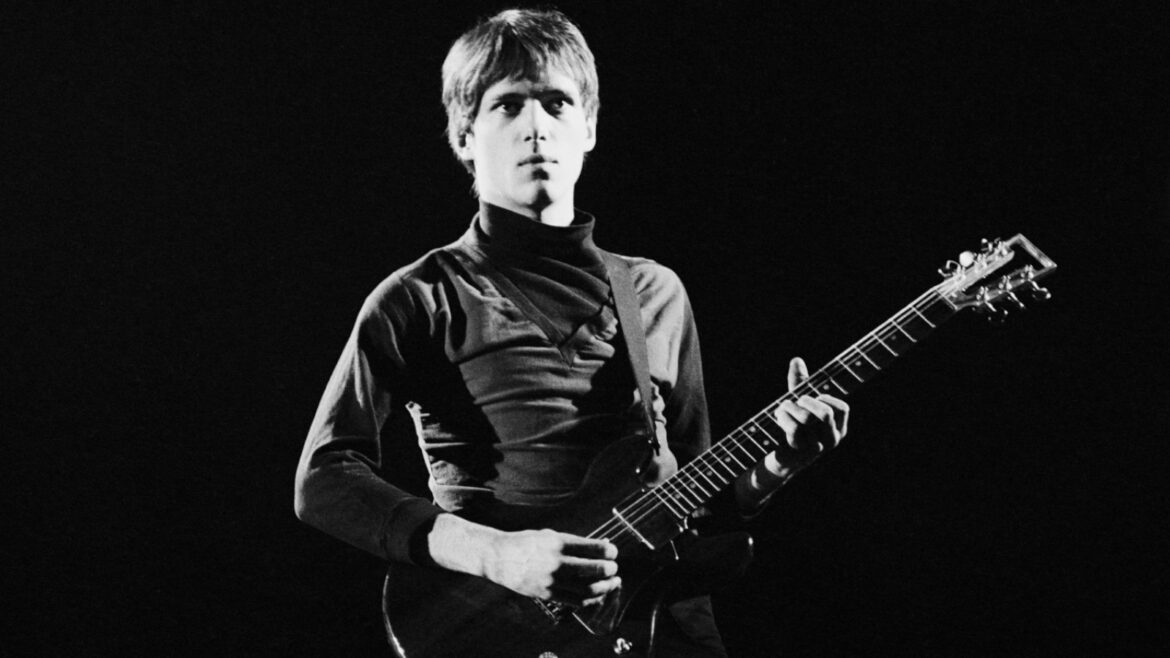
Richard Lloyd was an American guitarist, songwriter and musician best known as a founding member of the influential rock band Television.
Renowned for his inventive guitar playing, melodic solos and distinctive musical partnership with fellow guitarist Tom Verlaine, Lloyd helped create one of the most important guitar sounds to emerge from the New York music scene of the 1970s.
Although Television enjoyed relatively limited commercial success during its original existence, the band’s groundbreaking debut album, Marquee Moon, became one of the most celebrated records in alternative rock history.
Richard Lloyd was an important figure in the development of American punk, new wave and alternative music. His ability to combine sharp, angular rhythm playing with expressive lead guitar work helped distinguish Television from many of the other groups performing at New York’s legendary CBGB club. Alongside Verlaine, bassist Fred Smith and drummer Billy Ficca, he created a musical style that was adventurous, unpredictable and technically accomplished.
Beyond Television, Lloyd enjoyed a substantial solo career, released nine solo albums, worked as a session musician and collaborated with several other artists. His influence extended across generations of guitarists, while his contribution to Marquee Moon secured his place among the most distinctive musicians of his era.
Early Life and Musical Beginnings
Richard Lloyd was born Richard John Alt on October 25, 1951, in Pittsburgh, Pennsylvania, United States. His early childhood was marked by family changes. His parents separated when he was very young, and he subsequently moved with his mother to New York City. Following his mother’s remarriage, he adopted the surname Lloyd from his stepfather, becoming Richard Lloyd.
Growing up in New York exposed him to an extraordinary musical environment. The city was home to an expanding variety of musical styles, from blues and jazz to rock and experimental music. Lloyd developed an interest in music at an early age and initially experimented with drums before discovering that the guitar offered him a more rewarding creative outlet.
He later recalled first becoming fascinated with the guitar when he was approximately seven years old. During a sleepover at his cousins’ home, he encountered the instrument and became captivated by its sound. Rather than joining the other children, he spent much of the night experimenting with a few chords. The experience proved decisive and Richard Lloyd became determined to learn the instrument and quickly developed a deep attachment to electric guitar.
His early musical influences included the Beatles, the Rolling Stones, Jimi Hendrix and other musicians who demonstrated the possibilities of electric guitar playing. He was particularly attracted to expressive lead guitar, unusual sounds and the ability to make an instrument communicate emotion without relying on words.
As a teenager, he attended concerts and immersed himself in the developing rock culture of the 1960s. Performances by major acts at venues such as the Fillmore East helped broaden his musical understanding. He also attended the Woodstock festival in 1969, experiencing the energy of a generation increasingly interested in musical experimentation and artistic freedom.
Richard Lloyd attended Stuyvesant High School in Manhattan, although he eventually left before graduating. His ambitions were increasingly focused on music rather than conventional education. He was determined to pursue a career as a guitarist and songwriter.
During his younger years, he also experienced personal difficulties, including periods of mental health struggles and substance abuse. These experiences would influence parts of his later life and become subjects he discussed openly in his memoir.
Developing as a Guitarist
Before establishing himself in New York’s underground music scene, Richard Lloyd spent time in other American cities, including Boston and Los Angeles. These experiences provided opportunities to develop his playing and encounter musicians from different musical backgrounds.
During his time in Boston, he became familiar with established blues musicians and had opportunities to encounter artists such as Jimi Hendrix and Buddy Guy. He also played with blues musician John Lee Hooker, an experience that helped deepen his appreciation of blues guitar and improvisation.
Richard Lloyd’s playing was never restricted to conventional rock techniques. He was interested in melody, unusual chord progressions, sustained notes and the possibilities of creating musical conversations between instruments. His developing style combined influences from blues, rock, jazz and experimental music. Rather than simply reproducing familiar guitar sounds, he wanted to discover new ways of approaching the instrument.
By the early 1970s, he had returned to New York City, where a new underground music movement was beginning to take shape. The city’s emerging punk scene attracted musicians, artists and performers who wanted to challenge the increasingly polished sound of mainstream rock.
Richard Lloyd found himself in the right place at the right time.
Forming Television
In 1973, Richard Lloyd became involved with a group of musicians who would change the direction of American underground rock. He joined forces with guitarist and songwriter Tom Verlaine, bassist Richard Hell and drummer Billy Ficca. Verlaine, born Thomas Miller, had already been working with Hell and Ficca in a group called the Neon Boys. With Lloyd joining the musicians, the band developed into Television.
The group’s musical ambitions were different from those of many emerging punk acts. Although Television became closely associated with the punk movement, its members were interested in creating something more musically adventurous than straightforward three-chord rock.
Verlaine and Lloyd developed a distinctive partnership based on two contrasting guitar styles. Instead of one guitarist simply accompanying the other, they created elaborate musical exchanges, weaving melodies, counter-melodies, rhythmic patterns and extended instrumental passages together. Their playing became the defining feature of Television’s sound.
Richard Lloyd’s guitar work was often more direct and muscular than Verlaine’s, providing sharp chords, energetic fills and powerful lead passages. Verlaine brought a more abstract and exploratory approach, creating an unusual combination that allowed both musicians to express their individual personalities. The result was a sound that could be simultaneously aggressive, melodic and experimental.
Television made its first public performance in March 1974 and soon became one of the most exciting groups emerging from downtown Manhattan.
CBGB and the New York Punk Scene
One of the most important developments in Television’s early career was its relationship with CBGB, the legendary New York music venue located on the Bowery. At the time, the club was operated by Hilly Kristal and its name originally referred to country, bluegrass and blues. However, Television and its manager, Terry Ork, helped persuade Kristal to provide a platform for a new generation of rock musicians.
Television became one of the earliest bands to perform regularly at the venue. The club subsequently became the centre of an extraordinary musical movement. Artists including the Ramones, Blondie, Talking Heads and Patti Smith performed there, helping establish a new musical identity for New York. Television’s performances were particularly influential because they demonstrated that punk music did not have to abandon musical sophistication.
While many emerging punk groups favoured short, fast and deliberately uncomplicated songs, Television incorporated extended guitar improvisations, unusual arrangements and complex musical structures.
Richard Lloyd’s playing was central to this approach. His ability to move between rhythmic guitar parts and extended solos gave the group a distinctive live presence. The band’s performances attracted musicians, critics and music enthusiasts who recognised that something different was happening.
Television became an important part of the CBGB scene, helping establish the club’s reputation as a launching pad for some of the most influential American rock bands of the decade.
In 1975, Richard Hell left the group following creative disagreements and was replaced by Fred Smith, who had previously played with Blondie. With Smith on bass, Television continued developing its musical identity and gradually became one of the most respected groups in the New York underground.
.
Marquee Moon: A Landmark Rock Album
In 1977, Television released its debut studio album, Marquee Moon, through Elektra Records. The album is now widely regarded as one of the most important and influential rock recordings of the 1970s. Featuring Verlaine, Lloyd, Smith and Ficca, it presented a remarkable combination of punk energy, art rock, experimental guitar playing and sophisticated songwriting.
The title track, Marquee Moon, became the album’s centrepiece. Its extended instrumental passages, interlocking guitar parts and dramatic development challenged conventional expectations of what a punk-related rock song could sound like.
Richard Lloyd’s contribution was particularly important. His guitar playing supplied some of the album’s most memorable passages, balancing Verlaine’s distinctive approach with his own energetic and melodic style. The two guitarists created a musical relationship that was difficult to reproduce. Their instruments seemed to communicate with one another, sometimes moving together and sometimes taking completely different directions before eventually reconnecting.
Other songs on the album included See No Evil, Venus, Friction, Guiding Light, Prove It and Torn Curtain. Each demonstrated different aspects of Television’s musical personality. See No Evil opened the album with an immediate burst of energy, while Venus combined memorable guitar work with Verlaine’s distinctive lyrical style. Friction showcased the band’s restless musical character, and Guiding Light demonstrated a more reflective and atmospheric side.
Although Marquee Moon did not achieve major commercial success in the United States, it received considerable critical attention and developed a lasting reputation. British audiences were particularly receptive, and the album performed significantly better in the United Kingdom than in America.
Over subsequent decades, its reputation continued to grow. It became an essential recording for anyone interested in punk, post-punk, alternative rock or the development of modern guitar music. Its influence could be heard in the work of numerous later artists, including U2, R.E.M., Sonic Youth and Pavement.
For Richard Lloyd, the album represented the achievement of a musical vision developed through years of experimentation and collaboration.
Adventure and Television’s Breakup
Following the success of their debut among critics and dedicated music fans, Television returned with their second album, Adventure, released in 1978. Although it retained the group’s distinctive guitar interplay, the record explored a somewhat more melodic and polished sound. Songs included Glory, Days, Foxhole, Careful and The Dream’s Dream.
The album demonstrated that Television were not interested in simply repeating the formula established by Marquee Moon. They continued exploring different arrangements and songwriting approaches.
Adventure performed respectably in the United Kingdom, reaching the Top 10 of the British album chart, but it failed to achieve significant commercial success in the United States. Behind the scenes, however, tensions within the band were increasing.
Lloyd and Verlaine had different creative priorities, and their relationship became increasingly difficult. Both were strong musical personalities with their own ideas about the direction Television should take. Richard Lloyd also wanted greater opportunities to contribute his songwriting ideas. Although he was an important part of the band’s musical identity, Verlaine remained the dominant songwriter.
Personal difficulties and substance abuse further complicated the situation and by 1978, Richard Lloyd had left Television, and the band subsequently dissolved. The split marked the end of an important chapter in Lloyd’s career, but it also provided an opportunity to explore his own musical ambitions.
Despite its relatively short original existence, Television had already produced two albums that would become highly influential.
Solo Career and Alchemy
In 1979, Richard Lloyd released his debut solo album, Alchemy, on Elektra Records. The record allowed him to establish an identity outside Television and demonstrate his abilities as a songwriter, vocalist and guitarist.
Although his solo music retained elements of the sound associated with Television, it also explored more conventional song structures and melodic arrangements. Alchemy received positive attention from critics who appreciated Lloyd’s guitar playing and his ability to develop a distinctive musical direction.
He continued recording throughout his career, eventually releasing nine solo albums including Field of Fire (1986), Real Time (1987), The Radiant Monkey (2007), The Jamie Neverts Story (2009), The Unlimited (2013), Rosedale (2016) and The Countdown (2018). These recordings demonstrated his continuing interest in musical experimentation and his determination to remain active as an independent artist.
Although he never achieved the commercial success of major mainstream rock performers, Richard Lloyd developed a dedicated following among musicians and fans who appreciated his distinctive guitar style. His solo career also gave him greater freedom to explore musical ideas that might not have fitted comfortably within Television.
Collaborations and Television Reunions
During the years following Television’s breakup, Richard Lloyd continued working as a musician and recording artist. He became involved in several projects and collaborated with performers who appreciated his unusual guitar technique.
One of his notable musical associations was with American singer-songwriter Matthew Sweet. Lloyd played guitar on Sweet’s recordings during the 1990s, contributing expressive lead parts that complemented Sweet’s melodic alternative rock sound.
He also worked with John Doe, best known as a founding member of the Los Angeles punk band X, appearing on Doe’s 1990 solo album Meet John Doe.
Other collaborations included work with Swiss musician Stephan Eicher and various recording and performance projects. These opportunities allowed Richard Lloyd to demonstrate his versatility. While Television had established his reputation as an innovative guitarist, his work with other musicians showed that he could adapt his playing to different musical styles without losing his individuality.
In the early 1990s, Television began performing together again. The reunion brought Lloyd back into the musical partnership that had helped establish his reputation. The group performed at the 1992 Glastonbury Festival in England and subsequently released a self-titled studio album, Television, in the same year.
The record featured a more mature version of the band’s sound, retaining the intricate guitar interplay that had characterised its earlier work. One of its tracks, Call Mr. Lee, reached number 27 on the Billboard alternative chart, providing the reunited band with renewed attention.
Although the reunion did not lead to sustained commercial success, it gave fans another opportunity to hear the musicians working together.
Television performed occasionally in subsequent years, including further activity in 2001. However, the band never returned to the level of activity it had enjoyed during the 1970s.
The relationship between Richard Lloyd and Verlaine remained complicated, and the two musicians spent long periods apart. Nevertheless, their shared musical achievements continued to attract admiration.
Guitar Style and Musical Influence
Richard Lloyd’s reputation rested largely on his distinctive approach to electric guitar. His playing was characterised by powerful rhythmic chords, melodic lead passages, unusual phrasing and an ability to create musical tension without relying on conventional rock techniques.
His partnership with Tom Verlaine was particularly significant because it challenged the traditional roles of lead and rhythm guitarists. Rather than having one guitarist dominate while the other provided background accompaniment, Television created arrangements in which both instruments were equally important. Their guitar parts often overlapped, creating a complex musical conversation that became one of the group’s defining characteristics.
Richard Lloyd was especially effective at combining sharp, angular chord patterns with expressive solos. His playing could be aggressive and explosive, but it also contained considerable melodic sensitivity. His sound was closely associated with the Fender Stratocaster, while Verlaine frequently played a Fender Jazzmaster. The contrasting instruments and playing styles contributed to Television’s recognisable sound.
Lloyd’s influence extended beyond the original New York punk movement. Musicians working in alternative rock, indie rock and post-punk frequently cited Television as an important influence. Artists such as Johnny Marr, R.E.M., Sonic Youth and numerous later alternative rock musicians recognised the importance of Television’s approach to guitar music.
The band’s willingness to experiment with song structures and extended instrumental passages helped demonstrate that punk could be both adventurous and technically accomplished.
Richard Lloyd’s contribution was sometimes overshadowed by the attention given to Verlaine, particularly because Verlaine was the band’s principal songwriter and vocalist. However, the musical identity of Television depended heavily on the relationship between the two guitarists. Without Lloyd’s distinctive playing, Marquee Moon would have sounded very different.
Personal Struggles and Memoir
Richard Lloyd’s life was not without significant challenges. During his younger years, he experienced mental health difficulties and struggled with substance abuse. The pressures of the music industry, personal relationships and the demanding lifestyle associated with the New York underground scene contributed to periods of instability.
His heroin addiction became particularly serious during the late 1970s and early 1980s., but he eventually overcame his addiction in 1984, an achievement that allowed him to rebuild his life and continue pursuing music.
Richard Lloyd later became increasingly open about his experiences, discussing the difficulties he had encountered and the importance of finding a more stable direction.
In 2018, he published his memoir, Everything Is Combustible: Television, 1967–1978. The book provided readers with a personal account of his early life, musical development, experiences in New York and the formation of Television. It also explored the personalities and relationships that shaped the band, offering an insider’s perspective on one of the most important groups to emerge from the 1970s underground music scene.
The memoir was particularly valuable because it allowed Lloyd to tell his own story rather than simply being remembered as one half of Television’s celebrated guitar partnership. It revealed his determination, creative ambitions and complicated experiences during the years that transformed him from an aspiring young musician into an influential guitarist.
Later Years and Final Recordings
Richard Lloyd remained musically active well into later life. Rather than relying solely on his reputation as a former member of Television, he continued performing, recording and developing new material.
His later solo releases included The Radiant Monkey, The Jamie Neverts Story, The Unlimited, Rosedale and The Countdown. These albums reflected a musician who remained interested in exploring new ideas rather than simply recreating the sound of his most famous recordings.
He also continued appearing at concerts and events celebrating the music of Television and the wider New York punk movement. His legacy became increasingly recognised as Marquee Moon gained further critical acclaim and new generations discovered the album.
Although Television had never enjoyed the commercial success of some of its contemporaries, its artistic influence became undeniable.
Richard Lloyd’s guitar work was an important part of that achievement, and his continued involvement in music ensured that his contribution remained relevant.
In his later years, he was based in Chattanooga, Tennessee, where he continued his personal and musical life away from the intensity of the New York music scene.
Illness and Death
In March 2026, Richard Lloyd was diagnosed with cholangiocarcinoma, a form of cancer affecting the bile ducts. The illness proved particularly serious, with reports indicating that the cancer had spread to his liver and included a tumour that could not be surgically removed.
As his health deteriorated, he was increasingly unable to undertake the touring and musical activities that had remained an important part of his life.
A fundraising campaign was established in August 2026 by his friend Sean Seymour to help with medical and living expenses. The campaign highlighted the financial difficulties caused by his illness and the loss of income from performing.
Richard Lloyd died on November 7, 2026, aged 75, at his home in Chattanooga, Tennessee, just thirteen days after his 75th birthday.
Tributes followed from musicians and admirers who recognised his contribution to modern rock music. Former Smiths guitarist Johnny Marr remembered Lloyd as a genuine inspiration, praising both his musical ability and the person he had known. Singer-songwriter Lloyd Cole also paid tribute, recalling the extraordinary guitar playing that had made Television such a memorable live band.
Richard Lloyd’s death marked the loss of one of the defining guitarists of the original New York punk generation.
Check out Richard Lloyd on Amazon by clicking here.
Check out Television on Amazon by clicking here.
If you found this interesting please share it with your friends and family, and check out some of our other articles on Musicians who Died in 2026.
.
