
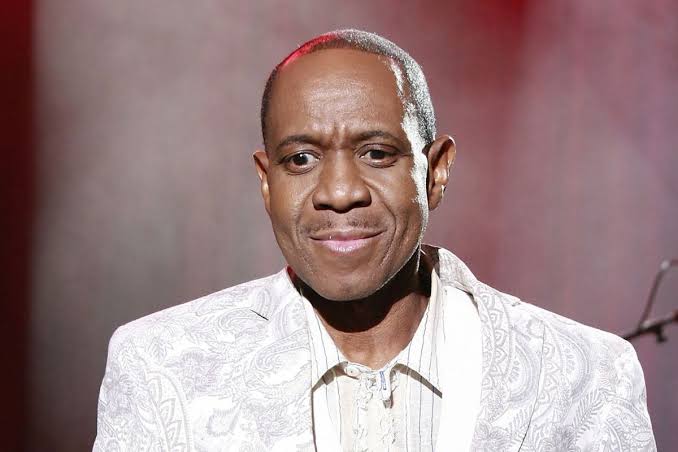
Freddie Jackson was one of the most recognisable voices in American R&B during the 1980s and early 1990s.
Renowned for his smooth vocals, romantic ballads and sophisticated soul sound, he became a defining figure in the quiet storm and contemporary R&B movements. With a string of chart-topping singles, Grammy nominations and a catalogue of enduring love songs, Jackson established himself as one of the most successful male R&B singers of his generation.
Early Life and Musical Beginnings
Freddie Jackson was born Frederick Anthony Jackson on October 2, 1957 in Harlem, New York City with a particularly rich musical heritage. Harlem had long been associated with jazz, gospel, blues and soul, providing a cultural environment in which music played an important role in everyday life.
Jackson discovered his love of singing at an early age. Like many influential soul performers, his musical education began in church rather than in a professional recording studio. He sang gospel music at White Rock Baptist Church in Harlem, where he developed the vocal control, emotional expression and musical discipline that would later become central to his professional style.
Gospel music provided an important foundation for his approach to singing. Its emphasis on expressive delivery, vocal strength and emotional connection would remain evident throughout his career, particularly in his romantic ballads.
It was also at White Rock Baptist Church that Freddie Jackson met Paul Laurence, a musician, songwriter and producer who would become one of the most important collaborators in his life. Their early connection developed into a professional partnership that helped shape Jackson’s recording career.
After completing his education, Jackson joined Laurence’s group, the Laurence-Jones Ensemble, commonly known as LJE. The group performed around New York, giving Jackson valuable experience in live entertainment and introducing him to the demands of working as a professional singer.
The New York nightclub circuit provided an opportunity to develop his stage presence and refine his vocal abilities. Performing in front of audiences helped him become a confident and accomplished entertainer.
Although Freddie Jackson would eventually become famous for romantic R&B ballads, his early musical experiences exposed him to a variety of styles, including gospel, funk and soul. This broad musical background would later help him move comfortably between slow love songs and more energetic dance tracks.
Moving to California and Joining Mystic Merlin
By the late 1970s, Freddie Jackson was ready to take his musical ambitions beyond New York. He moved to California, where he became the lead vocalist of Mystic Merlin, a funk and R&B group that combined soul influences with dance-oriented arrangements.
Mystic Merlin released three studio albums between 1980 and 1982. Jackson’s involvement with the group gave him valuable recording experience and introduced him to a different musical environment. The band was particularly suited to the developing funk and disco-influenced sound of the period. Its music allowed Jackson to explore a more rhythmic style of performance, something that would later become an important part of his solo catalogue. Although Mystic Merlin did not achieve the commercial success that Jackson would subsequently enjoy as a solo artist, the experience was an important stepping stone.
Freddie Jackson eventually returned to New York, where he reconnected professionally with Paul Laurence. Laurence was establishing himself through Hush Productions, and Jackson began recording demonstration vocals for his compositions. These recordings helped bring Jackson to the attention of people within the music industry. His talents also attracted the attention of established singer Melba Moore, who invited him to work as a backing vocalist after seeing him perform in a nightclub.
Working with Moore provided another valuable opportunity to develop his professional reputation. It also established a connection that would eventually lead to one of his early recording successes.
The Breakthrough: Rock Me Tonight (1985)
The defining moment in Freddie Jackson‘s career arrived in 1985 when he secured a recording contract with Capitol Records.
His debut solo album, Rock Me Tonight, was released that year and immediately established him as one of the most exciting new voices in contemporary R&B.
The album’s title track, written by Paul Laurence, became a major success. “Rock Me Tonight (For Old Times Sake)” spent six weeks at number one on the Billboard R&B chart, introducing Jackson’s distinctive vocal style to millions of listeners. The song combined a sophisticated production with a passionate vocal performance. Jackson delivered the lyrics with confidence and emotional intensity, creating a recording that perfectly captured the romantic side of mid-1980s R&B.
Another major highlight was “You Are My Lady”, which became one of his signature recordings. The romantic ballad showcased the softer side of Jackson’s voice. Its memorable melody, heartfelt lyrics and polished arrangement helped it become a favourite among R&B audiences. The song also crossed over into the mainstream pop market, reaching number 13 on the Billboard Hot 100.
Other successful tracks from the album included “He’ll Never Love You (Like I Do)” and “Love Is Just a Touch Away”.
The commercial performance of the album exceeded expectations. Rock Me Tonight topped the Billboard R&B album chart and eventually achieved platinum certification in the United States.
Freddie Jackson’s debut also earned him two Grammy Award nominations, including Best New Artist and Best R&B Vocal Performance, Male, for “You Are My Lady”.
For an artist who had spent years developing his career through church performances, nightclub appearances and backing vocals, the success represented a remarkable achievement. More importantly, it established a musical partnership between Jackson and Laurence that would produce many of the singer’s biggest hits.
Just Like the First Time and Continued Success (1986)
Rather than allowing the success of his debut to become a one-album achievement, Freddie Jackson quickly returned with another collection of recordings.
His second album, Just Like the First Time, arrived in 1986 and confirmed that he was more than capable of maintaining his position at the top of the R&B charts. The album produced several major hits, including “Tasty Love”, “Have You Ever Loved Somebody” and “Jam Tonight”. All three reached number one on the Billboard R&B singles chart, further strengthening Jackson’s reputation as one of the leading male R&B performers of the decade.
“Have You Ever Loved Somebody” demonstrated his ability to deliver emotionally engaging material, while “Jam Tonight” offered a more energetic and dance-friendly sound. “Tasty Love” became another particularly popular recording, combining an infectious melody with the polished production that had become associated with his music. The album also included “I Don’t Want to Lose Your Love”, which reached number two on the R&B chart.
.
Like its predecessor, Just Like the First Time achieved platinum status. Its success confirmed that Freddie Jackson had established a powerful commercial presence in American contemporary soul.
During this period, his popularity extended beyond traditional R&B audiences. His recordings were regularly played on radio stations, while his romantic songs became particularly popular with listeners who appreciated the sophisticated soul sound of the era.
Jackson was increasingly marketed as a romantic performer, although he was careful to explain that he did not want to be restricted to one particular image or musical style. He wanted his audience to appreciate his voice and musical abilities rather than simply associate him with love songs.
Working With Melba Moore
One of the important musical relationships in Freddie Jackson’s early career was his association with Melba Moore. After initially working as a backing vocalist for Moore, Jackson developed a successful recording partnership with her. Their duet “A Little Bit More”, featured on Moore’s 1986 album A Lot of Love, became a number-one R&B hit. The recording demonstrated the compatibility of their voices and allowed Jackson to showcase his abilities as a duet performer.
The collaboration also helped introduce him to audiences who were already familiar with Moore’s established career. Their professional relationship was particularly significant because it connected Jackson’s early experiences as a supporting vocalist with his emerging status as a major recording artist.
Don’t Let Love Slip Away (1988)
Freddie Jackson continued his remarkable run of success with the release of Don’t Let Love Slip Away in 1988. The album produced another major R&B hit with “Hey Lover”, which reached number one on the Billboard R&B chart.
Other popular recordings included “Nice ‘N’ Slow” and “Crazy (For Me)”, both of which demonstrated his continuing ability to deliver sophisticated soul music. “Nice ‘N’ Slow” became particularly important in his career. Its romantic atmosphere and memorable melody made it one of his most recognisable recordings and also earned him an American Music Award for Favorite Soul/R&B Single in 1988.
By this stage, Freddie Jackson had become one of the most reliable hitmakers in American R&B. His recordings regularly reached the top of the charts, and his albums were selling in considerable numbers. He had also developed a recognisable musical identity. His songs combined romantic themes, polished arrangements and expressive vocals, making them particularly suited to the quiet storm radio format.
Quiet storm programming traditionally focused on smooth, sophisticated R&B, often featuring romantic ballads and carefully produced soul recordings. Jackson’s music fitted naturally into this environment.
Freddie Jackson’s popularity during this period placed him alongside other major contemporary R&B performers, helping define the sound of the late 1980s.
Do Me Again and the 1990s
In 1990, Freddie Jackson released Do Me Again, another commercially successful album that demonstrated his ability to adapt while maintaining the qualities that had made him popular. The title track became another number-one R&B single, continuing his extraordinary run of chart success. “Main Course” was another notable recording, narrowly missing the top position by reaching number two.
By the beginning of the 1990s, Jackson had established an impressive collection of chart achievements. He would ultimately record ten number-one singles on the Billboard R&B chart. However, the musical landscape was beginning to change.
New jack swing, hip-hop influences and increasingly contemporary production styles were becoming more prominent in American R&B. Younger performers were introducing different sounds and approaches, changing what audiences expected from mainstream urban music.
Freddie Jackson’s sophisticated romantic style remained popular, but the commercial environment was becoming more competitive.
He continued recording and performing, although his chart dominance gradually diminished. His next major release was Time for Love in 1992, which continued his exploration of romantic soul and contemporary R&B.
Here It Is and Private Party
In late 1993, Freddie Jackson parted company with Capitol Records and signed with RCA Records, beginning another chapter in his recording career. The move represented an opportunity to refresh his musical direction while maintaining the qualities that had attracted listeners throughout the previous decade.
Freddie Jackson’s first album for RCA, Here It Is, was released in 1994, and in 1995, he recorded Private Party for Scotti Brothers Records. The album included “Rub Up Against You”, which became another respectable R&B chart entry.
Although his commercial success was no longer at the level of his mid-1980s peak, Jackson remained a respected performer with a loyal following.
His ability to move between major record labels and independent projects demonstrated his determination to continue working in an industry that was undergoing considerable changes. Rather than abandoning the musical style that had made him successful, he continued to develop recordings that reflected his personality and vocal strengths.
Film and Television Appearances
Although Freddie Jackson was primarily known as a singer, he also made appearances in television and film.
One of his most notable screen appearances came in Abel Ferrara’s 1990 crime drama King of New York, starring Christopher Walken. The film explored the criminal underworld of New York City and featured a number of performers and musicians. Freddie Jackson’s appearance as himself provided an opportunity to bring his musical identity into a cinematic setting.
He also appeared on the popular television sitcom Family Matters, again playing himself. His television appearances reflected his popularity during the 1980s and early 1990s, when successful R&B singers frequently appeared in entertainment programmes, music specials and television productions.
Another interesting contribution to his screen work came in 1989 when he recorded “Love Survives”, a duet with Irene Cara which featured on the soundtrack of the animated film All Dogs Go to Heaven. Produced by Michael Lloyd, the recording brought together two distinctive voices and demonstrated Jackson’s ability to work beyond the conventional boundaries of contemporary R&B.
Irene Cara was already widely recognised for her work in film and music, including her performances in Fame and Flashdance. The duet provided another memorable entry in Freddie Jackson’s recording catalogue.
Later Albums and Independent Music
As the music industry changed, Freddie Jackson increasingly pursued projects outside the major-label system. His later releases included Life After 30 in 1999, followed by It’s Your Move in 2004.
In 2005, he released Personal Reflections, a collection that explored familiar musical material through his own interpretations and the following year brought Transitions, another project demonstrating his continued interest in recording and performing.
In 2010, Jackson released For You, maintaining his connection with the romantic soul sound that had established his career.
He also continued making live appearances, performing for audiences who had followed him since his breakthrough years.
In 2014, he released the single “Love & Satisfaction”, showing that he remained creatively active.
In 2018, Freddie Jackson returned with Love Signals, another addition to a discography that had grown well beyond his commercially successful Capitol years.
In 2023, he released My First Love, continuing his recording career into its fifth decade. The album represented another chapter in a career built around romantic themes, expressive vocals and a lasting appreciation for traditional R&B and soul.
His later recordings may not have achieved the chart success of his 1980s releases, but they demonstrated his commitment to his musical identity.
Musical Style and Influence
Freddie Jackson’s greatest strength was his voice. He possessed a smooth, expressive vocal delivery that could move between intimate romantic performances and more energetic dance-oriented recordings. His ability to communicate emotion was central to his appeal. Whether singing about love, heartbreak, desire or relationships, he brought a sense of sincerity to his performances. His music was closely associated with the sophisticated R&B sound of the 1980s, a period when carefully arranged ballads and polished urban contemporary production enjoyed enormous popularity.
Paul Laurence played a particularly important role in shaping this sound, writing and producing several of Jackson’s most successful recordings. Together, they created songs that balanced memorable melodies with arrangements designed to showcase Jackson’s vocal strengths.
Freddie Jackson was also influenced by earlier generations of soul performers. He admired artists such as Marvin Gaye, Sam Cooke and Al Green, particularly their ability to reach mainstream audiences without abandoning the musical traditions that had shaped their careers.
He believed that soul music should retain its identity and emotional authenticity, even when reaching listeners beyond its traditional audience. This commitment became an important part of his artistic outlook.
Although he was often promoted as a romantic ladies’ man, Freddie Jackson did not want his career defined solely by that image. He wanted to be recognised as a versatile vocalist capable of performing different styles of music.
His catalogue demonstrated that versatility, moving from slow ballads to funkier dance recordings and occasional jazz-influenced material.
Personal Life and Health
Freddie Jackson generally kept his private life away from the public spotlight.
Although his music frequently explored romantic relationships, he preferred to let his recordings speak for themselves rather than make his personal circumstances the focus of media attention. He maintained a connection with his fans throughout his career and continued to perform for audiences who appreciated his contribution to R&B.
In 2024, Jackson publicly revealed that he was living with kidney disease and spoke about facing the challenges of the condition with openness and resilience, explaining that he wanted to share his experience in the hope that it might make a positive difference to others.
Despite the challenges, he remained associated with music and continued to be remembered for the recordings that had established his reputation.
His illness was a difficult chapter in his later years, but his musical achievements remained central to his public identity.
Death of Freddie Jackson
Freddie Jackson died on October 5, 2026, just three days after celebrating his 69th birthday.
His family released a heartfelt statement expressing their sadness and remembering the singer as a kind and generous person who loved his family, friends, fans and music. They also acknowledged the importance of his recordings, describing how his songs had become part of the soundtrack to people’s love stories, celebrations and treasured memories.
No official cause of death was announced in the initial family statement.
Check out Freddie Jackson on Amazon by clicking here.
If you found this interesting please share it with your friends and family, and check out some of our other articles on Musicians who Died in 2026.
.
