
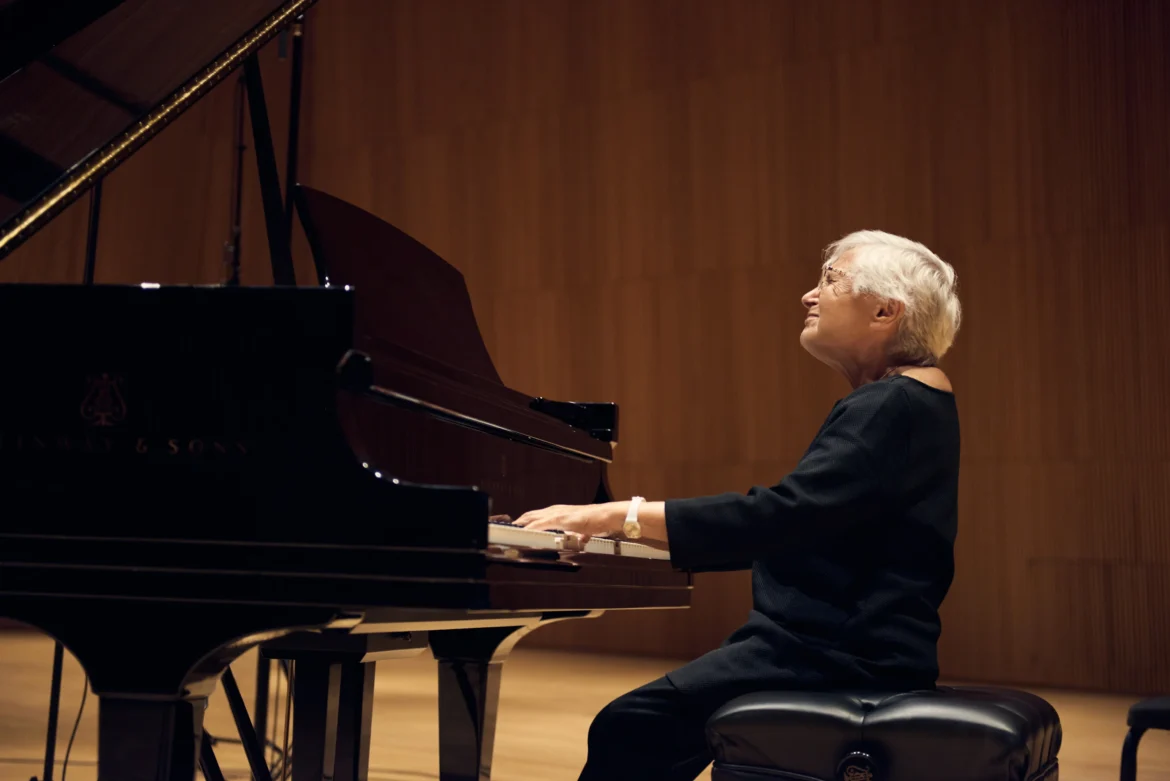
Ruth Slenczynska: The Last Living Link to Rachmaninoff
Ruth Slenczynska occupies a unique and almost mythic place in classical music history. Revered as a prodigy, survivor, pedagogue, and enduring performer, she was most famously known as the final piano student of Sergei Rachmaninoff.
Her life spanned more than a century, bridging the golden age of Romantic pianism with the modern era. Yet beyond this historical distinction lies a deeply human story, one marked by brilliance, hardship, reinvention, and lasting artistic legacy.
Early Life: A Prodigy Forged in Discipline
Ruth Slenczynska was born in Sacramento, California, on January 15, 1925 and was introduced to the piano at the age of three by her father, Joseph Slenczynski, a Polish violinist. From the beginning, her upbringing was intensely focused on musical achievement. Her father, determined to mold her into a world-class musician, enforced a strict and often harsh regimen of practice and study.
By the age of four, she had already given her first public recital, astonishing audiences with a level of technical proficiency and musical maturity rarely seen in someone so young. Within a few years, she was touring Europe, performing in major cultural centers such as Berlin and Paris.
Her early training brought her into contact with some of the greatest pianists and teachers of the early 20th century. She studied with luminaries including Artur Schnabel, Alfred Cortot, Egon Petri, and Josef Hofmann, a lineage that would shape her musical voice profoundly.
However, the most significant of her mentors was Sergei Rachmaninoff. Slenczynska studied with him in Paris in the early 1930s after impressing him with her playing. His influence left a permanent imprint on her artistry, particularly in tone production and expressive depth. She would later recall his poetic advice: to make the piano sound like “gold.” (The Times)
A Childhood Shadowed by Pressure
While her early career was marked by extraordinary success, it came at a steep personal cost. Ruth Slenczynska’s father exerted intense control over her life and career, often resorting to emotional and physical abuse to enforce discipline. Her childhood, later chronicled in her memoir Forbidden Childhood (1957), revealed the darker side of prodigy culture.
Despite widespread acclaim, some critics compared her talent to that of Wolfgang Amadeus Mozart, the relentless pressure eventually took its toll. At the age of 15, she made a dramatic decision: she abandoned both her musical career and her father, seeking a life beyond the confines of forced genius.
Reinvention and Return to Music
After leaving the concert stage, Ruth Slenczynska enrolled at the University of California, Berkeley, where she pursued studies in psychology. This period marked a crucial turning point, an attempt to rebuild her identity outside of music.
However, music was never far from her life. Encouraged by her first husband, George Born, she gradually returned to the piano. By 1951, she re-emerged as a concert pianist, performing at the Carmel Bach Festival and receiving enthusiastic reviews.
Her comeback was not merely a return, it was a transformation. No longer under her father’s control, she approached music on her own terms. This newfound independence brought depth and authenticity to her performances, earning her renewed respect in the classical music world.
Career Highlights and Artistic Contributions
Throughout the 1950s and 1960s, Ruth Slenczynska enjoyed a successful performing career, touring internationally and collaborating with major orchestras, including the Boston Pops under conductor Arthur Fiedler. (The Times)
Her repertoire spanned the great Romantic composers, Chopin, Liszt, and of course Rachmaninoff, whose works aligned with her expressive style. Critics often noted her ability to combine technical precision with emotional intensity, a hallmark of the Romantic tradition.
In addition to performing, she made significant contributions as an educator and author. Her book Music at Your Fingertips: Aspects of Pianoforte Technique became a respected resource for pianists, offering insights into technique and interpretation.
In 1964, Ruth Slenczynska accepted a position as Artist-in-Residence at Southern Illinois University Edwardsville, where she taught for over two decades. Her influence extended across generations of students, many of whom carried forward her pedagogical legacy. (SIU Edwardsville)
A Life Beyond the Spotlight
After her second marriage to James Kerr in 1964, Ruth Slenczynska gradually stepped away from the international spotlight, focusing on teaching and a quieter life. For many years, she remained relatively unknown to the broader public, despite her remarkable history.
Yet within the classical music community, she was revered as a living link to a bygone era. Her direct connection to Rachmaninoff, and through him, to the Romantic tradition, made her an invaluable repository of musical knowledge and interpretation.
Late-Life Renaissance
In a remarkable twist, Ruth Slenczynska experienced a resurgence of interest in her later years. In 2022, at the age of 96, she released My Life in Music, her first album in nearly six decades. The recording featured works by composers she had known personally, including Rachmaninoff and Samuel Barber.
The album was met with critical acclaim, introducing her artistry to a new generation of listeners. It also served as a poignant reflection on her life, a musical memoir spanning nearly a century.
Her longevity was extraordinary not only in years but in artistic vitality. Even into her late 90s, she continued to practice and reflect on music with clarity and passion.
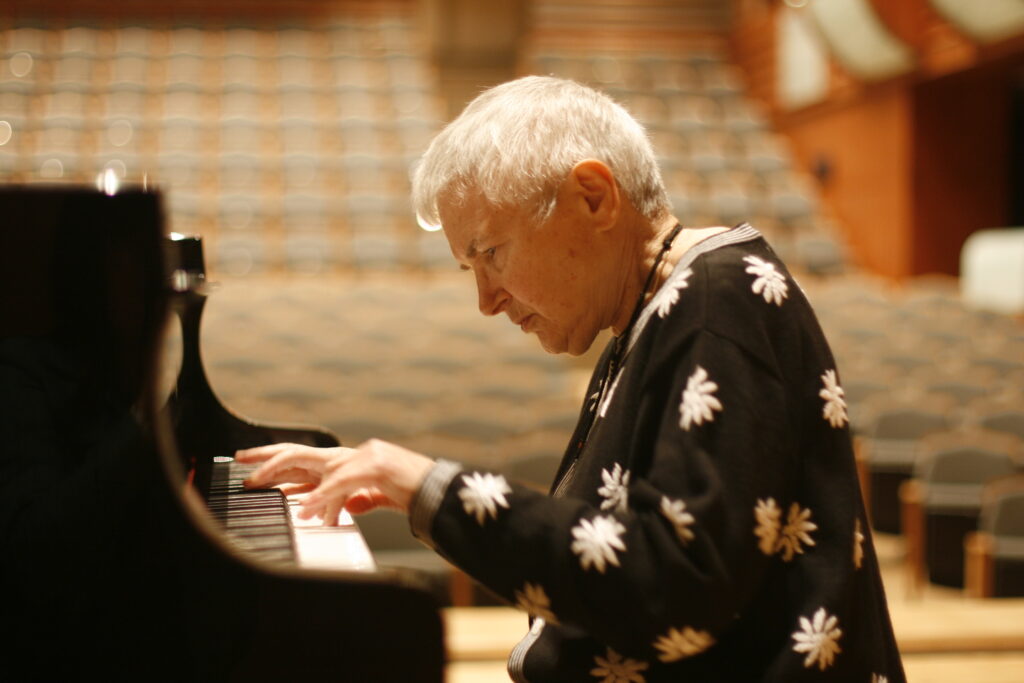
Legacy: The Last Student of Rachmaninoff
Slenczynska’s designation as the last surviving pupil of Sergei Rachmaninoff carries profound symbolic weight. Through her, a direct pedagogical lineage extended from the 19th century into the 21st.
This connection is more than historical, it represents a continuity of musical ideas, traditions, and interpretations. In a world increasingly distant from the Romantic era, Slenczynska embodied its living memory.
Her playing style, shaped by firsthand instruction from great masters, offered rare insights into how this music was originally conceived and performed.
Death and Reflection
Ruth Slenczynska died on April 22, 2026, at the age of 101. Her death marked the end of a remarkable chapter in musical history, the final direct link to one of the greatest composer-pianists of all time.
Her life story resonates far beyond the concert hall. It is a narrative of resilience, transformation, and enduring passion. From a prodigious child under immense pressure to an independent artist and respected teacher, she redefined her identity multiple times across a century.
Conclusion: A Life in Music and Meaning
Ruth Slenczynska was more than a prodigy or a historical footnote, she was a bridge between eras, a witness to musical history, and a testament to the human capacity for renewal.
Her journey reminds us that talent alone does not define greatness. It is the ability to endure, adapt, and ultimately find one’s own voice that leaves a lasting impact.
As the final student of Sergei Rachmaninoff, she carried forward a legacy of sound and spirit. But as an individual, she forged something equally powerful: a life reclaimed, reshaped, and lived on her own terms.
Her music, teachings, and story will continue to inspire generations, long after the final notes have faded.
Check out Ruth Slenczynska on Amazon by clicking here.
If you found this interesting please share it with your friends and family, and check out some of our other articles on Musicians who Died in 2026.
.
