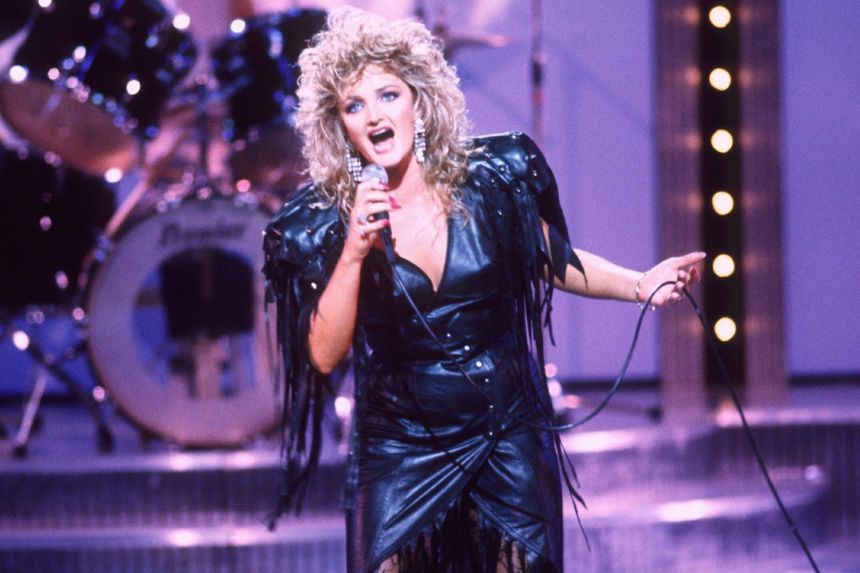
Bonnie Tyler was a Welsh singer and songwriter whose powerful, raspy voice made her one of the most recognizable performers in popular music. During a career spanning more than five decades, Tyler sold millions of records worldwide and achieved international success with timeless hits including “It’s a Heartache,” “Holding Out for a Hero,” and “Total Eclipse of the Heart.”
Her distinctive vocal style, which developed after surgery on her vocal cords in the 1970s, became her trademark and helped establish her as one of Britain’s most successful female rock singers.
Tyler enjoyed chart success across Europe, North America, Australia, and New Zealand, becoming a household name through a combination of emotional ballads, rock anthems, and memorable live performances. Although musical trends changed throughout her long career, her recordings continued to find new audiences through films, television, sporting events, and streaming platforms. Her influence extended beyond commercial success, inspiring generations of singers with her unmistakable voice and passionate performances.
Early Life
Bonnie Tyler was born Gaynor Hopkins on June 8, 1951, in Skewen, Neath, Glamorgan, Wales. She was one of six children born to Elsie and Glyndŵr Hopkins. Her father worked as a coal miner, while her mother was involved in the family’s daily life, creating a hardworking household rooted in the traditions of the South Wales Valleys.
Growing up in post-war Wales, music was an important part of family and community life. Tyler was exposed to gospel music through chapel services and enjoyed listening to popular artists on the radio. Influenced by performers such as Tina Turner, Janis Joplin, Elvis Presley, and the Beatles, she developed a love of singing from an early age.
She attended local schools but showed greater interest in music than academic study. Before entering the music industry, she worked in a grocery store and later in a nightclub, where she occasionally sang. Determined to pursue a professional career, she entered local talent competitions during the late 1960s and early 1970s. Although she did not always win, the experience gave her confidence and helped her gain recognition within the Welsh music scene.
Initially performing under the stage name Sherene Davis, she sang in clubs and hotels throughout Wales and western England. Her energetic performances attracted increasing attention, and by the mid-1970s she was searching for a recording contract that could launch her career.
Discovery and Recording Contract
Bonnie Tyler’s breakthrough came when songwriter and producer Ronnie Scott—not the famous jazz musician, but a successful music publisher—and record producer Steve Wolfe noticed her talent. Impressed by both her voice and stage presence, they offered to manage her career and encouraged her to adopt a new stage name.
The name “Bonnie Tyler” was chosen because it was memorable, easy to pronounce internationally, and suited her energetic image. Under Scott and Wolfe’s guidance, Tyler signed with RCA Records and began recording professionally.
During the recording of her debut material, Tyler developed nodules on her vocal cords due to overuse. Doctors advised surgery followed by several weeks of complete silence. Unable to resist speaking before her recovery was complete, she permanently altered her voice, leaving it with the deep, husky tone that would become one of the most distinctive sounds in popular music. Although initially worried that the surgery had ruined her singing career, the unique vocal quality ultimately became her greatest asset.
Breakthrough Success
In 1976, Bonnie Tyler released her debut single, “My! My! Honeycomb,” which attracted modest attention but failed to become a major hit. Greater success followed with “Lost in France,” released in early 1977. The single entered the UK Top Ten and introduced audiences to her emotionally powerful singing style.
Her debut album, The World Starts Tonight, appeared later in 1977 and established Tyler as one of Britain’s most promising new vocalists. The album also produced the successful single “More Than a Lover,” confirming that her initial success had not been a one-hit wonder.
The real breakthrough arrived in late 1977 with the release of “It’s a Heartache.” Written by Ronnie Scott and Steve Wolfe, the emotional country-rock ballad became one of the defining songs of the decade. The single reached No. 4 on the UK Singles Chart and climbed to No. 3 on the U.S. Billboard Hot 100, introducing Tyler to millions of American listeners.
The song topped charts in several countries and sold millions of copies worldwide. Its combination of heartfelt lyrics, memorable melody, and Tyler’s gravelly vocals proved irresistible. Radio stations played it extensively, and it remains one of the most recognizable songs of the 1970s.
Following the success of “It’s a Heartache,” Tyler became an international star. She toured extensively throughout Europe, North America, Australia, and New Zealand, performing before increasingly larger audiences. Her concerts demonstrated that she possessed not only a remarkable recording voice but also an energetic stage presence capable of captivating live audiences.
Building an International Career
The enormous popularity of “It’s a Heartache” created high expectations for Bonnie Tyler’s future releases. Albums such as Natural Force and Diamond Cut continued her commercial momentum, producing successful singles and strengthening her reputation as one of Britain’s leading female vocalists.
Throughout the late 1970s, Tyler became particularly successful in continental Europe, where audiences embraced her blend of rock, country, and pop influences. Her records consistently charted in Germany, France, Scandinavia, and the Benelux countries, laying the foundation for an exceptionally loyal international fan base.
Unlike many artists whose popularity depended on a single market, Tyler developed a truly global following. She frequently toured outside the United Kingdom and adapted her performances to audiences with different musical tastes while remaining faithful to her distinctive vocal style.
Although changing musical fashions during the early 1980s briefly slowed her commercial momentum, Tyler remained determined to reinvent herself. She sought new collaborators capable of expanding her sound beyond country-rock and soft pop. This decision ultimately led to one of the most important partnerships of her career.
Collaboration with Jim Steinman
In the early 1980s, Bonnie Tyler began working with songwriter and producer Jim Steinman, who had already achieved enormous success through his collaborations with Meat Loaf. Steinman’s dramatic, theatrical songwriting style perfectly complemented Tyler’s powerful voice.
Their partnership transformed her career. Instead of straightforward country-rock songs, Tyler embraced grand, cinematic productions filled with soaring melodies, emotional lyrics, and dramatic arrangements. The result was one of the defining albums of the decade.
Released in 1983, Faster Than the Speed of Night became Tyler’s biggest commercial success. The album reached No. 1 in the United Kingdom and established her among the world’s leading female rock performers. At its heart was a song that would become one of the greatest-selling and most celebrated singles in music history: “Total Eclipse of the Heart.”
The release marked the beginning of Bonnie Tyler’s second, and arguably greatest, period of international success. Her distinctive voice, already admired around the world, now reached an even broader audience through one of the most memorable power ballads ever recorded.
“Total Eclipse of the Heart” Changes Everything
The lead single from Faster Than the Speed of Night, “Total Eclipse of the Heart,” was released in 1983 and quickly became Bonnie Tyler’s signature song. Written and produced by Jim Steinman, the dramatic power ballad showcased the full range of Tyler’s unmistakable voice. Its emotional intensity, sweeping orchestration, and unforgettable chorus made it an instant international sensation.
The song reached No. 1 on the UK Singles Chart, No. 1 on the U.S. Billboard Hot 100, and topped the charts in numerous other countries. It sold millions of copies worldwide and became one of the defining recordings of the 1980s. The accompanying music video received heavy rotation on MTV, helping introduce Tyler to a new generation of music fans during the early years of music television.
.
Faster Than the Speed of Night also became a commercial triumph, reaching No. 1 in the United Kingdom and charting strongly throughout Europe, North America, Australia, and New Zealand. The album demonstrated Tyler’s ability to combine rock music with theatrical storytelling, a style that perfectly complemented her powerful vocals. Critics praised her emotional delivery, while audiences embraced the larger-than-life production that became synonymous with her work alongside Jim Steinman.
“Holding Out for a Hero” and Continued Success
Bonnie Tyler continued her run of success with “Holding Out for a Hero,” released in 1984. Written by Jim Steinman and Dean Pitchford for the film Footloose, the song featured another dramatic vocal performance and quickly became one of Tyler’s best-known recordings. Although initially associated with the blockbuster film, it developed a life of its own through countless appearances in television programmes, advertisements, sporting events, and films over the following decades.
Throughout the remainder of the 1980s, Tyler released several successful albums, including Secret Dreams and Forbidden Fire (1986), which featured the international hit “If You Were a Woman (And I Was a Man).” While changing musical trends brought increased competition from dance-pop and electronic music, Tyler maintained a loyal international audience through regular touring and consistent album releases.
Success Throughout the 1990s and 2000s
Unlike many artists whose popularity faded after the 1980s, Bonnie Tyler remained a successful live performer. Her concerts attracted audiences across Europe, where she had established particularly strong followings in Germany, France, Scandinavia, Spain, and the United Kingdom. Her powerful stage presence and instantly recognizable voice ensured that classic songs such as “It’s a Heartache,” “Holding Out for a Hero,” and “Total Eclipse of the Heart” remained concert highlights.
During the 1990s and early 2000s, Tyler continued recording new material while embracing collaborations with artists from a variety of musical backgrounds. She explored country, rock, blues, and pop influences, demonstrating remarkable versatility despite being most closely associated with power ballads. Albums released during this period were especially successful in mainland Europe, where she enjoyed enduring popularity.
Tyler’s ability to reinvent herself without abandoning her musical identity helped sustain her lengthy career. She regularly toured internationally and remained in demand for festivals, television appearances, charity concerts, and special anniversary performances celebrating classic popular music. Her recordings also found new audiences through film soundtracks, streaming services, and viral online videos.
Eurovision 2013 and Later Career
One of the most significant moments of her later career came in 2013, when she represented the United Kingdom in the Eurovision Song Contest with the song “Believe in Me.” The contest, held in Malmö, Sweden, introduced Tyler to millions of younger viewers across Europe. Although the United Kingdom finished in nineteenth place, her participation was widely praised as an example of an established international artist supporting the competition. Tyler approached Eurovision with professionalism and enthusiasm, earning admiration for her live performance and gracious attitude.
Awards, Honors, and Recognition
In recognition of her contribution to music, Tyler received numerous honours throughout her career. She earned multiple gold and platinum certifications, received prestigious industry awards, and was nominated for several major international music prizes. Her achievements reflected not only commercial success but also her influence on generations of singers inspired by her distinctive vocal style.
In 2023, Bonnie Tyler was appointed a Member of the Order of the British Empire (MBE) for services to music. The honour recognised more than five decades of achievement and acknowledged her role as one of Wales’ most successful recording artists. Throughout her career she remained proud of her Welsh heritage, frequently speaking about her upbringing and maintaining close ties with her home country.
Personal Life and Marriage
Away from the stage, Bonnie Tyler enjoyed a remarkably stable personal life. In 1973 she married Robert Sullivan, who became both her husband and one of her strongest supporters throughout her career. Their marriage endured for more than fifty years, an uncommon achievement within the entertainment industry. The couple divided their time between homes in Wales, England, and Portugal, where Tyler particularly enjoyed spending time away from the demands of touring.
Tyler often described herself as fortunate to have balanced international fame with a relatively private family life. She and Robert did not have children, but they frequently spoke about the importance of family, friendship, and maintaining normal routines despite her worldwide success. Friends and colleagues consistently described Tyler as warm, humorous, approachable, and deeply appreciative of her fans.

.
Charity Work and Philanthropy
Outside music, Bonnie Tyler supported numerous charitable causes throughout her life. She participated in fundraising concerts, children’s charities, cancer awareness campaigns, and humanitarian events. Although never seeking publicity for her charitable work, she believed strongly in using her public profile to support worthwhile causes.
Final Years and Lasting Popularity
Even after more than fifty years in the music industry, Bonnie Tyler continued recording and performing. Anniversary editions of her classic albums, orchestral collaborations, and appearances at major festivals introduced her songs to younger audiences. Streaming platforms also contributed to renewed popularity for “Total Eclipse of the Heart” and “Holding Out for a Hero,” both of which became enduring favourites on playlists around the world.
Death of Bonnie Tyler
On May 6, 2026, Tyler underwent emergency surgery in Faro, Portugal, where she lived, to treat a perforated intestine, and was placed in an induced coma in the intensive care unit. When doctors attempted to bring her out of the coma, she suffered a cardiac arrest and was resuscitated.
Bonnie Tyler later died on July 8, 2026 due to complications from her illness, she was 75 years old.
Bonnie Tyler’s Legacy
Her musical legacy remains remarkable. “It’s a Heartache” established her as an international star during the late 1970s. “Total Eclipse of the Heart” became one of the defining songs of the 1980s and remains one of the best-selling singles by a female British artist. “Holding Out for a Hero” evolved into a cultural phenomenon through its continued use in films, television programmes, sporting events, and advertising campaigns. Together, these recordings secured Tyler’s place among the most influential female rock singers of the modern era.
Bonnie Tyler’s career demonstrated the value of perseverance, adaptability, and authenticity. What initially seemed like a devastating setback, the permanent change to her voice following vocal cord surgery, ultimately became the defining characteristic of one of popular music’s greatest performers. Her unmistakable husky vocals transformed heartbreak, hope, and triumph into unforgettable musical experiences that resonated across generations and continents.
Remembered as one of Wales’ greatest musical ambassadors, Bonnie Tyler leaves behind an extraordinary catalogue of recordings, countless memorable performances, and a legacy that continues to inspire singers and entertain audiences around the world. Her music remains a testament to the enduring power of passion, resilience, and a voice unlike any other in popular music history.
Check out Bonnie Tyler on Amazon by clicking here.
If you found this interesting please share it with your friends and family, and check out some of our other articles on Musicians who Died in 2026.
.
