
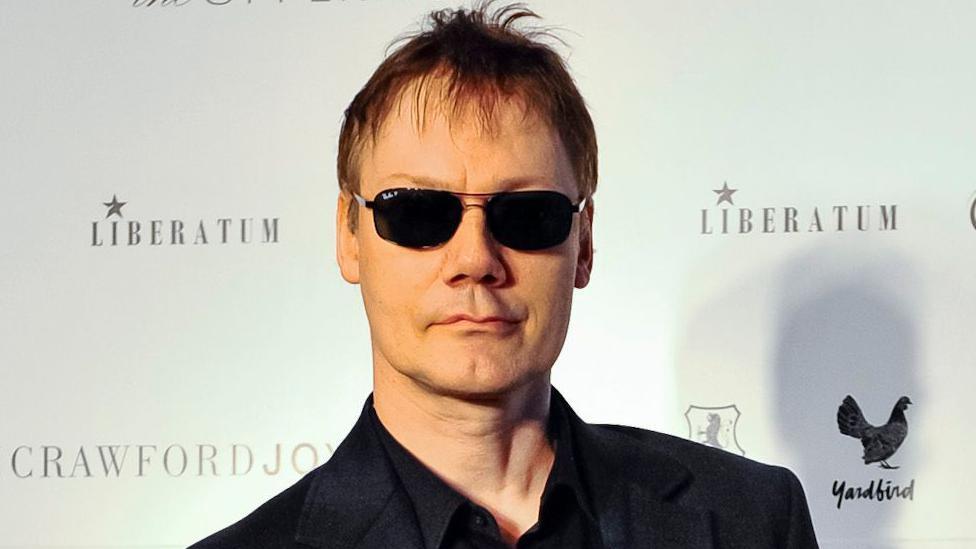
William Orbit was one of the most influential British electronic music producers, composers, musicians and remixers of the modern era. Best known for his groundbreaking production work on Madonna’s critically acclaimed album Ray of Light, Orbit developed a distinctive sound that blended electronic music, ambient textures, classical influences, dance beats and sophisticated studio production.
Over a career spanning more than four decades, William Orbit worked with some of the biggest names in popular music, including Madonna, Blur, U2, All Saints, Robbie Williams, Britney Spears, Queen and many others. His work helped demonstrate how electronic music could move from underground clubs into mainstream pop without losing its experimental character.
Who Was William Orbit?
William Orbit was born William Mark Wainwright on December 15, 1956, in London, England. He became known professionally as William Orbit and established himself as a musician, composer, producer and electronic music innovator.
According to Orbit’s official biography, his fascination with recorded sound began when he was a teenager and discovered his uncle’s tape recorder. The ability to record, manipulate and preserve sound fascinated him and eventually became the foundation of his career.
Orbit left formal education at a relatively young age and pursued an unconventional path. Rather than following a traditional career, he travelled, worked a variety of jobs and increasingly concentrated on music. His early life helped shape the independent and experimental approach that became central to his career.
The Early Years and Torch Song
Orbit’s professional music career began during the late 1970s and early 1980s when he became involved with the electronic music scene and formed the group Torch Song.
Torch Song became an important early vehicle for Orbit’s developing musical ideas. The band combined synthesizers, electronic production and pop songwriting at a time when electronic music was still considered relatively experimental.
Orbit’s early work eventually attracted the attention of music industry figures, including Miles Copeland of I.R.S. Records. The opportunity helped establish him as a serious recording artist and producer.
Rather than simply following existing musical trends, Orbit became interested in creating sounds that existed between electronic dance music, ambient music and pop. That willingness to experiment would eventually become his trademark.
Guerilla Studios and the Rise of Electronic Music
William Orbit was also associated with Guerilla Studios and the influential Guerilla record label.
The development of Britain’s electronic music culture during the 1980s and 1990s provided Orbit with an environment in which experimentation could flourish. His work was increasingly connected with emerging electronic genres, including ambient, techno, trip-hop, breakbeat and downtempo music.
Orbit was particularly interested in the possibilities offered by studio technology, for him, the recording studio was not simply a place where musicians captured performances. It was an instrument in itself. Sounds could be sampled, processed, reversed, layered and transformed into something completely new. This approach became hugely influential as digital production technology became increasingly accessible.
Strange Cargo and William Orbit’s Solo Career
While Orbit became famous for producing other artists, his own recordings were equally important to his reputation. His Strange Cargo projects established him as a respected electronic and ambient musician in his own right. The music associated with Strange Cargo demonstrated Orbit’s ability to create atmospheric instrumental compositions that existed outside the conventional structures of mainstream pop.
His solo work attracted listeners who were interested in ambient music, electronic experimentation and cinematic soundscapes. These recordings also helped establish the musical vocabulary that would later become so important to his production work.
Pieces in a Modern Style
One of William Orbit’s most ambitious projects was Pieces in a Modern Style. Released in 2000, the album reinterpreted classical compositions through contemporary electronic production. Rather than simply reproducing classical music, Orbit transformed familiar compositions with synthesizers, electronic textures and modern studio techniques. The result was an unusual meeting point between classical music and electronic dance culture.
The album became a significant commercial success, reaching No. 2 on the UK Albums Chart according to contemporary accounts of Orbit’s career. One of the best-known tracks associated with the project was Orbit’s electronic interpretation of Samuel Barber’s Adagio for Strings which demonstrated Orbit’s talent for taking material from a completely different musical tradition and giving it a contemporary identity.
William Orbit and Madonna
William Orbit’s greatest mainstream breakthrough came through his collaboration with Madonna.
In the late 1990s, Madonna was looking for a new musical direction. Orbit’s atmospheric electronic sound proved to be an ideal match for her ambitions. The result was Ray of Light, released in 1998 which represented a major transformation in Madonna’s sound.
Instead of relying primarily on traditional pop and dance production, Ray of Light incorporated elements of techno, electronica, ambient music and psychedelic influences. Orbit played a crucial role in shaping the album’s sonic identity.
Ray of Light
Ray of Light became one of Madonna’s most critically and commercially successful albums, combining sophisticated song writing, electronic production and atmospheric textures helped introduce electronic music to a huge mainstream audience.
Tracks such as “Frozen,” “Ray of Light” and “The Power of Good-Bye” demonstrated how electronic production could coexist with emotionally powerful pop song writing and Orbit’s production helped give Madonna a futuristic sound while retaining the accessibility that had made her one of the world’s biggest pop stars.
The album reportedly sold around 16 million copies worldwide and earned multiple Grammy Awards, including recognition for Orbit’s production work. For many music fans, William Orbit and Ray of Light remain inseparable and the album is frequently cited as one of the landmark electronic pop records of the 1990s.
William Orbit and Blur
Orbit’s influence wasn’t limited to dance and pop music.
In 1999, he worked with British alternative rock band Blur on their album 13, which demonstrated Orbit’s versatility as a producer. Blur’s music was already moving into more experimental territory, and Orbit’s production techniques helped create a darker, more atmospheric and unconventional sound.
13 became another important chapter in Orbit’s career and demonstrated that his production style could work just as effectively with a guitar-based alternative rock band as it could with a global pop superstar.
Working With U2
William Orbit also worked with Irish rock band U2.
Among his notable contributions were production and remix work connected with “Electrical Storm” and “The Hands That Built America.” “Electrical Storm” became a UK Top 5 single, further demonstrating Orbit’s ability to work with established artists while introducing electronic production techniques into their music.
His work with U2 added another major rock act to an already impressive production résumé.
William Orbit and All Saints
Orbit also worked with British girl group All Saints.
His production work contributed to the group’s sophisticated blend of pop, electronic music and atmospheric sound. All Saints were among the successful British acts of the late 1990s and early 2000s, and Orbit’s involvement further demonstrated his position as one of the era’s sought-after producers.
His ability to move between genres became one of the defining characteristics of his career.
Queen and Freddie Mercury
Another fascinating chapter in William Orbit’s career involved Queen.
Orbit worked on previously unreleased and archival Queen material, including tracks featuring the voice of Freddie Mercury.
His production work included “There Must Be More to Life Than This,” involving archival recordings of Freddie Mercury and Michael Jackson, as well as “Let Me in Your Heart Again.” These projects allowed Orbit to apply modern production techniques to historic recordings. The work was particularly significant because it connected one of the pioneers of electronic pop production with the legacy of one of rock music’s most celebrated bands.
Britney Spears and Later Production Work
Orbit continued working with major artists well into the 21st century.
In 2013, he worked with Britney Spears and will.i.am on Spears’ album Britney Jean, contributing to the song “Alien.”
He also worked with Chris Brown and other major artists during this period. These collaborations demonstrated that Orbit remained relevant as music production technology changed dramatically.
His career had begun in the analogue era, but he successfully adapted to digital production and modern recording software.
.
.
William Orbit’s Musical Style
What made William Orbit different from many other producers was his ability to combine apparently contradictory musical worlds.
His music could be Electronic yet emotional, Experimental yet accessible, Classical yet futuristic, Ambient yet rhythmic and Underground yet commercially successful. He understood the importance of atmosphere.
His productions frequently featured layered synthesizers, processed vocals, unusual percussion, ambient soundscapes and carefully constructed textures. Rather than allowing technology to dominate the music, he used technology to create emotional environments. That became one of his greatest strengths as a producer.
William Orbit and Electronic Music
William Orbit’s career is particularly important in the history of electronic music because he helped bridge the gap between underground electronic culture and mainstream pop.
During the 1980s and early 1990s, electronic music was often associated with specialist audiences and club culture. By the late 1990s, however, electronic production had become central to mainstream popular music. Orbit was one of the producers who helped make that transition possible. His work demonstrated that synthesizers, sequencers, sampling and digital effects could be used to create sophisticated pop music rather than simply dance tracks.
Awards and Achievements
Orbit received numerous awards and industry honours throughout his career.
His production work on Madonna’s Ray of Light earned Grammy recognition, while his work across multiple artists contributed to hundreds of millions of record sales. His career also included Ivor Novello recognition and numerous other industry honours.
Orbit’s official biography states that his career and production work were associated with more than 200 million recordings worldwide. However, commercial statistics only tell part of the story. his greatest achievement was arguably his influence on the sound of popular music.
William Orbit’s Personal Challenges
Orbit’s later life included periods of significant personal difficulty.
His official biography describes struggles involving substance use and a serious mental health crisis. Orbit subsequently spoke publicly about these experiences and about his efforts to recover and return to creative work. These experiences formed a difficult chapter in the life of an artist whose career had otherwise been marked by extraordinary creativity and success.
Importantly, Orbit continued to create music and art, and developed his interest in painting and continued exploring creative ideas later in life.
William Orbit’s Death in 2026
William Orbit died at home on July 23, 2026, aged 69.
His death was announced on August 7, 2026, by family and friends.
The announcement described the loss with profound sadness and paid tribute to the impact Orbit had on people through his music, friendship and kindness. No cause of death was announced.
William Orbit’s Legacy
William Orbit’s legacy extends far beyond his most famous production credits, he was an artist who understood that popular music could evolve.
His career crossed decades of technological and cultural change, from analogue synthesizers and tape machines to sophisticated digital audio workstations. He worked with artists from completely different musical backgrounds and consistently brought an experimental mindset to his projects.
His greatest mainstream achievement, Ray of Light, remains particularly important. The album helped establish a blueprint for sophisticated electronic pop and demonstrated that experimental production could coexist with massive commercial success. But Orbit’s influence can also be heard in his solo recordings, classical reinterpretations, remixes and work with alternative rock, dance and electronic artists.
Check out William Orbit on Amazon by clicking here.
If you found this interesting please share it with your friends and family, and check out some of our other articles on Musicians who Died in 2026.
.
