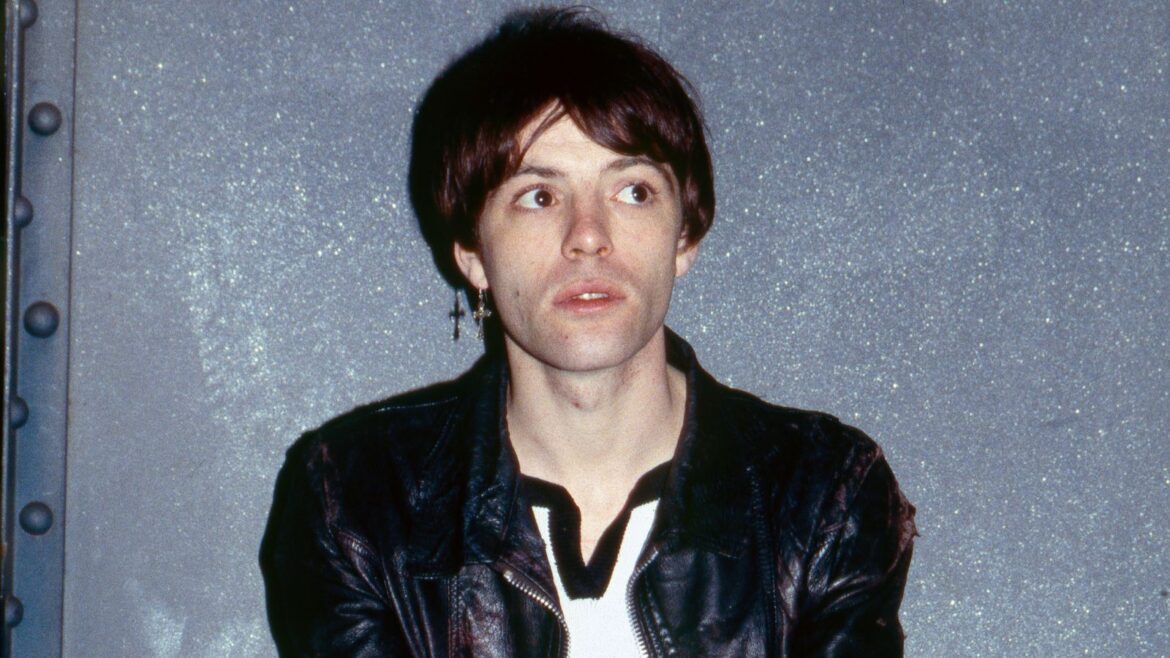
Richey Edwards remains one of the most enigmatic and intellectually compelling figures in modern British music. As lyricist and rhythm guitarist of Manic Street Preachers, Edwards was central not just to the band’s words, but to its entire ideological and aesthetic framework.
To understand Edwards fully, it is necessary to examine him alongside the evolution of the Manic Street Preachers themselves, a band whose trajectory, before and after his disappearance, reflects both his influence and his absence.
Early Life, Education, and Intellectual Formation
Richey Edwards was born Richard James Edwards on December 22, 1967, and raised in Blackwood, a former mining town in South Wales, Edwards grew up in a region marked by the economic and social fallout of deindustrialization. This background is essential to understanding his later fixation on class, identity, and political disillusionment. Unlike many rock musicians, Edwards approached music through an academic and literary lens. At Swansea University, where he studied political history, he immersed himself in writers such as George Orwell, Albert Camus, Friedrich Nietzsche, and J. G. Ballard.
These influences are evident in his lyrics, which often read like fragmented essays or philosophical notes rather than conventional rock verses. His writing combined political critique with personal anguish, drawing connections between macro-level systems, capitalism, authoritarianism, media culture, and the micro-level experience of psychological distress.
Formation and Ideology of Manic Street Preachers
Manic Street Preachers formed in the mid-1980s, built around school friends James Dean Bradfield, Nicky Wire, and Sean Moore. Edwards initially functioned as an outsider-insider, a close confidant who later became integral to the band’s identity.
The band’s early ethos was deliberately confrontational and self-mythologizing. They famously declared they would release one album, sell 16 million copies, and then split up, an example of their mixture of irony, ambition, and provocation. Their aesthetic fused punk aggression with glam excess, drawing from artists like the Sex Pistols, The Clash, and even elements of David Bowie.
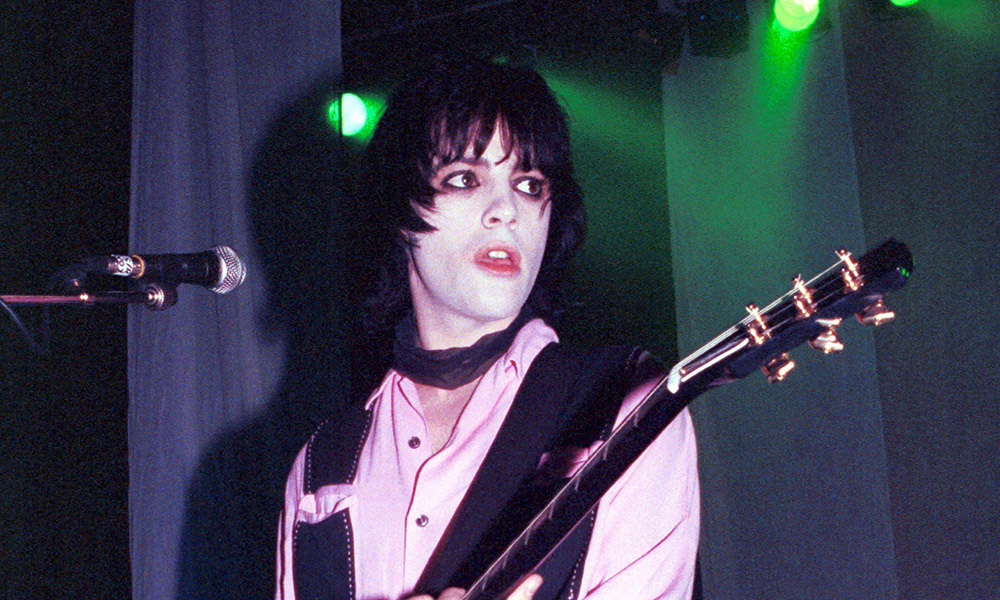
Richey Edwards, in particular, was crucial in shaping the band’s visual identity, slogans, military-style clothing, and heavy use of text, slogans painted on instruments, manifestos, and interviews that blurred sincerity and performance. He understood image as language, something to be manipulated and weaponized.
Generation Terrorists and Early Ambition
The band’s debut album, Generation Terrorists, was a sprawling, ambitious statement. Clocking in at over 70 minutes, it tackled topics including American cultural imperialism, monarchy, consumerism, and political apathy. Edwards’ lyrics were dense and often sloganistic, reflecting both punk influences and his academic background.
While the album received mixed reviews, some critics saw it as overly grandiose, it established the Manics as a band with intellectual ambitions far beyond their peers. Edwards’ writing stood out for its refusal to simplify; he demanded effort from listeners, embedding references that required decoding.
Gold Against the Soul and Internal Fractures
Their second album, Gold Against the Soul, marked a stylistic shift toward a more polished, American-influenced rock sound. This change created tension within the band, particularly for Edwards, who later criticized the album as shallow and lacking ideological substance.
This period coincided with a deepening of Edwards’ personal struggles. His alcohol consumption increased, and his self-harm became more severe. The contrast between the band’s growing commercial aspirations and Edwards’ desire for artistic and political depth became increasingly difficult to reconcile.
The Holy Bible, A Creative and Psychological Apex
The band’s third album, The Holy Bible, represents the peak of Edwards’ artistic vision. It is widely regarded as one of the darkest and most uncompromising records ever released by a mainstream rock band.
The album’s themes are relentless, anorexia, self-mutilation, genocide, political oppression, and human cruelty. Edwards drew on a wide range of sources, including historical texts, psychiatric literature, and personal experience. Songs like “4st 7lb” offer a harrowing portrayal of eating disorders, while “Archives of Pain” explores capital punishment and justice.
Musically, the band matched this intensity with abrasive, claustrophobic arrangements. James Dean Bradfield’s vocals became sharper and more urgent, while Nicky Wire and Sean Moore anchored the sound in a tight, militaristic rhythm section.
Critically, The Holy Bible was both acclaimed and unsettling. It did not aim for comfort or accessibility; instead, it functioned as a document of psychological extremity.
Public Persona and the “4 REAL” Incident
Richey Edwards’ public image was inseparable from his internal struggles. The infamous 1991 incident in which he carved “4 REAL” into his arm during an interview became a defining moment. It was a response to a journalist questioning the band’s authenticity, but it also revealed the depth of his need to prove sincerity, even through self-destruction.
This act has often been mythologized, but it also raises uncomfortable questions about the relationship between performance and suffering. Edwards seemed to exist in a space where authenticity required physical proof, a dangerous and unsustainable standard.
Disappearance and Aftermath
On February 1, 1995, Richey Edwards disappeared at the age of 27. His last known movements included staying at the Embassy Hotel in London and withdrawing money from his bank account over several days. His car was found near the Severn Bridge, a site associated with suicide.
Despite investigations, no body was ever found. Sightings were reported in places as far afield as India and the Canary Islands, though none were confirmed. The ambiguity surrounding his fate has contributed to his enduring mystique.
In 2008, Richey Edwards was legally declared dead, though his absence had long been accepted in practical terms.
Manic Street Preachers After Edwards
Following Richey Edwards’ disappearance, Manic Street Preachers faced a critical decision to disband or continue. They chose to continue as a trio, but Edwards’ influence did not disappear.
Their 1996 album, Everything Must Go, marked a significant shift. The sound became more expansive and melodic, incorporating elements of Britpop and arena rock. Importantly, several songs used lyrics Edwards had written before his disappearance, creating a direct link between past and present.
The album was both a commercial and critical success, signaling the band’s transformation. Later works, including This Is My Truth Tell Me Yours (1998), further solidified their place in British music, though the tone was less confrontational and more reflective.
Nicky Wire assumed a greater role in lyric writing, often acknowledging Richey Edwards’ influence while moving in a slightly different direction. The band’s post-Edwards work tends to balance political themes with a broader emotional accessibility.
Legacy and Cultural Significance
Richey Edwards’ legacy operates on multiple levels. As a lyricist, he expanded the possibilities of rock music, proving that it could engage deeply with philosophy, politics, and literature. His work challenged listeners to think, not just feel.
At the same time, his life serves as a cautionary tale. The romanticization of his suffering risks obscuring the reality of his pain. Edwards was not merely a tragic icon; he was a person struggling with severe mental health issues that ultimately overwhelmed him.
For Manic Street Preachers, Richey Edwards remains both a foundational figure and an enduring absence. His words continue to resonate in their music, and his influence is acknowledged in interviews, performances, and the band’s ongoing identity.
Conclusion
Richey Edwards occupies a unique place in cultural history, a figure defined as much by his intellect and artistry as by his disappearance. His work with Manic Street Preachers represents a rare fusion of rock music and serious intellectual inquiry, while his life story raises profound questions about authenticity, suffering, and the cost of artistic intensity.
The continued success of Manic Street Preachers demonstrates both resilience and adaptation, but it also underscores the irreplaceable role Edwards played. His presence shaped their most uncompromising work; his absence forced them to evolve.
In the end, Richey Edwards remains unresolved, a voice that still speaks through lyrics, a figure who resists closure, and a reminder of how closely brilliance and fragility can coexist.
Check out Richey Edwards on Amazon by clicking here.
Check out the Manic Street Preachers on Amazon by clicking here.
If you found this interesting please share it with your friends and family, and check out some of our other articles on Musicians in the 27 Club.
.
