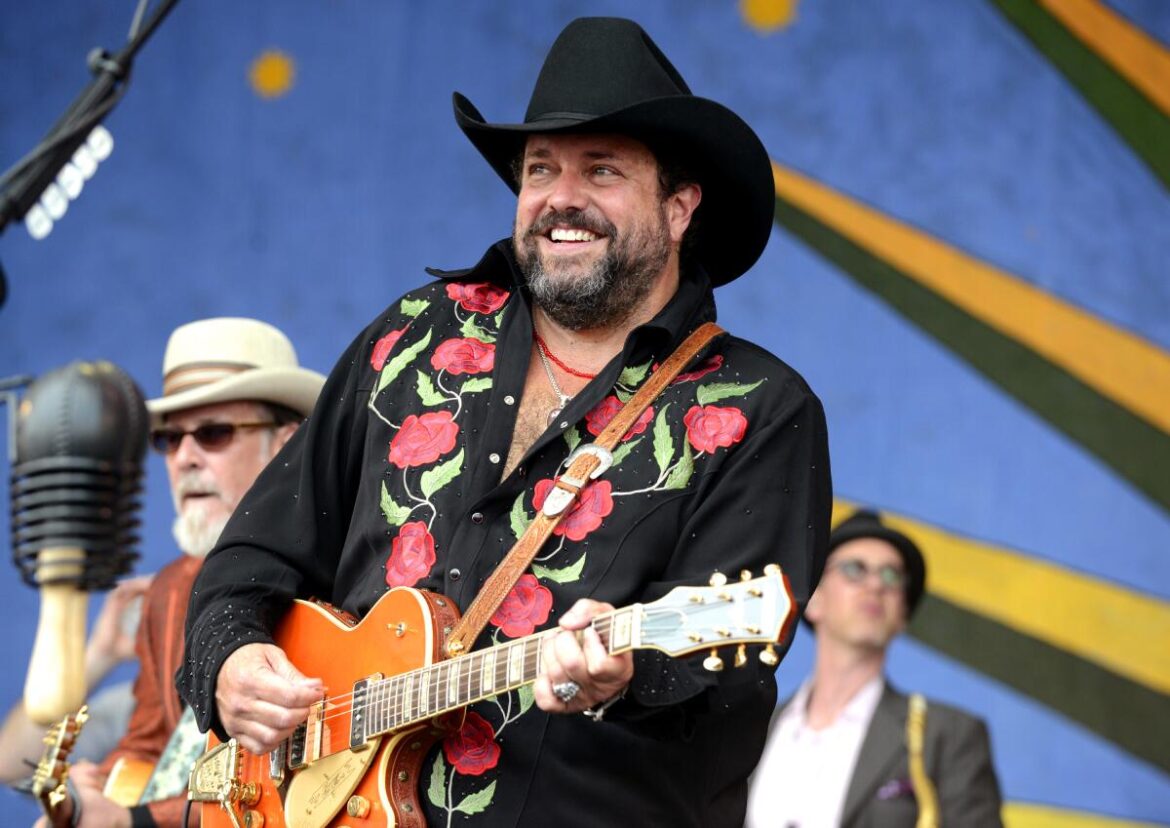
Raul Malo was born Raul Francisco Martínez-Malo Jr. on August 7, 1965, in Miami, Florida, into a Cuban-American family. Growing up in Miami, a cultural crossroads of Latin America, the Caribbean, and the U.S. South.
Malo was exposed from an early age to a rich and diverse musical environment. His childhood was steeped in a mix of sounds: Latin rhythms, Cuban music, classic pop, rock, and American country. This multicultural immersion would later become a defining element of his artistry.
Raul Malo’s upbringing instilled in him an appreciation for music’s breadth — not just as a genre, but as a cultural expression that could bridge backgrounds. He often recalled how his family home was “a celebration of all these cultures,” reflecting not only heritage but the blending and coexistence of different musical traditions.
As he matured, Malo gravitated toward music himself. With guitar and voice as his tools, he began to imagine a path not constrained by typical genre boundaries. His ambitions reached fruition in 1989, when he co-founded The Mavericks in Miami, alongside drummer Paul Deakin and bassist Robert Reynolds. The choice of Miami — rather than a more predictable country-music hub — already spoke to the band’s identity: rooted in Southern and country traditions, but infused with Latin, rock, and Americana influences.
The Mavericks — Birth of a Genre-Defying Band
Origins & Early Years
The Mavericks emerged in 1989, but their origin story diverged from what many expected of a “country” band. Instead of cutting their teeth in honky-tonks or Nashville bars, they played punk and rock clubs in Miami. That was no accident: the band wanted freedom to perform original songs rather than cover standard country tracks. This environment allowed them to test an eclectic sonic formula — one that drew from country, rock, roots, Latin, and more — all while appealing to a broad, cross-cultural audience.
Raul Malo’s role from day one was central: as lead singer, guitarist, and songwriter, his talents shaped the identity and direction of the band. His baritone and tenor voice — both powerful and flexible, capable of emotive ballads or spirited rock & swing — became a hallmark. Coupled with his guitar playing, Malo gave The Mavericks a distinctive voice in a crowded musical landscape.
Their sound didn’t fit neatly into a single pigeonhole: some described them as alt-country, others as Americana, roots, Tejano, swing, or Latin-tinged country. In many ways, they blurred genre boundaries — embracing tradition while pushing forward bold experimentation.
Breakthrough and Rise to Fame
In the early 1990s, The Mavericks began to gain traction. Their self-titled debut album (released in 1990) marked their first step, but it was their 1994 album What a Crying Shame that became their commercial breakthrough. With its blend of lush arrangements, heartfelt songwriting, and genre-mixing, it struck a chord with audiences. The album eventually achieved platinum status in the U.S. and double-platinum in Canada — a sign that their unorthodox style had found a wide and receptive audience.
One of their standout hits from the band’s early years was All You Ever Do Is Bring Me Down, featuring accordion virtuoso Flaco Jiménez. The song, with its swinging rhythm and Tex-Mex flair, reached No. 13 on the U.S. country charts in 1996, and remains a signature track for the band. The collaboration with Jiménez underscored The Mavericks’ commitment to blending Latin and country roots — a rarity at the time.
.
Other successes followed. The band charted multiple times on the American Billboard Hot Country Songs charts. Their song Dance the Night Away became a hit in the United Kingdom in 1998, helping open international doors and proving the band’s cross-border appeal. Meanwhile, their growing catalog and touring schedule built a loyal fanbase across North America and beyond.
Critical acclaim followed — The Mavericks earned awards and recognition, including a Grammy Award, two Country Music Association (CMA) awards, and three Academy of Country Music (ACM) Awards. Their reputation was not only as superb songsmiths and instrumentalists, but as genre-defying innovators, unafraid to mix Latin, rock, swing, country, and pop.
Throughout this period, Raul Malo’s identity as the creative heart of the band became widely acknowledged — his songwriting, his voice, his guitar, and his cultural heritage all contributing to a unique musical signature.
Songwriting, Collaborations, and Creative Reach
While The Mavericks remained his primary vehicle, Raul Malo’s talents extended far beyond the band. He co-wrote many of the group’s singles, helping craft a diverse catalog that ranged from melancholic ballads to danceable Tex-Mex swings.
In 2003, he co-wrote In My Dreams for fellow country artist Rick Trevino — a demonstration that his songwriting abilities resonated beyond his own band.
As a musician deeply rooted in both Latin and American traditions, Malo’s reach extended to collaborations that reflected his dual heritage. His work contributed to a broader musical conversation — one that challenged the rigid boundaries of genres and embraced cross-cultural fusion. In doing so, he helped expand the space for others exploring similar blends of Americana, Latin roots, country, and rock.
Solo Career and Side Projects
In the early 2000s, The Mavericks disbanded (for reasons including shifting musical landscapes and industry pressures). Rather than fade away, Raul Malo embarked on a solo career, using the opportunity to explore a broader range of musical styles, languages, and themes.
From 2001, he also participated in the supergroup Los Super Seven — a collective of musicians dedicated to exploring Latin roots, folk, and Americana, often in both English and Spanish. With Los Super Seven, Malo embraced his cultural heritage more overtly, connecting Latin folk traditions with American roots music — a thematic and stylistic continuation of his work with The Mavericks, but perhaps even more personal.
In his solo work, Raul Malo released several albums that blended country, roots, Latin rhythms, and pop sensibilities. His projects spanned instrumental pieces, intimate ballads, Latin-inflected songs, and heartfelt narratives. He also explored Spanish-language music. For example, he recorded an all-Spanish album for children with his family — featuring vocals from his sister, his mother, and his wife — evoking a sense of legacy, heritage, and familial roots.
These solo explorations allowed Malo creative freedom: unbound by commercial expectations of mainstream country, he could delve into the textures of his cultural identity, experiment with sound, and reach audiences beyond traditional genre confines.
His ability to navigate multiple musical worlds — English-language country and Americana, Spanish-language Latin music, folk, rock, and more — made him a rare artist capable of speaking authentically to diverse audiences.
Reunion: The Mavericks Return
In 2012, The Mavericks reunited with Raul Malo back at the helm, alongside core (and evolving) lineups. This reunion marked a creative resurgence: new albums, renewed touring, and reinvigorated energy. The band proved that their earlier success was not a fluke — that their sound, deeply rooted yet fluid, still resonated.
Over the following years, The Mavericks released multiple albums under new musical labels including their own imprint, which gave them greater control over their artistic direction. Their post-reunion catalog incorporated cumbia, Tex-Mex, pop rock, rockabilly, Americana, and Latin pop — showing that the band (and Malo himself) remained committed to musical exploration rather than nostalgia.
In 2024, The Mavericks released their 13th studio album, Moon & Stars, a testament to their longevity and the sustained creative drive of Raul Malo and his bandmates. That more than three decades after their formation they were still producing compelling new material underscores the enduring relevance of their music.
Their 2020 full-length Spanish album En Español deserves special mention: by recording Latin-American standards and original songs in Spanish, the band — under Malo’s leadership — explicitly acknowledged the value of multicultural heritage within American music. It was more than a novelty; it was a statement: Latin music has always been, and always will be, part of America’s musical identity. Malo once said he hoped their music might gently open hearts: if someone “on the fence” heard them singing in Spanish, maybe they’d be reminded of the beautiful cultures that make up what America is trying to be.
This inclusive, border-crossing vision was central to The Mavericks’ identity post-reunion — and one of the reasons they remained beloved by fans across ethnic, cultural, and generational lines.
Voice, Style, and Artistic Identity
A core reason for Raul Malo’s, and The Mavericks‘, unique place in music lies in his voice and musical sensibility.
Malo’s vocal range was remarkable: he could deliver a smooth, sorrowful ballad in a deep, resonant baritone, or soar into operatic high notes with emotional intensity. His voice carried warmth, sensuality, longing, and joy. Whether singing in English or Spanish, in country, rock, Latin, or swing styles — the voice remained unmistakably his.
His guitar playing and musical arrangements complemented this versatility. Rather than conforming to a narrow definition of “country,” Raul Malo embraced a hybrid identity — weaving together country, western swing, rockabilly, Latin rhythms, surf rock, pop, and Americana. The result was often rich, layered music that paid homage to tradition while sounding fresh and boundary-breaking.
His songwriting captured diverse emotional landscapes: love, heartbreak, longing, nostalgia, joy, celebration, longing for home, cultural pride, and universal humanity. Through his lyrics and music, Malo became an ambassador for music as a bridge — between languages, cultures, and musical traditions.
Moreover, his outlook on music was inclusive and aspirational. He believed in the power of music to remind people of shared heritage, shared human experience, and shared cultural roots. In a landscape often divided by genre, race, or marketing categories, he stood as a unifying figure — not least because of his Cuban-American background and his willingness to blend and transcend boundaries.
Contributions to Latin-American and Multicultural American Music
By embracing Latin influences, singing in Spanish, blending genres, and refusing to be boxed in, Raul Malo made significant contributions to what might be called multicultural American music. His work challenged entrenched ideas about what “country,” “Americana,” or “roots” music should sound like. He helped open doors for artists who carry multiple cultural identities — showing that heritage and mainstream American music are not mutually exclusive, but can form a vibrant, living fusion.
With The Mavericks’ Spanish-language album and his solo Latin projects, Malo contributed to visibility: to demonstrating that Spanish-language songs could coexist alongside English-language Americana in a world often dominated by market segmentation. He celebrated bicultural heritage, diasporic identity, and the fluidity of cultural expression.
Additionally, through collaborations like Los Super Seven, he linked Latin-American folk traditions, Tex-Mex, and American roots in ways that honored history while creating something new. That bridging of traditions has, for many younger artists, become a model: to treat music as a living crossroads, rather than as isolated silos.
In doing so, Raul Malo’s work transcended entertainment. It became part of a broader conversation about identity, belonging, heritage, and music’s role in connecting communities.
Later Years: Health Struggles and Legacy
In June 2024, Raul Malo publicly revealed that he had been diagnosed with colon cancer. Despite his illness, he — for a time — continued performing and remained engaged with his music and fans. However, in September 2025, he disclosed that the disease had progressed: he was battling a rare complication known as leptomeningeal disease (LMD), in which cancer spreads to the membranes around the brain and spinal cord. As a result, The Mavericks cancelled the remainder of their tour dates, and Malo relocated from his Nashville home to Houston to receive specialized treatment.
As his health declined, the music community responded with love and respect. Tribute shows were organized, including a two-night event at Nashville’s Ryman Auditorium — held even though Raul Malo, hospitalized, could not attend. During that time, the band’s members visited him and played for him one final time, an intimate last performance dedicated to him.
Raul Malo died on December 8, 2025, at the age of 60. He left behind a legacy not only of music, but of cultural representation, artistic courage, and boundary-breaking creativity. He is survived by his wife (with whom he had been married for decades), their children, his family, and the many bandmates, collaborators, and fans whom he touched throughout the years.

.
Impact, Resonance, and Why He Still Matters
Reflecting on Raul Malo’s life and work, several themes emerge that help explain his lasting importance — not just as a talented musician, but as a figure of cultural significance.
1. Blending Cultures & Genres — Redefining Americana
At a time when many artists were boxed into genre-specific marketing lanes, Malo and The Mavericks dared to cross boundaries. They blended country with Latin, Tejano, rock, swing, surf, pop — mixing languages, rhythms, and traditions. That willingness made their music inclusive and borderless. In doing so, Malo helped redefine what “Americana” could be: not a narrow, uniform style, but a broad spectrum reflecting the true multicultural roots of American music.
2. Elevating Voice and Emotion — An Uncommon Vocal Gift
Raul Malo’s voice was exceptional. Versatile, powerful, and full of soul, it could convey heartbreak, longing, joy, nostalgia, passion — often all within the same set. His vocals weren’t just technically impressive: they were emotionally resonant. For many listeners, hearing him sing felt like being transported — across time, place, and memory. That emotional depth remains in his recordings, waiting to be rediscovered.
3. Artistic Integrity & Authenticity — Refusing Compromise
Raul Malo and The Mavericks never fully embraced the formulaic constraints of mainstream country. Instead, they pursued authenticity: honoring heritage, embracing Latin roots, writing honest songs, and staying true to their vision. When they reunited, they did so on their own terms — under their own label, with creative control, continuing to explore rather than replicate past glories. That commitment to integrity is rare — and valuable.
4. Cultural Representation and Inclusivity — A Bridge Across Communities
As a Cuban-American frontman in a genre often dominated by Anglo-American narratives, Malo embodied hybridity. By singing in Spanish, celebrating Latin musical roots, and blending cultural traditions, he offered representation for Latinx audiences within country and Americana — and helped broaden the understanding of what American music is. For many listeners with similar backgrounds, his music affirmed identity and heritage; for others, it served as an invitation to listen, understand, and empathize.
5. Longevity, Reinvention, and Legacy — A Career Spanning Decades
From forming The Mavericks in 1989, rising to fame in the 1990s, exploring solo work and collaborations, reuniting the band in the 2010s, releasing new albums in the 2020s — Raul Malo’s career spanned more than three decades. He adapted to changing musical climates, explored new sounds, and remained creatively active until the end. That longevity, paired with consistent quality and innovation, cements his place in musical history.
What He Leaves Behind — Music, Memory, and Influence
Raul Malo leaves behind:
- A rich discography — spanning The Mavericks’ early albums, their reunion works, solo albums, Spanish-language projects, and collaborations.
- A body of songs that defy genre labels — songs that can make country fans, Latin music listeners, rock lovers, and Americana devotees all feel at home.
- A legacy of inclusivity — proving that music can transcend cultural, linguistic, and racial boundaries, that heritage is strength, and that identity can enrich art rather than limit it.
- A demonstration of artistic courage — a musician who stayed true to his vision, even at the risk of being outside mainstream trends, commercial expectations, or industry norms.
- Inspiration for future musicians — particularly for those who straddle multiple cultures, languages, or traditions, showing that the fusion of backgrounds can yield something unique, authentic, and timeless.
- Emotional and human impact — for fans around the world who found solace, joy, nostalgia, pride, or hope in his voice and songs; for Latinx audiences who recognized representation; for musical peers who saw in him an example of bold creativity and cultural respect.
In short: Raul Malo’s legacy is not limited to a set of hits or a set of awards. It lives on in the many hearts and lives he touched — through dance floors, concert halls, memories, emotional catharsis, cultural pride, and musical discovery.
Conclusion: A Voice That Transcended Borders
Raul Malo’s passing on December 8, 2025 marks the end of a singular life, but not of his influence. His voice, his music, his vision remain. He showed the world that country doesn’t have to be one-dimensional; that Americana can — and should — reflect the diversity of its people; that Latin rhythms and Spanish lyrics have a place in the heart of American roots music; that a band from Miami can shake up Nashville, Europe, and beyond.
He wasn’t a trend-chaser, but a trailblazer. Not a follower, but an originator. Not a stereotype, but a hybrid, an artist, a dreamer.
To revisit The Mavericks’ catalog, his solo work, or his collaborations is not merely to listen — it is to remember a voice that refused to be contained, to celebrate a cultural bridge, to honor a creative spirit that believed in music’s power to unite, uplift, and transform.
Check out Raul Malo on Amazon by clicking here.
Check out The Mavericks on Amazon by clicking here.
If you found this interesting please share it with your friends and family, and check out some of our other articles on Musicians who Died in 2025.
.
.
