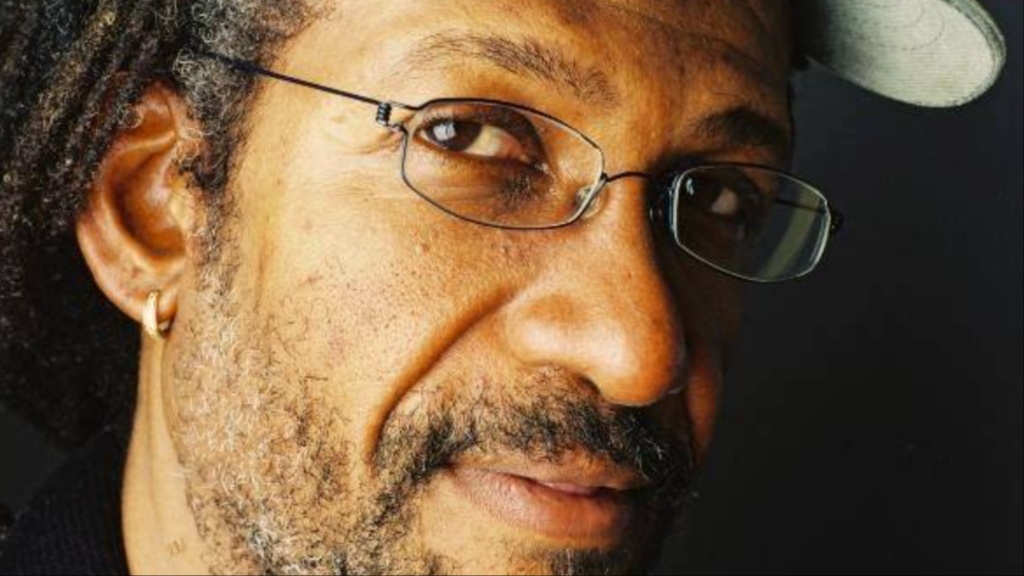
Sly Dunbar was one of the most important and innovative drummers in the history of modern music. Best known as one half of the legendary rhythm section and production duo Sly and Robbie, alongside bassist Robbie Shakespeare.
Sly Dunbar reshaped the rhythmic foundations of reggae and Jamaican popular music while also influencing global pop, rock, funk, and electronic styles. Dunbar’s work powered thousands of recordings and defined the groove of multiple musical eras. His drumming was not simply accompaniment; it was architectural, futuristic, emotional, and revolutionary.
Childhood and Early Influences
Sly Dunbar was born Lowell Fillmore “Sly” Dunbar in Kingston, Jamaica, on May 10, 1952 and grew up in the Waterhouse district of Kingston, an area renowned for producing many of Jamaica’s finest musicians. Waterhouse was alive with sound systems, church music, street performances, and radio broadcasts. Music was not a luxury, it was a daily presence and a cultural necessity. From a young age, Sly was immersed in rhythm. He was drawn to how beats could move people, how a simple groove could transform a gathering into a celebration.
His early influences came from both Jamaican and American sources. He listened closely to ska and rocksteady pioneers such as Lloyd Knibb of The Skatalites, whose jazz-influenced drumming laid the groundwork for modern Jamaican rhythms. At the same time, Sly absorbed American soul, funk, and R&B, particularly the precision and power of James Brown’s rhythm sections and the groove-based arrangements of Motown.
Unlike many formally trained musicians, Sly was largely self-taught. He initially played guitar but soon gravitated toward drums, fascinated by their central role in shaping music’s emotional pulse. By his teenage years, he had developed a distinctive style that combined discipline with imagination. He practiced obsessively, playing along with records and mimicking everything from jazz swing to funk syncopation.
Entering the Studio World
In the late 1960s and early 1970s, Kingston’s music scene was dominated by independent studios and producers. The Jamaican recording industry worked at a furious pace, producing hundreds of singles each year. Producers relied on house bands and freelance musicians who could adapt quickly and play anything.
Sly’s talent soon caught attention. He joined The Aggrovators, the house band for producer Bunny “Striker” Lee, and became one of the most in-demand drummers in Kingston. His reputation grew not only because of his technical skill but because of his creativity. Sly never played a beat the same way twice. He constantly reimagined patterns, textures, and dynamics.
At this time, reggae was evolving from rocksteady into a slower, heavier, more hypnotic form. The “one-drop” rhythm, where the snare and bass drum hit together on the third beat, became central. Sly mastered this style but also expanded it. He experimented with syncopation, double-time hi-hats, and alternative bass drum placements, laying the groundwork for new rhythmic possibilities.
Work with Lee “Scratch” Perry and Dub Innovation
One of Sly Dunbar’s most important early collaborations was with Lee “Scratch” Perry, the eccentric genius producer who transformed reggae into dub. Dub stripped songs down to their rhythmic and bass foundations, emphasizing echo, space, and atmosphere. In this environment, the drummer’s role became central.
Sly’s drumming with Perry was groundbreaking. He approached rhythm as a sculptural force, allowing silence to be as important as sound. On tracks by Junior Murvin, Max Romeo, and The Heptones, Sly’s beats were minimal yet powerful, providing a backbone that Perry could deconstruct and rebuild in the mixing process.
Dub made rhythm visible, and Sly’s drums became the architecture of that new sonic world.
Meeting Robbie Shakespeare and the Birth of a Legendary Duo
In the mid-1970s, Sly Dunbar met bassist Robbie Shakespeare, another Waterhouse native. Their musical chemistry was immediate. Robbie’s bass lines were melodic, deep, and emotional; Sly’s drumming was sharp, inventive, and flexible. Together they formed a rhythm section that didn’t just support songs, it defined them.
They soon became known as Sly and Robbie, and their partnership grew into one of the most prolific in music history. They worked as session musicians, bandleaders, and eventually producers. Their ability to adapt to any style, roots reggae, rock, funk, disco, jazz, or pop, made them indispensable.
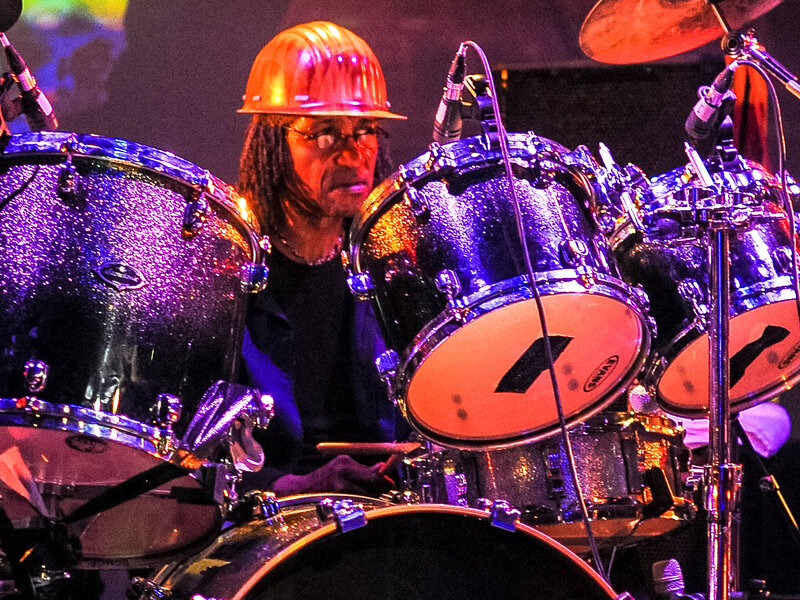
Their early major success came with Black Uhuru, whose albums Red (1977), Chill Out (1981), and Sinsemilla (1980) introduced a darker, more militant reggae sound. Sly’s drumming on these records was aggressive, spacious, and modern. He used rimshots, tight hi-hats, and syncopated bass drum patterns to create tension and drive.
.
Redefining Reggae Rhythm
Sly Dunbar’s most lasting contribution was his reinvention of reggae drumming. Traditional reggae rhythms were built on the one-drop, but Sly expanded the vocabulary dramatically. He introduced:
• Rockers rhythm – more forward-driving with bass drum on every beat
• Steppers rhythm – four-on-the-floor feel for dancing
• Hybrid funk/reggae grooves
• Syncopated hi-hat and snare variations
He also paid careful attention to tone and texture. His snare sound was crisp, his kick drum tight and punchy, and his hi-hat patterns fluid. He often played slightly ahead of the beat, giving songs urgency.
Unlike many drummers, Sly did not rely on fills. Instead, he built interest through subtle changes in rhythm and dynamics. His grooves evolved naturally across a song, responding to vocals and instrumentation.
Embracing Technology
Sly Dunbar was one of the first Jamaican musicians to fully embrace drum machines and electronic rhythm programming. Rather than seeing technology as a threat, he saw it as a tool for expansion. He combined live drumming with electronic textures to create futuristic reggae sounds.
With Sly and Robbie’s 1985 album Language Barrier, he helped pioneer a new hybrid of reggae, funk, and electronic music. The album was largely instrumental and showcased his rhythmic experimentation. It influenced dance, hip-hop, and electronic producers around the world.
Sly did not replace the drummer with machines—he extended what drumming could be.
Global Collaborations
By the late 1970s and 1980s, Sly and Robbie became global studio legends. They worked with an astonishing range of artists, including:
• Grace Jones – redefining her sound on Warm Leatherette, Nightclubbing, and Slave to the Rhythm
• Bob Dylan
• The Rolling Stones
• Serge Gainsbourg
• Herbie Hancock
• Joe Cocker
• No Doubt
With Grace Jones, Sly’s drumming was stripped-down, icy, and mechanical yet deeply funky. He turned reggae rhythms into sleek, minimalist grooves that reshaped 1980s pop.
With rock artists, he brought Caribbean rhythm into mainstream music without losing its identity.
Dancehall and the Digital Revolution
In the 1980s, Jamaican music shifted toward dancehall, a faster, more digitally driven style. Sly and Robbie were at the center of this change. They produced and performed on tracks that helped define the genre.
Their work with Ini Kamoze, Eek-A-Mouse, and others introduced drum machine rhythms and sparse, heavy basslines. Sly’s sense of timing and space was crucial in this new sound.
He understood that dancehall was not about complexity—it was about impact.
The Producer as Architect
As a producer, Sly Dunbar was meticulous. He paid attention to every detail: tone, balance, arrangement, and feel. He approached production as composition. Rhythm came first, then bass, then melody.
Sly and Robbie produced dozens of albums under their own name and for other artists. Their production style was modern, disciplined, and internationally appealing without sacrificing Jamaican authenticity.
.
Mentorship and Later Years
In his later years, Sly continued to work, tour, and mentor younger musicians. He was respected not only as a legend but as a teacher. Many drummers studied his patterns and philosophies.
Despite health challenges, he remained creatively curious. He never stopped listening to new music or experimenting with rhythm.
Sly Dunbar died from cancer at his home in Kingston, Jamaica, on January 26, 2026, at the age of 73.
Legacy and Cultural Impact
Sly Dunbar’s influence is immeasurable. He changed how drummers think about groove. He helped transform reggae from a local style into a global language. He bridged tradition and innovation.
In Jamaica, he is remembered as a cultural architect. Worldwide, he is recognized as one of the greatest drummers of all time.
Lowell “Sly” Dunbar was not just a drummer, he was a visionary. Through his work with Robbie Shakespeare and countless artists, he reshaped rhythm itself. His beats continue to pulse through reggae, hip-hop, pop, and electronic music.
In the language of groove, Sly Dunbar was fluent and the world is still listening.
Check out Sly Dunbar on Amazon by clicking here.
Check out Sly and Robbie on Amazon by clicking here.
If you found this interesting please share it with your friends and family, and check out some of our other articles on Musicians who Died in 2026.
.
