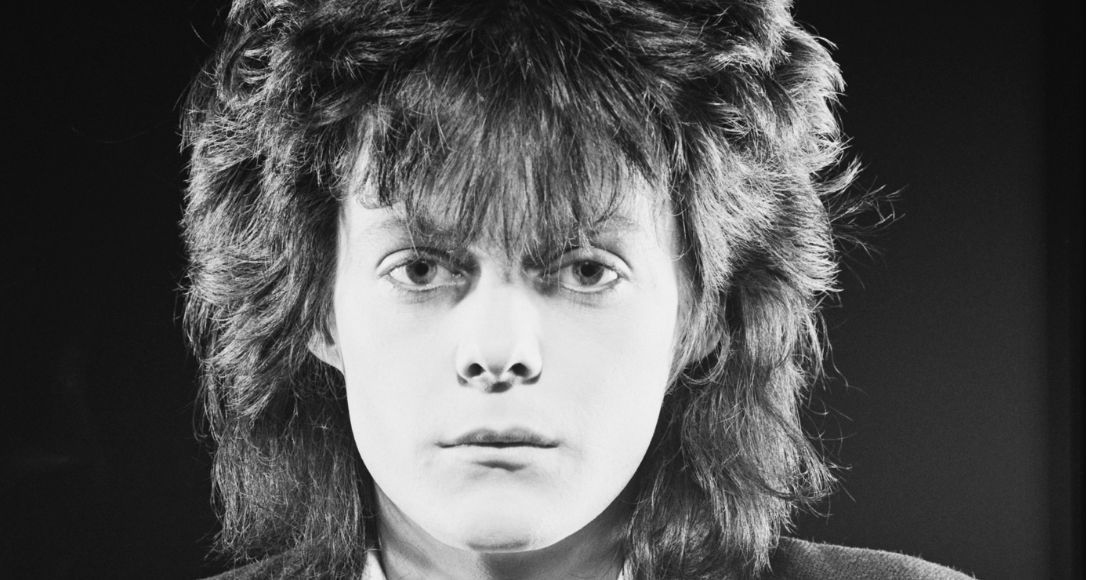
Kenny Morris occupies a distinctive and enduring place in the history of British post-punk. As the first studio drummer of Siouxsie and the Banshees, he helped define a new rhythmic language that rejected the flash and bombast of traditional rock drumming in favor of something starker, more atmospheric, and emotionally resonant.
His minimalist style, anchored in tom-toms and almost devoid of cymbals, reshaped how drums could function in alternative music. Beyond his musical contributions, Morris was also a songwriter and painter, an artist whose sensibility crossed mediums and expressed the restless, experimental spirit of the post-punk avant-garde.
Though his time with Siouxsie and the Banshees was brief, Morris’s influence proved far-reaching. He helped establish the band’s early sound, contributed to their debut album The Scream (1978), and left a blueprint for drumming that would echo through gothic rock, post-punk, and alternative music for decades.
Early Life and Artistic Formation
Kenny Morris was born in London on February 1, 1957, and came of age during a period of cultural upheaval and artistic reinvention. The late 1960s and early 1970s were fertile ground for young musicians who felt alienated by mainstream rock’s excesses and technical grandstanding. Morris was drawn to music not as spectacle but as expression, something visceral, emotional, and atmospheric.
From early on, he showed a dual interest in sound and image. Painting and music developed side by side in his creative life, each feeding the other. This visual sensitivity later translated into the way he approached rhythm: not as a mechanical timekeeping function but as a form of texture, mood, and space.
He was influenced less by traditional rock drummers and more by art-school experimentalism, dub, krautrock, and the stripped-down energy of punk. Yet he did not simply imitate punk’s aggression. Instead, Morris sought something darker and more nuanced, music that conveyed tension, unease, and emotional depth.
Joining Siouxsie and the Banshees
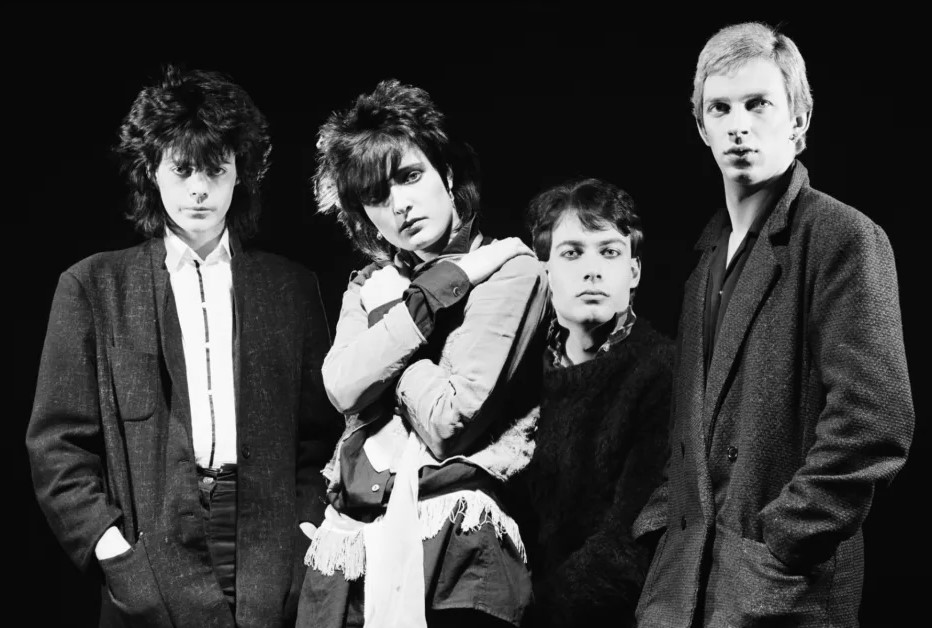
In 1977, Kenny Morris joined Siouxsie and the Banshees during the formative days of the UK punk and post-punk explosion. The band, fronted by Siouxsie Sioux with Steven Severin on bass and John McKay on guitar, was already cultivating a sound that diverged from punk’s raw simplicity. They aimed for something more atmospheric, eerie, and art-driven.
.
Kenny Morris was the ideal drummer for this vision.
Rather than dominate the music with heavy backbeats and crashing cymbals, he approached the drum kit as a sculptural instrument. He emphasized tom-toms, using them to create rolling, tribal, and hypnotic rhythms. Cymbals were used sparingly, almost as punctuation marks rather than constant timekeepers.
This approach gave the Banshees’ early music a ritualistic feel, simultaneously primal and modern. Morris’s playing didn’t just support the songs; it shaped their emotional architecture.
The Scream and a New Rhythmic Language
Kenny Morris’s most significant recorded legacy is Siouxsie and the Banshees’ debut album, The Scream (1978). The record stands as one of the defining documents of post-punk, and Morris’s drumming is central to its identity.
On tracks like “Jigsaw Feeling,” “Mirage,” and “Helter Skelter,” his rhythms feel restless and cinematic. Instead of straightforward rock patterns, he built tension through repetition and variation. His tom-heavy approach created a sense of forward motion without obvious swing or blues influence.
What made Morris revolutionary was not virtuosity but restraint. He understood that absence could be as powerful as presence. By removing cymbal wash and simplifying the kit’s sonic palette, he allowed space for McKay’s jagged guitar and Siouxsie’s incantatory vocals to cut through. The drums became a kind of emotional undercurrent, subtle but commanding.
This sound marked a decisive break from both classic rock and punk orthodoxy. It helped establish post-punk as a genre rooted in mood, art, and experimentation.
Departure and Aftermath
After The Scream, Morris left Siouxsie and the Banshees in 1978 along with guitarist John McKay. The reasons were complex, creative tensions, personal dynamics, and the pressures of sudden success. While his tenure with the band was short, its impact was lasting.
His departure marked the end of one phase of the Banshees and the beginning of another. The band would go on to achieve greater commercial success and stylistic evolution, but the stark, avant-garde intensity of the early era remained uniquely tied to Morris’s drumming.
For Kenny Morris himself, the break freed him to pursue other musical and artistic projects. He continued working as a songwriter and musician in various contexts, though none matched the historical significance of his work with the Banshees. His broader creative identity increasingly embraced painting and visual art, areas in which he could express the same emotional tension and abstraction found in his rhythms.
Style and Technique: The Tom-Tom Philosopher
Kenny Morris is often described as a drummer who “hardly used cymbals,” but that phrase only hints at the depth of his philosophy. He treated the drum kit as a tonal instrument rather than a percussive weapon.
Key elements of his style included:
• Tom-tom dominance – Creating rolling, tribal textures rather than rigid beats.
• Minimal cymbal use – Letting silence and space shape the groove.
• Non-rock phrasing – Avoiding blues-based and swing patterns.
• Emotional dynamics – Building tension through repetition and subtle variation.
This approach aligned him with other post-punk innovators like Stephen Morris (Joy Division), Bruce Smith (The Pop Group), and later drummers in gothic and alternative rock. But Kenny Morris was among the first to fully break away from rock’s rhythmic orthodoxy.
He wasn’t interested in impressing musicians; he wanted to move listeners emotionally.
Influence on Post-Punk and Gothic Rock
Kenny Morris’s influence is most clearly felt in the evolution of post-punk and gothic rock. His early work helped establish the idea that drums could create atmosphere rather than simply drive songs forward.
Bands and drummers who followed in his wake adopted similar principles:
• Emphasizing mood over groove
• Using tom-based patterns
• Avoiding flashy fills
• Prioritizing texture and repetition
From the cold minimalism of Joy Division to the dark romanticism of The Cure, the DNA of Morris’s approach is evident. Even beyond goth and post-punk, his influence can be traced into alternative, industrial, and experimental music.
He helped redefine what “power” meant in drumming: not volume, but emotional gravity.
Kenny Morris the Painter
Less widely known but equally important was Kenny Morris’s life as a painter. His visual art echoed the same themes found in his music, abstraction, tension, mood, and stark beauty.
Painting gave him a space free from the demands of the music industry. Where the band world could be unstable and ego-driven, the canvas allowed introspection. His work often explored internal landscapes rather than literal representation.
For Morris, rhythm and color were two sides of the same creative impulse.
Later Years and Legacy
As the decades passed, Kenny Morris remained something of a cult figure. He was respected deeply by musicians and fans who understood the importance of his early contributions. While he never sought mainstream fame, his work continued to be rediscovered by new generations of listeners exploring the roots of post-punk.
By the 2010s and 2020s, The Scream was widely recognized as a landmark album, and Morris’s drumming was increasingly singled out as a key reason for its lasting power. Critics and historians alike began to view him not merely as a former band member, but as a foundational architect of the post-punk aesthetic.
Kenny Morris’s death on January 15, 2026, marked the passing of a quiet revolutionary artist who reshaped the role of the drummer and expanded the emotional possibilities of rhythm.
Conclusion: The Power of Restraint
Kenny Morris’s legacy rests not on quantity of work, but on depth of impact. In a musical culture often obsessed with speed, volume, and spectacle, he showed that restraint, mood, and space could be radical.
He was not a drummer who shouted; he whispered with intensity.
Through Siouxsie and the Banshees’ The Scream, he helped give birth to post-punk’s dark, cerebral heart. Through his art, he explored the same emotional terrain visually. And through his influence, he changed how countless musicians thought about rhythm not as decoration, but as atmosphere, tension, and psychological force.
Kenny Morris remains one of the great unsung innovators of British music: A drummer who painted with sound, and an artist who turned silence into power.
Check out Siouxsie and the Banshees on Amazon by clicking here.
If you found this interesting please share it with your friends and family, and check out some of our other articles on Musicians who Died in 2026.
.
