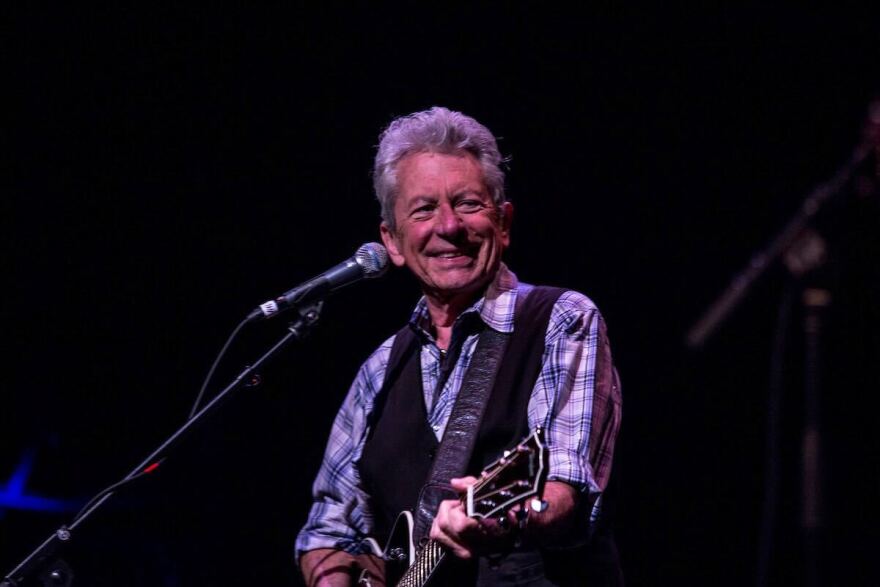
Joe Ely was an American singer, songwriter, and guitarist whose restless musical spirit helped define—and continually expand—the boundaries of Texas and American roots music.
Widely regarded as “one of the main movers” of Austin’s progressive country scene in the 1970s and ’80s, Ely forged a singular career that blended honky-tonk, rock and roll, folk, punk attitude, and border-town influences into a body of work that was both deeply regional and boldly cosmopolitan. Over more than five decades, he became not just a beloved Texas institution, but a revered figure among musicians worldwide, admired for his integrity, curiosity, and unflinching dedication to songcraft.
West Texas Roots
Joe Ely was born in Amarillo, Texas, and raised in Lubbock, a place whose stark geography and cultural contradictions would leave a permanent imprint on his music. The flat, wind-swept plains of the Texas Panhandle were far removed from the lush musical capitals of America, but they offered their own raw poetry. Lubbock was also the hometown of Buddy Holly, whose legacy loomed large over Ely’s generation. Holly’s example—proof that a kid from West Texas could change the world—was foundational for Ely and many of his peers.
Growing up, Ely absorbed a wide range of sounds. Country radio, rockabilly records, Mexican music drifting north from the border, folk songs, and early rock and roll all found their way into his musical consciousness. He learned guitar early and quickly developed a love for storytelling through song. That sense of narrative, grounded in place but open to imagination, would become one of his defining traits.
The Flatlanders and Early Collaborations
In the early 1970s, Ely became part of a creative triangle that would profoundly shape Texas music. Alongside fellow Lubbock natives Jimmie Dale Gilmore and Butch Hancock, he formed the Flatlanders. Though the group’s initial recordings went largely unnoticed at the time, their songs—spare, poetic, and steeped in West Texas atmosphere—would later be recognized as foundational texts of the progressive country movement.
The Flatlanders embodied a new approach to country songwriting, one that favored introspection and literary depth over commercial polish. Ely’s contributions to the group reflected his knack for vivid imagery and emotional directness. Even as the Flatlanders dissolved into individual careers, the creative bond between the three men endured, resurfacing in reunions and collaborative projects decades later.
Austin and the Progressive Country Movement
By the mid-1970s, Ely had relocated to Austin, Texas, a city undergoing a musical renaissance. Austin’s clubs—most notably the Armadillo World Headquarters—became melting pots where hippies, cowboys, rockers, and folkies mingled freely. This was the birthplace of progressive country, a loose, rebellious movement that rejected Nashville’s formulas in favor of authenticity and experimentation.
.
Joe Ely quickly emerged as one of the scene’s most dynamic figures. His self-titled debut album, Joe Ely (1977), announced him as a major new voice. Backed by an exceptional band that included David Grissom and Lloyd Maines, Ely combined traditional country forms with the energy of rock and the spirit of outlaw independence. His songs were populated by drifters, dreamers, and hard-living characters, all rendered with empathy and sharp detail.
Albums such as Honky Tonk Masquerade (1978) and Down on the Drag (1979) solidified Ely’s reputation. He was equally at home delivering a roadhouse barn-burner or a quiet, reflective ballad. His music honored tradition without being bound by it, a balancing act that defined the best of Austin’s progressive country era.
A Fearless Performer
Joe Ely’s reputation as a live performer became legendary. Onstage, he was a study in controlled intensity, capable of explosive energy one moment and intimate storytelling the next. He toured relentlessly, often playing far beyond the Texas circuit, taking his music to audiences who may never have heard of progressive country but immediately recognized its power.
One of the most remarkable chapters of Ely’s career was his association with British punk band The Clash. In the late 1970s, as punk and roots music unexpectedly intersected, Ely opened shows for The Clash in the United Kingdom. The pairing seemed improbable on paper, but it made perfect sense in practice. Ely’s music shared punk’s raw honesty, anti-pretension ethos, and emotional urgency.
These shows exposed Ely to a new audience and underscored his belief that great music transcends genre boundaries. His willingness to step outside expected lanes would remain a hallmark of his career.
Songwriting and Storytelling
At the heart of Joe Ely’s legacy is his songwriting. Ely possessed an uncommon ability to tell stories that felt both specific and universal. His songs often unfolded like short films, rich with sensory detail and emotional subtext. He wrote about the American road not as a romantic abstraction, but as a lived reality—full of freedom, loneliness, beauty, and danger.
Ely’s lyrics reflected a deep compassion for flawed characters. Whether he was singing about migrant workers, small-town lifers, or restless wanderers, he approached his subjects with dignity rather than judgment. His voice—weathered, expressive, and unmistakably Texan—gave those stories an added layer of authenticity.
Over time, his songwriting grew increasingly reflective. While early albums crackled with youthful urgency, later works revealed a mature artist grappling with memory, loss, faith, and endurance. Ely never stopped evolving, refusing to become a nostalgia act or repeat himself simply to satisfy expectations.
Crossing Borders and Expanding Horizons
Ely’s curiosity led him far beyond Texas. He developed a deep connection to Mexican music and culture, particularly the sounds of northern Mexico. Albums such as Love and Danger and Musta Notta Gotta Lotta incorporated Tex-Mex rhythms, accordion textures, and Spanish-language influences, expanding the vocabulary of American roots music.
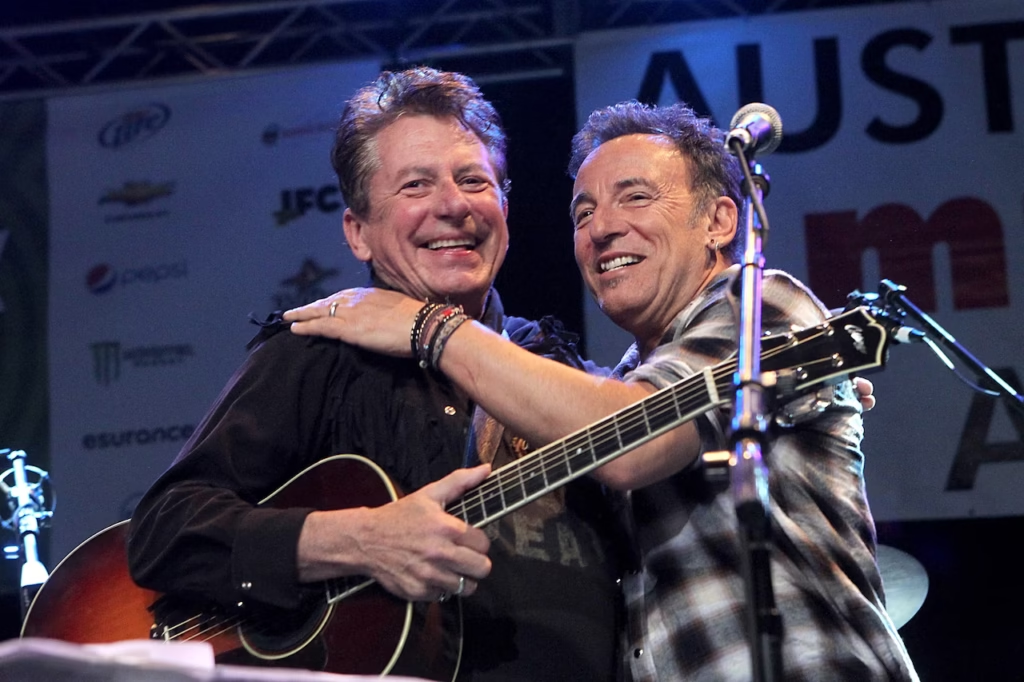
He also collaborated with an eclectic range of artists, including Bruce Springsteen, Los Super Seven, The Chieftains, and James McMurtry. Each collaboration revealed a different facet of Ely’s musical personality while reinforcing his core identity as a storyteller and seeker.
Rather than chasing trends, Ely followed his interests wherever they led. That openness kept his music vital and unpredictable well into his later years.
.
The Flatlanders Revisited
In the 2000s, Ely reunited with Jimmie Dale Gilmore and Butch Hancock to record new Flatlanders albums, including Now Again and Hills and Valleys. These records were not exercises in nostalgia but affirmations of enduring creative chemistry. The trio’s harmonies, weathered by time, carried a depth and warmth that only decades of shared history could produce.
The Flatlanders’ later work was widely praised and introduced their music to new generations of listeners. For Ely, these reunions served as both a homecoming and a reminder of the communal roots from which his solo career had grown.
Later Years and Enduring Influence
As he entered his seventies, Joe Ely showed no signs of slowing creatively, even as his touring schedule became more selective. His later albums were marked by introspection and grace, addressing themes of mortality, resilience, and spiritual searching. The fire of his youth was tempered by wisdom, but never extinguished.
Ely also became an elder statesman of Texas music, admired not only for his accomplishments but for his humility and generosity. Younger musicians sought his counsel, and peers spoke of him with reverence. He embodied a model of artistic integrity that prized honesty over hype and substance over spectacle.
Death and Legacy
Joe Ely died from Parkinson’s disease, dementia and pneumonia at his Taos, New Mexico, home on December 15, 2025, at the age of 78.[
He occupies a unique place in American music history: a bridge between country tradition and modern experimentation, between rural roots and global perspective. As one of the architects of Austin’s progressive country scene, he helped create space for countless artists who followed, proving that country music could be adventurous, inclusive, and intellectually rich without losing its soul.
A Lasting Voice
Joe Ely’s life and career defy easy categorization. He was at once a Texan traditionalist and a musical explorer, a fierce live performer and a quiet poet, a collaborator and an individualist. What unified all these facets was his unwavering commitment to truth in music.
In the end, Ely’s greatest achievement may be the trust he earned from listeners. When he sang, audiences believed him. They believed the worlds he described, the emotions he conveyed, and the journeys he invited them to share. That trust, built song by song over decades, is the mark of a truly great artist.
Joe Ely leaves behind more than albums and accolades. He leaves a road map for how to live a creative life—with courage, curiosity, and compassion—and a catalog of songs that will continue to travel far beyond the plains of West Texas, carrying his voice wherever people gather to listen, remember, and dream.
Check out Joe Ely on Amazon by clicking here.
If you found this interesting please share it with your friends and family, and check out some of our other articles on Musicians who Died in 2025.
.

Cool guy!