
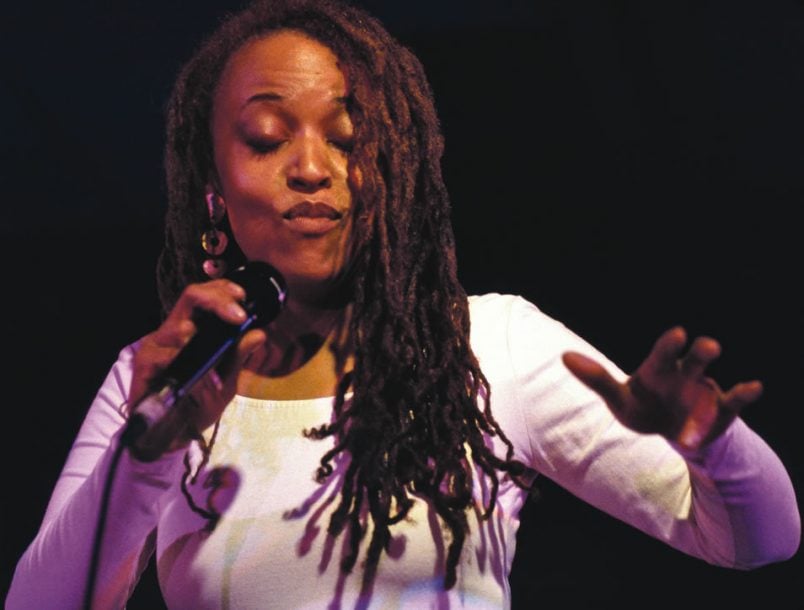
Cassandra Wilson was an American jazz singer, songwriter and producer whose deeply resonant contralto voice, adventurous musical instincts and extraordinary ability to move between genres made her one of the most important vocalists of her generation.
Born in Jackson, Mississippi, Wilson developed a musical identity that reached far beyond conventional jazz. She brought together jazz, blues, folk, country, soul, rock and contemporary music, creating performances that were intimate, atmospheric and unmistakably her own.
Her career included two Grammy Awards, numerous critically acclaimed recordings, collaborations with some of the most respected musicians in modern jazz, and the extraordinary honour of being named a National Endowment for the Arts Jazz Master in 2022. She was also described by Time magazine in 2001 as “America’s best singer,” a recognition of the singular qualities of her voice and artistry. (National Endowment for the Arts)
Growing Up in Jackson, Mississippi
Cassandra Wilson was born in Jackson, Mississippi, on December 4, 1955. Music surrounded her from an early age. Her father, Herman Fowlkes Jr., was a jazz guitarist and bassist, while her mother was a teacher who had a strong appreciation for Motown and popular music. This combination of jazz, rhythm and blues and popular music helped create the broad musical perspective that would become central to Wilson’s career.
She began playing piano as a child, reportedly starting at around six years old, and later took up guitar. By the age of 12 she was playing guitar and writing songs. Music was not simply something she listened to, it became a language through which she could express herself.
Her upbringing in Mississippi was equally important. The state had an enormous influence on American music, producing generations of blues musicians and contributing profoundly to gospel, soul, rock and jazz. Wilson absorbed that environment and carried its musical history with her throughout her career. Rather than seeing jazz as a closed musical tradition, she understood it as something connected to the wider American experience. That perspective would eventually become one of her greatest strengths.
Education and the Beginning of a Musical Career
Cassandra Wilson attended Millsaps College in Jackson, initially studying theater arts and philosophy. She later transferred to Jackson State University, where she earned a degree in mass communications in 1979. During this period she was already becoming increasingly involved with music. She performed with local groups, including the all-women band Past Present and Future, while continuing to develop her abilities as a vocalist and musician.
One particularly important influence was drummer Alvin Fielder, who helped Wilson deepen her understanding of jazz. Her early musical education was therefore unusually broad. She had formal academic interests, experience as a performer and exposure to the blues and jazz traditions of Mississippi.
After college, Cassandra Wilson spent time in New Orleans, another city with an extraordinary musical heritage. There she sought out musicians and mentors including Ellis Marsalis Jr. and Earl Turbinton. New Orleans added another dimension to her musical education before she made the decision that would change her career.
Moving to New York
In the early 1980s, Cassandra Wilson moved to New York City. The city was then one of the most important centres for adventurous jazz, and she quickly became involved with musicians who were challenging traditional ideas about the music. She met saxophonist Steve Coleman and became one of the founding members of the M-Base Collective, a group of musicians associated with an innovative approach to jazz that incorporated complex rhythms, improvisation and contemporary influences. For a vocalist, this was an unusual environment.
Wilson was surrounded by musicians interested in pushing jazz forward rather than simply reproducing its past. She also worked with Henry Threadgill’s avant-garde ensemble New Air and appeared on Air Show No. 1. Her early recordings demonstrated that she was prepared to take risks and operate outside conventional definitions of jazz singing. Her first recording as a leader came in the mid-1980s, with Point of View establishing Wilson as an artist worth watching. But the most significant transformation in her career was still to come.
Finding Her Voice
During the first years of her recording career, Cassandra Wilson experimented with contemporary jazz and different approaches to songwriting and performance. Eventually, however, she began searching for a more acoustic and roots-oriented sound. That search led to the album that changed everything, Blue Light ‘Til Dawn.
Released by Blue Note in 1993, the album represented a major turning point. Instead of concentrating primarily on the conventional jazz standards associated with many vocalists, Wilson drew heavily from blues, folk, country and roots music. The album included material associated with artists such as Robert Johnson, Van Morrison and Joni Mitchell, alongside original material.
What made the project remarkable was not simply the choice of songs. Wilson transformed them, she slowed down melodies, changed their atmosphere and used the deep, earthy character of her voice to make familiar material sound new. Her singing could be intimate and almost whispered one moment, then dark, powerful and emotionally overwhelming the next.
Blue Light ‘Til Dawn demonstrated that jazz could embrace American roots music without losing its sophistication. It also established the artistic formula that would define much of the rest of Cassandra Wilson’s career, take a song, strip away expectations and discover what else it might become.
A Distinctive Voice
Cassandra Wilson possessed one of the most recognisable voices in jazz. Her contralto was low, smoky and textured, but describing it simply as a “deep voice” fails to capture what made it special. She had an extraordinary sense of timing and phrasing. She could leave space between words, allowing silence to become part of the performance.
Unlike singers who depended on vocal fireworks, Wilson often achieved greater emotional impact through restraint. Her performances could feel almost conversational. That quality made her particularly effective when singing blues and folk material. She understood that these traditions were not merely about melody. They were about storytelling, atmosphere and emotional truth. Her voice seemed capable of carrying history.
Critic Gary Giddins praised her distinctive timbre and her ability to expand the boundaries of jazz by incorporating blues, country and folk. The National Endowment for the Arts similarly described her work as helping to expand the definition of jazz.
New Moon Daughter and Grammy Success
Cassandra Wilson followed Blue Light ‘Til Dawn with another landmark album, New Moon Daughter, released in 1995. The record continued her exploration of blues, folk, rock and jazz, combining covers with original material. It was a critical and commercial success and earned Wilson a Grammy Award. The album demonstrated that her success with Blue Light ‘Til Dawn had not been a one-off experiment, she had found an artistic identity.
Wilson was subsequently recognised as one of the leading jazz vocalists of the 1990s, receiving DownBeat magazine’s Female Jazz Vocalist of the Year award in 1995 and 1996. Her music attracted listeners who might not traditionally have considered themselves jazz fans. That was one of her greatest achievements. She did not simplify jazz to reach a wider audience, instead, she widened the definition of jazz.
Blood on the Fields
Wilson’s growing reputation also brought her into major collaborations. One of the most significant was her involvement with trumpeter and composer Wynton Marsalis’s Blood on the Fields, an ambitious jazz oratorio dealing with slavery and African American history. Wilson performed one of the leading roles in the work, which became the first jazz composition to receive the Pulitzer Prize for Music. Her involvement demonstrated the power and flexibility of her voice in a large-scale theatrical and musical setting. It also showed that Wilson was not simply a recording artist. She could become part of ambitious musical projects involving history, theatre, composition and improvisation.
Traveling Miles
In 1999, Wilson released Traveling Miles, a project inspired by one of the most influential musicians in jazz history, Miles Davis. Davis had been an important figure in Wilson’s musical development, and the album was not intended simply as a collection of Davis covers. Instead, Wilson interpreted his influence through her own artistic language.
This was typical of her approach to tribute albums. She rarely attempted to reproduce another artist’s work faithfully. She wanted to understand the spirit behind it and then make it her own. Her relationship with Davis’s music therefore became another opportunity for reinvention.
The album earned critical attention and further confirmed her position as an artist capable of connecting different eras of jazz. Blue Note notes that Traveling Miles followed her work on Blood on the Fields and reflected her continuing willingness to explore new territory. (Blue Note Records)
Continuing to Take Risks
Cassandra Wilson could easily have spent the rest of her career repeating the formula that had made her successful but she chose not to. Albums such as Belly of the Sun, Glamoured, Thunderbird, Loverly, Silver Pony and Another Country showed an artist who remained restless and curious.
Belly of the Sun incorporated blues, country, soul and rock. Glamoured placed greater emphasis on Wilson’s own songwriting, with around half of the material composed by her. Thunderbird explored contemporary production and elements of hip-hop and sampling. Loverly returned to jazz standards. Another Country again shifted direction, featuring mostly original material and being co-produced by Wilson and guitarist Fabrizio Sotti.
This constant movement was central to her identity, Wilson never appeared interested in fitting neatly into one category.
Billie Holiday and Coming Forth by Day
One of Cassandra Wilson’s most important later projects was Coming Forth by Day, released in 2015 to coincide with the centenary of Billie Holiday’s birth.
Holiday was one of the defining singers of the 20th century, and interpreting her repertoire presented an obvious challenge. Wilson approached the project from her own perspective rather than attempting to imitate Holiday. Her voice was fundamentally different from Holiday’s, and Wilson understood that. The result was an album that honoured Holiday while remaining unmistakably a Cassandra Wilson recording. Her interpretation demonstrated once again how she could engage with jazz history without becoming trapped by it.
The album became an important late-career statement and connected Wilson with one of the artists who had helped shape the tradition in which she worked. (Cassandra Wilson)
More Than a Jazz Singer
Although Cassandra Wilson is generally described as a jazz singer, that label does not fully explain her career. She was also a songwriter, guitarist, producer and musical interpreter.
She worked with musicians from very different backgrounds, including Pat Metheny, Dave Holland, Charlie Haden, Terence Blanchard, Bill Frisell, Angelique Kidjo and others. She also collaborated with musicians outside conventional jazz circles, demonstrating her ability to operate comfortably across musical boundaries.
Her willingness to work with different artists reflected her fundamental belief that music could not be restricted by genre. Blues could become jazz, Country could become jazz, Folk could become jazz, Rock could become jazz and jazz itself could continue changing.
Recognition and Honours
Cassandra Wilson’s contributions eventually earned recognition far beyond record sales and critical reviews.
She received two Grammy Awards and numerous other honours throughout her career. Among them were the Miles Davis Prize from the Festival International de Jazz de Montréal, the Mississippi Governor’s Award for Artistic Excellence in Music and a marker on the Mississippi Blues Trail. She also received honorary doctorates from institutions including Millsaps College, the New School and Berklee College of Music.
Perhaps the most significant recognition came in 2022, when the National Endowment for the Arts named Cassandra Wilson a Jazz Master. The NEA Jazz Masters Fellowship is among the highest honours available to American jazz musicians.
By that stage, Wilson’s influence was unquestionable. She had not simply succeeded within the existing jazz tradition, she had helped reshape it.
A Mississippi Artist
Despite achieving international fame, Cassandra Wilson’s connection with Mississippi remained fundamental to her identity.
The musical culture of the American South was present throughout her work. Blues, gospel, folk traditions and the storytelling culture of the region were woven into her artistic vocabulary.
Her hometown of Jackson also remembered her as an important cultural figure. Following her death, Jackson Mayor John Horhn described Cassandra Wilson as an extraordinary native daughter and emphasised the way she carried the sound, spirit and history of Mississippi wherever her music travelled.
That connection is important when considering Wilson’s legacy. She was a global jazz artist, but she never had to abandon her roots to achieve that status. Instead, she made those roots part of her international appeal.
The Legacy of Cassandra Wilson
Cassandra Wilson’s greatest contribution may have been the freedom she gave other singers. She demonstrated that a jazz vocalist did not have to limit herself to the traditional songbook. She showed that a singer could perform Robert Johnson, Joni Mitchell, Van Morrison, Miles Davis and Billie Holiday while maintaining a coherent personal identity.
She also proved that a powerful voice does not necessarily have to be loud. Her artistry was based on atmosphere, phrasing, emotional intelligence and an extraordinary understanding of space.
For younger singers, Wilson provided a model of independence. She demonstrated that commercial success did not have to come at the expense of artistic exploration.
Her recordings remain particularly important because they do not sound as though they were designed for a particular moment in time. They breathe, they move slowly, they invite repeated listening and they continue to reveal different details with time.
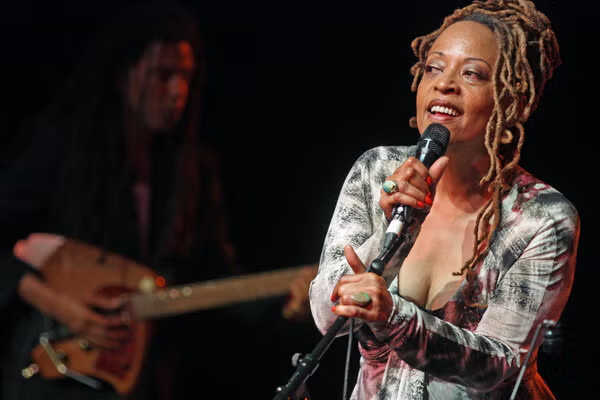
Remembering Cassandra Wilson
Cassandra Wilson died on September 1, 2026, leaving behind a body of work that stretched across more than four decades.
Her death brought an end to the life of one of the most distinctive voices in modern jazz, but it did not bring an end to her music. Her recordings remain, her influence remains, and the artists she inspired will continue to carry elements of her musical philosophy forward.
Wilson understood something fundamental about jazz, the tradition survives because musicians are willing to change it.
She respected the past without becoming imprisoned by it. She embraced contemporary ideas without abandoning history. She could sing a centuries-old blues tradition and make it feel intimate and contemporary. That balance was rare.
Her career was ultimately a journey toward artistic freedom. From Jackson, Mississippi, to the New York avant-garde, from Blue Note Records to the world’s greatest concert halls, Wilson continually searched for new ways to express herself.
She never needed to be the loudest voice in the room, her voice was enough, deep, smoky, expressive and unmistakable, it became one of the defining sounds of modern jazz.
Cassandra Wilson leaves behind more than two Grammy Awards, acclaimed albums and prestigious honours. She leaves behind an example of what it means to be an artist: curious, courageous, independent and unwilling to accept that music must stay within predetermined boundaries.
For listeners discovering her work for the first time, there is an extraordinary catalogue waiting to be explored, from Blue Light ‘Til Dawn and New Moon Daughter to Traveling Miles, Loverly and Coming Forth by Day.
And for those who had listened to her for decades, her passing is a reminder of just how rare her combination of voice, musicianship and imagination truly was.
Check out Cassandra Wilson on Amazon by clicking here.
If you found this interesting please share it with your friends and family, and check out some of our other articles on Musicians who Died in 2026.
.
