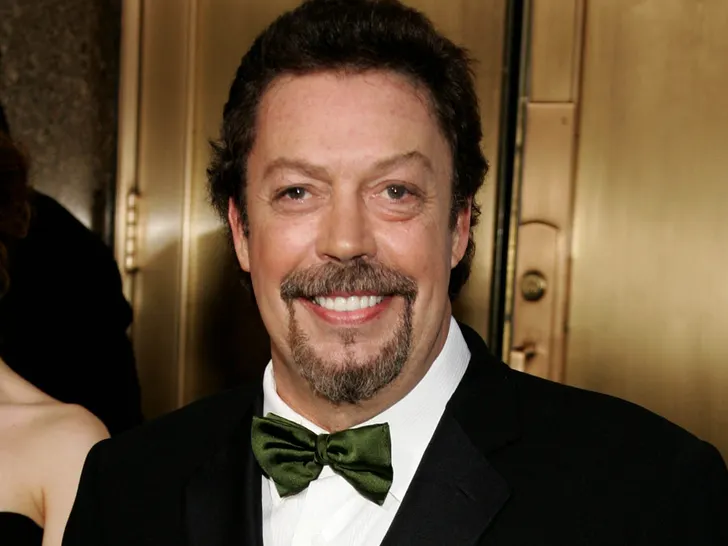
Tim Curry was one of those rare performers whose name became almost inseparable from some of the most memorable characters in popular culture.
With his distinctive voice, extraordinary theatrical presence and remarkable ability to move between comedy, horror, drama, fantasy and musical theatre, Curry created a body of work that spanned almost six decades. Although he became internationally famous as Dr. Frank-N-Furter in The Rocky Horror Picture Show, his career was far too extensive to be defined by a single role.
Early Life in England
Tim Curry was born Timothy James Curry on April 19, 1946, in Grappenhall, Cheshire, England. His father, James Curry, was a Royal Navy chaplain, while his mother, Patricia, worked as a school secretary. Because of his father’s career, Curry spent parts of his childhood living in different parts of Britain and overseas before the family eventually settled in Plymouth.
His interest in performance developed early. Curry was a talented singer as a child and eventually became particularly interested in acting. After attending Kingswood School in Bath, Somerset, he went on to study English and drama at the University of Birmingham, graduating in 1968. His university education gave him a strong grounding in literature and theatre, but it was the professional stage that would provide the beginning of his remarkable career.
Curry was not born into a traditional show-business family, and his route into acting was not necessarily straightforward. What he possessed from an early age was an enormous personality and a natural ability to command attention. Those qualities would become fundamental to almost every major performance he gave.
The Stage Comes First
Before Hollywood knew his name, Tim Curry was a theatre actor, his first major professional role came in the original London production of Hair in 1968. It was an important beginning because the production placed Curry in the middle of the changing theatrical culture of the late 1960s. It was also where he met Richard O’Brien, a meeting that would eventually change the course of his career.
O’Brien would go on to create The Rocky Horror Show, and Curry would become its most famous performer.
Tim Curry’s early stage work demonstrated that he was far more than an actor who happened to be good at playing eccentric characters. He was a highly trained performer who understood voice, movement, comedy, timing and the importance of connecting with a live audience.
Theatre would remain an important part of his career throughout his life. He eventually earned three Tony Award nominations, recognising his performances in productions including Amadeus, My Favorite Year and Spamalot. (Reuters)
The Rocky Horror Show
In 1973, Tim Curry took on the role that would transform his career, Richard O’Brien’s The Rocky Horror Show opened in London with Curry playing Dr. Frank-N-Furter, the flamboyant scientist at the centre of the story. The character was unlike anything Curry had previously played, combining outrageous theatricality, sexuality, humour and menace.
Curry understood immediately that Frank-N-Furter had to be larger than life, his interpretation was highly distinctive. Rather than simply playing the character as a conventional stage villain, he created someone charismatic, funny, seductive and unpredictable. His voice became an important part of the performance, as did his physical presence and extraordinary confidence.
The musical became a sensation, and Curry reprised the role for the 1975 film adaptation, The Rocky Horror Picture Show, which would eventually become one of the most famous cult films ever made.
Becoming Dr. Frank-N-Furter
The Rocky Horror Picture Show was not an immediate mainstream success. Instead, it gradually developed an extraordinary following through midnight screenings and word of mouth. Audiences began returning again and again. They dressed as the characters, shouted responses at the screen, sang along with the songs and transformed screenings into events rather than ordinary cinema visits. At the centre of this phenomenon was Curry’s Frank-N-Furter.
The performance became one of the defining examples of an actor creating a character that was larger than the production itself. Curry’s portrayal was flamboyant without being empty, funny without losing its edge and theatrical without appearing artificial.
Frank-N-Furter also became an important cultural figure for audiences who felt outside conventional society. Rocky Horror celebrated individuality, freedom of expression and the rejection of social expectations, and Curry’s performance became central to that message. More than 50 years after the film’s release, the character remains instantly recognisable.
.
From Cult Star to Hollywood Actor
The enormous success of Rocky Horror could easily have trapped Tim Curry into a career where he was repeatedly asked to play variations of Frank-N-Furter, instead, he continually looked for different opportunities.
During the late 1970s and early 1980s, he appeared in productions including The Shout, Times Square, The Ploughman’s Lunch and Annie. His performance as Rooster Hannigan in the 1982 film version of Annie gave audiences another opportunity to see his talent for playing theatrical villains while incorporating comedy and music. (The Guardian)
Curry was particularly good at playing characters who were morally questionable but still entertaining to watch. He understood that villains did not necessarily have to be completely serious. Sometimes the most memorable villains were the ones who enjoyed being villains.
Legend and the Lord of Darkness
One of his most visually spectacular film roles came in Ridley Scott’s 1985 fantasy film Legend.
Tim Curry played Darkness, a demonic ruler whose appearance was as striking as his personality. The elaborate makeup and enormous horns transformed the actor physically, but Curry’s performance underneath the makeup was what made the character memorable. He gave Darkness a combination of menace, elegance and theatrical humour. The role also demonstrated how effectively Curry could use his voice and physicality to create a character. Even when hidden beneath layers of makeup and costume, his personality remained unmistakable.
Legend has subsequently developed its own devoted following, and Curry’s performance remains one of its most celebrated elements.
Clue and His Comic Genius
The same year that Tim Curry appeared in Legend, he also starred in one of his most beloved comedies, Clue as Wadsworth the butler, Curry was given the opportunity to demonstrate just how good he was at rapid-fire comedy. The film’s complicated plot and multiple endings have helped Clue develop a lasting cult following, but Curry’s performance is one of the principal reasons audiences continue to return to it.
His energy is almost impossible to ignore. Wadsworth is constantly moving, explaining, reacting and delivering dialogue at extraordinary speed. Curry manages to make the character both ridiculous and authoritative, turning the butler into one of the film’s central attractions.
For viewers who knew Curry primarily from Rocky Horror or Legend, Clue revealed another side of his talent., he was genuinely funny.
Pennywise in Stephen King’s It
If Frank-N-Furter made Tim Curry a cult icon, Pennywise the Dancing Clown gave him an entirely different kind of immortality.
In 1990, Curry played Pennywise in the television miniseries adaptation of Stephen King’s It. The character was terrifying because Curry understood that Pennywise did not need to behave like an ordinary horror monster. He could smile, joke and appear almost friendly before suddenly becoming deeply threatening.
Curry’s performance relied heavily on voice and expression. His exaggerated delivery and unsettling manner created a version of Pennywise that remained firmly embedded in the memories of viewers. The miniseries became a major part of horror culture, and Curry’s Pennywise continued to be discussed decades later.
Even after later actors took on the character in new adaptations, Curry’s interpretation retained a special place among horror fans.
Annie, Home Alone 2 and Family Audiences
Tim Curry’s filmography also included performances that introduced him to much younger audiences.
He appeared as the concierge in Home Alone 2: Lost in New York, bringing his familiar comic timing to a major family film. His performance helped make the hotel scenes particularly memorable. He later played Long John Silver in Muppet Treasure Island, another role that allowed him to combine humour, adventure and theatricality. His voice and physical performance were ideally suited to the larger-than-life world of the Muppets.
These films demonstrated an important part of Curry’s appeal. He could be frightening to horror audiences and hilarious to children without either side of his career seeming artificial.
An Extraordinary Voice
Tim Curry possessed one of the most recognisable voices in entertainment, his rich baritone could be sinister, comic, elegant or warm, sometimes within the same sentence which made him particularly successful as a voice actor.
He voiced numerous animated characters throughout his career, including Captain Hook in Peter Pan and the Pirates, Hexxus in FernGully: The Last Rainforest, Sir Nigel Thornberry in The Wild Thornberrys and Chancellor Palpatine/Darth Sidious in Star Wars: The Clone Wars.
His work on Peter Pan and the Pirates earned him a Daytime Emmy Award, adding another major achievement to a career that already included theatre, film and television recognition. (People.com)
Voice acting became particularly important later in Curry’s career because it allowed him to continue performing even when physical limitations made traditional acting more difficult.
A Career on the Stage
Despite his success in Hollywood, Tim Curry never stopped being a theatre performer at heart. He appeared in major productions throughout his career, including Amadeus, The Pirates of Penzance, My Favorite Year and Spamalot. His work in theatre earned him three Tony nominations, a significant achievement that reflected the respect he received from the theatrical community.
His stage background also helps explain why his film performances were so distinctive, he knew how to project, use his voice and understood timing and physical comedy. Most importantly, he understood the relationship between performer and audience.
Whether he was performing in front of hundreds of people in a theatre or millions of people through a television screen, Curry had an extraordinary ability to make his presence felt.
Music Was Another Part of His Career
Tim Curry was also a singer and musician.
His musical ability was an important part of his success in The Rocky Horror Show, but his interest in music extended beyond musical theatre. He released several albums during his career and explored rock and pop music alongside his acting work. His musical performances demonstrated that he was not simply an actor who could sing when a role required it. Music was another genuine part of his artistic identity.
That combination of acting and music made him particularly well suited to theatrical productions.
His Personal Approach to Acting
One of the most interesting aspects of Tim Curry’s career was his willingness to take risks, he never seemed particularly interested in becoming a conventional leading man. Instead, he gravitated towards unusual characters, villains, eccentrics and people who occupied the edges of society. That decision probably helped make his career more enduring.
While many actors become associated with a particular type of handsome leading role, Curry created characters that audiences remembered because they were unusual.
He was never afraid of being strange, he was never afraid of being theatrical, and he was never afraid of being different, that quality became one of his greatest strengths.
The Stroke and His Later Career
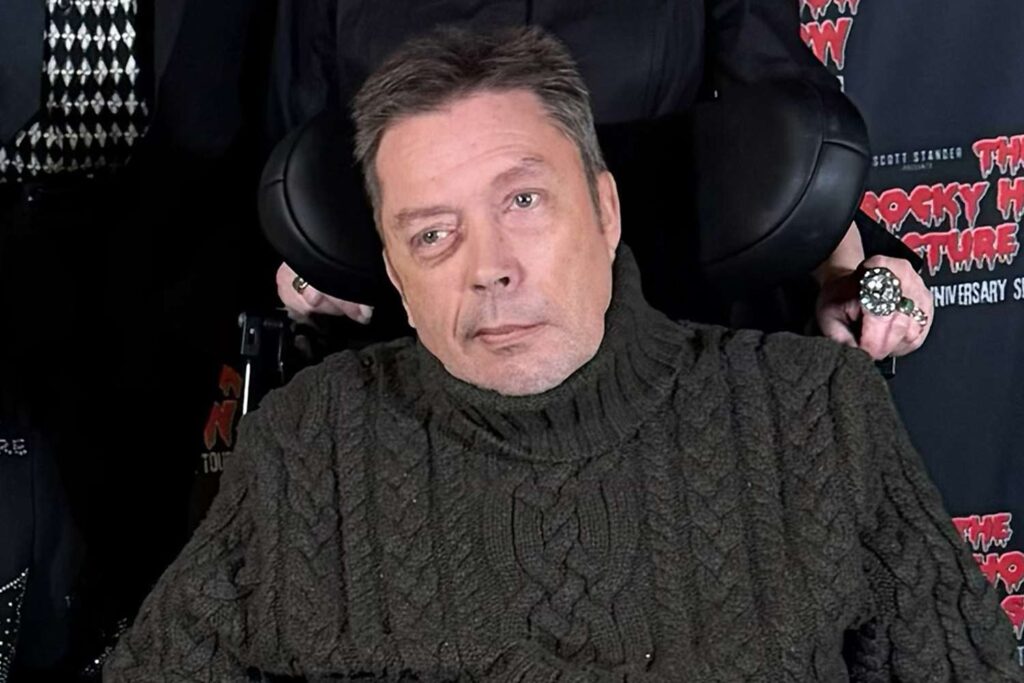
In 2012, Tim Curry suffered a major stroke that dramatically changed his life and career. The stroke left him partially paralysed and affected his mobility and speech, resulting in a significant reduction in his on-screen work. However, Curry did not simply disappear, he continued to work in voice acting and remained connected to the entertainment world. He also continued to make appearances connected with Rocky Horror, a production that had remained such an important part of his life.
His resilience became an important part of the story of his later years, but it is equally important not to allow the stroke to overshadow everything that came before it.
Tim Curry’s career was already extraordinary long before 2012, the stroke changed what he could physically do, but it did not erase the work he had created.
.
A Performer Who Crossed Generations
One of the greatest achievements of Tim Curry’s career was his ability to remain relevant to completely different generations.
Someone discovering The Rocky Horror Picture Show in the 1970s could know Curry as Frank-N-Furter.
A child growing up in the 1980s might have encountered him through Annie or Legend.
A teenager in the 1990s might have been terrified by Pennywise or laughed at Clue.
A younger generation could recognise his voice from The Wild Thornberrys, Star Wars: The Clone Wars or video games.
Few actors have managed to occupy so many different corners of popular culture.
Health and death
A heavy cigarette smoker, Tim Curry stated that he had used the drugs hashish and cocaine, and he also spent time in alcohol rehabilitation, but did not consider himself an alcoholic.
On July 13, 2012 while receiving a massage, Curry suffered a major stroke which required brain surgery. He used a wheelchair afterwards and continued to experience mobility issues, particularly in his left arm and leg, and also affected his short-term memory. In September 2025, Curry said he was still unable to walk.
Tim Curry died at his home in Toluca Lake, Los Angeles, on August 25. 2026, aged 80.
Check out Tim Curry on Amazon by clicking here.
If you found this interesting please share it with your friends and family, and check out some of our other articles on Musicians who Died in 2026.
.
