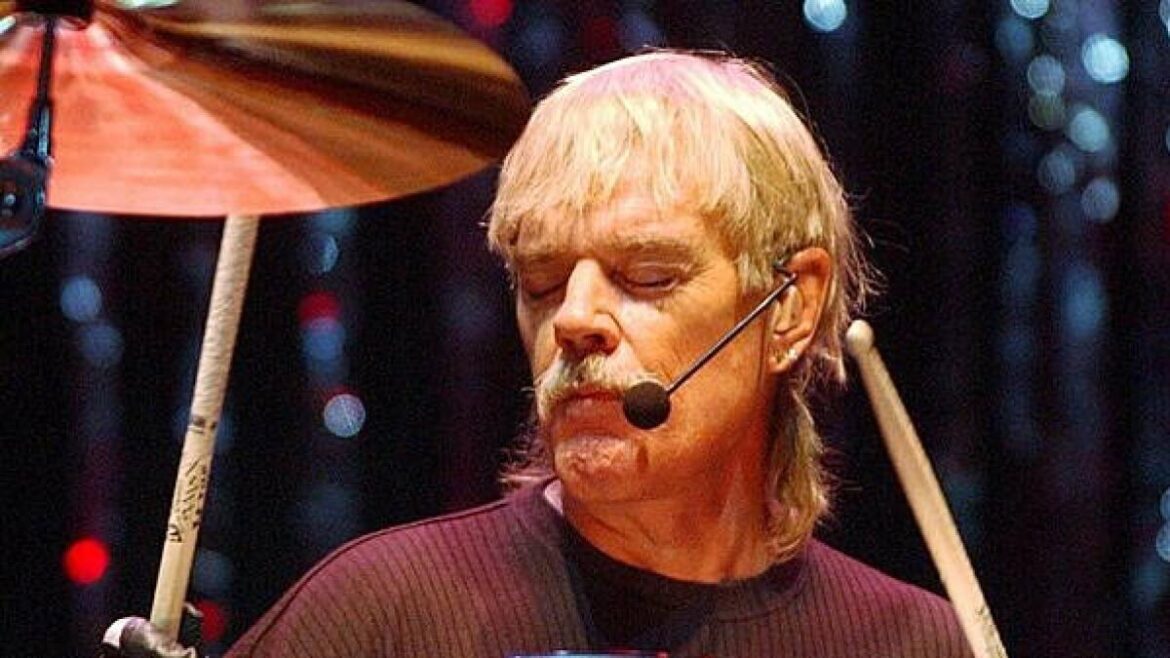
Frank Beard was an American drummer whose name became inseparably linked with one of the most distinctive rock bands in history, ZZ Top. For more than five decades, Beard provided the powerful, precise and unmistakably swinging rhythmic foundation beneath guitarist Billy Gibbons and bassist Dusty Hill.
Although ZZ Top became famous for its bearded guitarist and bassist, sunglasses, hats, sharp suits and larger-than-life image, the man behind the drums had an important distinction: Frank Beard was famously the member who did not have a long beard. Behind that visual joke was a musician of considerable ability whose drumming was fundamental to the band’s sound.
Early Life in Texas
Frank Beard was born Frank Lee Beard on June 11, 1949, in Frankston, Texas, and grew up in Irving, near Dallas. He attended Irving High School and developed an interest in drums during his teenage years.
Like many young musicians who came of age during the explosion of rock and roll, Beard was drawn to the energy and excitement of live music. He began playing drums while still young and soon discovered that performing could become more than a hobby. His early musical career took him through several Texas groups, including the Cellar Dwellers, the Hustlers, the Warlocks and American Blues. It was during this period that he developed a particularly important musical friendship with bassist Dusty Hill. That relationship would eventually help create one of rock’s most enduring rhythm sections.
Beard’s early career also included an unusual episode involving The Zombies. He and Dusty Hill were among musicians who performed with an unauthorized American touring version using the British band’s name. The strange episode became one of the more entertaining footnotes in Beard’s pre-ZZ Top history.
Meeting Billy Gibbons
The most important turning point in Frank Beard’s career came in 1969. Billy Gibbons, guitarist and vocalist of Houston psychedelic-rock group The Moving Sidewalks, was developing a new musical project. Beard became involved with the emerging ZZ Top and subsequently helped bring Dusty Hill into the lineup. Sources differ slightly in how the band’s early formation is described, but Beard, Hill and Gibbons soon became the trio that would define ZZ Top. The combination was remarkably effective.
Gibbons supplied the gritty, blues-influenced guitar work. Hill delivered the bass and vocals. Beard provided the rhythmic engine that allowed the two string players to create ZZ Top’s famous combination of blues, boogie, rock and Texas swagger.
The band’s first recorded material appeared around the beginning of the 1970s, and ZZ Top’s First Album followed in January 1971. The record established the group’s raw blues-rock identity and began a remarkable recording career. Interestingly, Beard was initially credited under the nickname “Rube Beard” on some early ZZ Top releases, including the first album and Tres Hombres. He subsequently appeared under his real name.
The Sound of ZZ Top
It is easy to underestimate a drummer in a power trio because the guitarist and vocalist often receive most of the attention. In ZZ Top’s case, however, Frank Beard’s contribution was essential. The band’s music depended heavily on groove.
ZZ Top’s songs frequently combined blues structures with hard-rock guitar tones, syncopated rhythms and an unmistakable Texas swing. Beard’s drumming provided the pulse that allowed Gibbons’ guitar to sound simultaneously heavy, loose and funky.
The official ZZ Top biography describes Beard as both a roots and progressive drummer and recognizes his importance to the group’s powerful stage and studio presence. His playing was not simply about keeping time. He knew when to push, when to hold back and when to allow the guitar and bass to occupy the spotlight. That restraint became one of his greatest strengths.
On songs such as “La Grange,” “Tush,” “Gimme All Your Lovin’,” “Sharp Dressed Man” and “Legs,” Beard’s drumming helped create the grooves that made ZZ Top immediately recognizable. His style was powerful without being unnecessarily complicated. The result was music that could work equally well in a smoky club, on a concert stage, on the radio or through the speakers of an MTV-era television set.
.
From Texas Boogie to International Stardom
During the 1970s, ZZ Top gradually expanded from a Texas-based blues-rock attraction into an internationally recognized rock act. Albums such as Rio Grande Mud, Tres Hombres, Fandango!, Tejas, Degüello and El Loco helped establish the group’s reputation.
The band’s music retained its blues foundation while gradually becoming more adventurous. Beard and Hill were particularly important to this development because their rhythm section gave Gibbons enormous freedom. The trio’s chemistry was one of ZZ Top’s defining characteristics.
For decades, the same three musicians performed together. That longevity was extraordinary in rock music, where changing musical tastes, disagreements, substance abuse, personal conflicts and commercial pressures frequently break bands apart. ZZ Top survived all of those challenges.
The Eliminator Era
ZZ Top’s transformation during the 1980s made Frank Beard and his bandmates global superstars.
The 1983 album Eliminator represented a dramatic change in presentation. Synthesizers, programmed elements, polished production and an increasingly sophisticated visual identity were incorporated into the band’s blues-rock foundation. The result was enormously successful. Songs including “Gimme All Your Lovin’,” “Sharp Dressed Man” and “Legs” became international hits, while their highly memorable music videos turned Gibbons, Hill and Beard into MTV icons.
The visual contrast between the three musicians became part of popular culture. Gibbons and Hill were instantly recognizable because of their enormous beards, dark sunglasses and hats. Beard, ironically, was the clean-shaven drummer whose surname suggested precisely the opposite appearance. The joke became part of ZZ Top’s mythology.
Yet Frank Beard’s importance was musical rather than visual. His drumming helped preserve the band’s earthy groove even as the production became increasingly modern.
The Man Behind the Kit
Frank Beard was generally less flamboyant publicly than Billy Gibbons and Dusty Hill and that difference was important to ZZ Top’s balance. Gibbons became the charismatic guitar hero. Hill was the imposing bassist and vocalist. Beard often appeared as the quieter member who simply got on with the job.
That understated personality made his musicianship even more important. He did not need to dominate the stage to dominate the rhythm. Behind the kit, Beard was responsible for helping create the musical architecture that allowed ZZ Top’s songs to work. His playing gave the band’s music its forward movement and helped maintain the distinctive relationship between bass and guitar.
The trio’s sound was never simply “guitar, bass and drums.” It was a conversation between three musicians who had spent decades learning exactly where the other two would go next.
Personal Struggles and Recovery
Like many musicians who experienced enormous success during the 1970s, Frank Beard also struggled with substance abuse. By the late 1970s, his drug use had become serious enough to affect his personal and professional life. ZZ Top eventually went on hiatus while Beard dealt with his addiction and entered rehabilitation. His recovery became an important part of his personal story.
Rather than allowing his problems to destroy his career, Beard eventually returned to music and continued working with ZZ Top for decades. The band’s survival through this period was remarkable. The three musicians would ultimately maintain one of the longest-lasting lineups in rock history.
Life Away From ZZ Top
Frank Beard’s life was not solely about touring and recording, he married Catherine Alexander in 1978, although the marriage ended in divorce in 1981, then in 1982, he married Debbie Meredith. They had three children together.
Beard also developed a life away from the stage in Texas. He was associated with his Top 40 Ranch in Richmond and was known to enjoy golf and participate in local events. His connection with Texas remained strong throughout his life.
Although ZZ Top became a global phenomenon, the band never abandoned its Texas identity. That sense of place was an important part of its appeal, and Beard embodied that connection.
The Rock & Roll Hall of Fame
In 2004, ZZ Top received one of rock music’s highest honors when the group was inducted into the Rock & Roll Hall of Fame. The induction recognized the extraordinary career of Gibbons, Hill and Beard and their influence on rock, blues and popular culture. By then, ZZ Top had already spent more than three decades together.
Their career was unusual not simply because of its length but because the core lineup remained intact for so long. Beard and Hill’s rhythm section became one of the most recognizable in American rock. The group’s induction also confirmed that ZZ Top was much more than a successful touring act. Its music had become part of the permanent history of rock and roll.
The Loss of Dusty Hill
One of the greatest personal and musical losses of Frank Beard’s later life came in 2021, when Dusty Hill died at the age of 72.
Hill had been Beard’s rhythm-section partner for more than five decades. The pair had played together in earlier bands before becoming part of ZZ Top, making their musical relationship one of the longest-running partnerships in rock.
After Hill’s death, Elwood Francis joined ZZ Top on bass, allowing the group to continue performing. Beard and Gibbons remained committed to carrying the band’s music forward, but the loss inevitably changed the character of the band.
For Beard, the passing of the man with whom he had shared the stage for most of his adult life represented the end of an extraordinary musical partnership.
.
His Final Years
Frank Beard continued to perform with ZZ Top into his seventies. Even after more than five decades on the road, he remained an important part of the band’s live identity.
In 2026, however, health problems led him to step away from touring. Michael Monahan temporarily filled the drum position for performances while Beard dealt with his health. Recent cancellations brought renewed attention to his condition.
Frank Beard died on August 17, 2026, at his ranch in Richmond, Texas, while in hospice care and surrounded by family. He was 77.
Billy Gibbons paid tribute to his longtime bandmate and friend, remembering Beard as an innovative drummer and a true Texan. His death came only a few years after the loss of Dusty Hill, meaning that the classic ZZ Top trio of Gibbons, Hill and Beard had finally come to an end.
A Legacy Written in Rhythm
Frank Beard’s legacy cannot be separated from ZZ Top. For more than 50 years, he sat behind the drum kit while the band transformed from a Texas blues-rock trio into a worldwide institution.
ZZ Top sold tens of millions of records, filled arenas, appeared on MTV and influenced generations of musicians. The band successfully combined traditional blues with hard rock, boogie, humor, technology and a distinctive visual identity. Through all of those changes, Beard’s role remained remarkably consistent. He supplied the beat. His drumming gave ZZ Top the foundation on which its music was built. His partnership with Dusty Hill created an exceptionally tight rhythm section, while his ability to adapt to the band’s changing sound helped ZZ Top remain relevant across multiple generations.
There is also something fitting about Beard’s reputation. His bandmates were famous for their enormous beards, while Frank Beard’s surname became one of rock’s great visual jokes. But behind the humor was a serious musician who rarely needed to seek the spotlight. He let the music speak.
Check out ZZ Top on Amazon by clicking here.
If you found this interesting please share it with your friends and family, and check out some of our other articles on Musicians who Died in 2026.
.
