
Victor Willis was an American singer, songwriter, actor, and stage performer best known as the original lead vocalist and co-songwriter of the internationally successful disco group the Village People.
Possessing a rich baritone voice, charismatic stage presence, and a background in theater, Willis became one of the defining voices of the disco era during the late 1970s. His performances on songs such as Y.M.C.A., Macho Man, In the Navy, and Go West helped establish the group as one of the most recognizable musical acts in popular culture. Beyond his work as a performer, Willis was an accomplished songwriter whose creative contributions extended far beyond the stage. His legal victories concerning copyright ownership also had a lasting impact on the rights of songwriters in the United States, making him an influential figure in music publishing as well as entertainment.
Early Life and Family Background
Victor Willis was born Victor Edward Willison July 1, 1951, Willis was raised in a deeply religious household. His father served as a Baptist preacher, and the church played a central role in his childhood. Like many African American singers who would later enter popular music, Willis received his earliest musical education through gospel singing. Church services provided opportunities to develop vocal strength, harmony, rhythm, and confidence before live audiences. The spiritual discipline and emotional expressiveness that characterized gospel music became permanent features of his singing style, even after he transitioned into secular music.
Growing up in this environment also instilled a strong appreciation for performance. Music in the church involved not only singing but storytelling, dramatic expression, and communication with an audience. These experiences proved invaluable during his later career as both a stage actor and recording artist.
Training in Acting and Dance
Recognizing his artistic ambitions, Victor Willis pursued formal training in acting and dance. Rather than limiting himself to singing, he sought to become a complete performer capable of succeeding on the musical stage. This decision reflected the increasingly multidisciplinary nature of theater during the late twentieth century, where performers were expected to sing, dance, and act with equal skill.
His professional journey brought him to New York City, where he joined the renowned Negro Ensemble Company, an organization established to promote African American actors, playwrights, directors, and theatrical productions. Membership in the company provided Willis with valuable experience working alongside respected performers and creative artists while exposing him to challenging dramatic material.
The Negro Ensemble Company served as an important launching pad for numerous Black performers during the 1960s and 1970s. For Willis, it offered professional discipline and opportunities to refine his craft beyond musical performance alone. His experience there strengthened his acting abilities while broadening his artistic outlook.
Success on the Musical Stage
Victor Willis soon established himself as a talented musical theater performer. Among his most notable accomplishments was appearing in the original Broadway production of The Wiz in 1976. The musical, an African American adaptation of The Wonderful Wizard of Oz, became a landmark production in Broadway history. Its energetic music, choreography, and imaginative staging resonated strongly with audiences and critics alike.
Participation in The Wiz allowed Willis to demonstrate not only his vocal abilities but also his skills as an actor and dancer. His involvement in such a prestigious production enhanced his professional reputation and opened additional opportunities in entertainment. He later participated in the Australian production of the musical, expanding his international performing experience and introducing his talents to audiences beyond the United States.
Co-Founding Village People
Although his theatrical career was flourishing, an even greater opportunity emerged during the mid-1970s. French producers Jacques Morali and Henri Belolo were developing an ambitious disco project that would become Village People. The concept centered on exaggerated masculine archetypes, including a policeman, construction worker, cowboy, Native American, biker, leatherman, and military figures, combined with infectious dance music.
Victor Willis became one of the group’s founding members and quickly emerged as its unmistakable lead vocalist. Unlike some groups in which lead singing duties rotated among members, Village People’s recordings relied heavily on Willis’s commanding voice. His energetic delivery, soulful phrasing, and theatrical confidence distinguished the group’s recordings and gave many of their songs immediate recognizability.
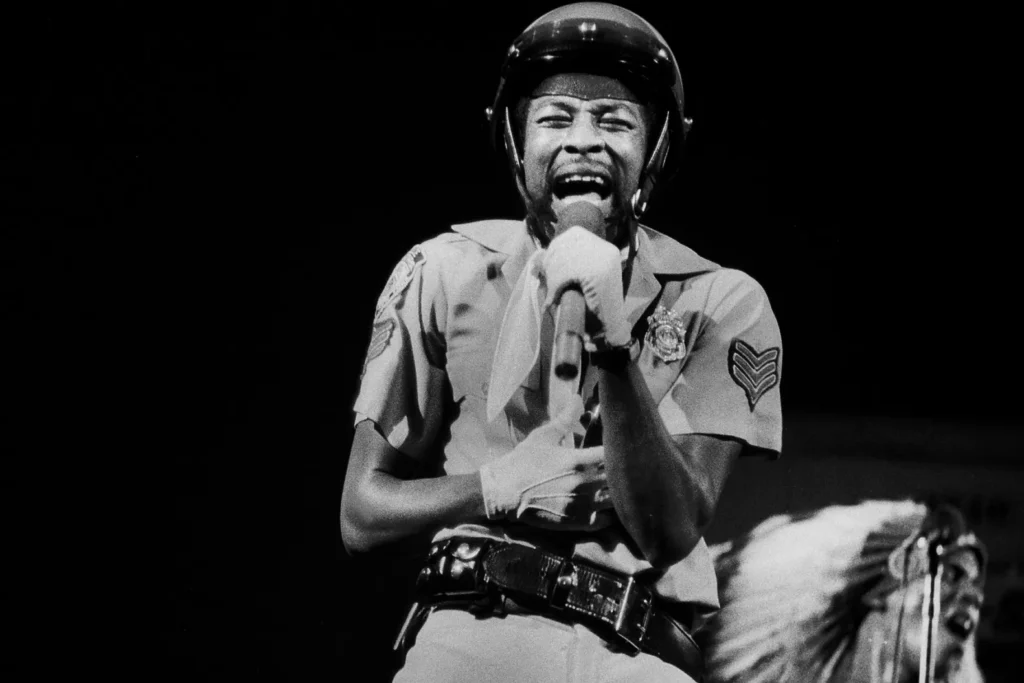
Within Village People, Willis typically appeared dressed either as a policeman or a naval officer, costumes that became central elements of the group’s visual identity. These costumes were inspired by American occupational stereotypes and popular imagery, creating instantly recognizable characters. While the costumes attracted attention, it was Willis’s vocal performances that provided the emotional center of the group’s music.
International Stardom During the Disco Era
Village People rapidly became one of the defining acts of the disco movement. Their songs combined danceable rhythms, memorable choruses, humor, theatricality, and polished studio production. The group achieved remarkable international success, selling millions of records while performing throughout North America, Europe, Australia, Asia, and Latin America.
A major reason for this success lay in Victor Willis’s songwriting partnership. He co-wrote virtually all of the group’s biggest hits, helping craft songs whose melodies and lyrics proved both commercially successful and culturally enduring. Unlike many performers who simply recorded material written by others, Willis actively participated in the creative process that shaped Village People’s musical identity.
.
Signature Songs and Songwriting
Among these compositions, Y.M.C.A. became one of the most successful popular songs ever recorded. Released in 1978, its instantly recognizable chorus and accompanying arm movements transformed it into a worldwide cultural phenomenon. The song transcended the disco era, becoming a fixture at sporting events, weddings, political rallies, celebrations, and countless public gatherings. Decades after its release, it remained one of the most recognizable songs in popular music.
Other hits followed. Macho Man humorously celebrated exaggerated masculinity while becoming a dance-floor favorite. In the Navy combined military imagery with energetic rhythms and memorable hooks. Go West, initially a commercial success for Village People, later achieved renewed international popularity through a cover version by Pet Shop Boys. Each of these songs demonstrated Willis’s ability to blend accessible lyrics with memorable melodies.
Influence on Disco Culture
Village People’s music also reflected the broader cultural landscape of the late 1970s. Disco represented diversity, nightlife, freedom of expression, and dance culture. Although critics sometimes dismissed disco as lightweight entertainment, the genre profoundly influenced later developments in dance music, electronic music, pop production, and LGBTQ+ culture. Village People occupied a unique place within this movement by combining theatrical presentation with sophisticated pop craftsmanship.
Departure from Village People
Despite the group’s extraordinary success, Victor Willis left Village People after only a few years. Creative differences, business disputes, and the pressures associated with international fame contributed to his departure. Although later versions of Village People continued performing with replacement singers, many fans regarded Willis as the group’s definitive lead vocalist.
Solo Career and Later Musical Activities
Following his departure, Victor Willis pursued solo recording projects while continuing to work in music and entertainment. Although none of his solo releases matched the commercial success of Village People, they showcased his versatility and commitment to artistic independence. He also remained involved in songwriting and production while making occasional appearances connected to his earlier achievements.
The 1980s proved challenging for many disco performers as public tastes shifted dramatically. Nevertheless, Village People’s music survived changing fashions because of its memorable songwriting and broad appeal. Songs written by Willis continued to receive extensive radio airplay, licensing, and commercial use around the world.
.
Copyright Victory and Artists’ Rights
In later years, Victor Willis became equally well known for his involvement in copyright law. His legal battle over ownership rights to songs he had co-written attracted national attention. Utilizing termination provisions contained within United States copyright law, Willis successfully reclaimed his share of numerous copyrights after the statutory period allowed by law.
This legal victory established an important precedent for songwriters seeking to regain ownership of creative works that had originally been assigned to publishers or production companies. The outcome clarified aspects of copyright termination law and reinforced the principle that creators possess long-term rights in their own intellectual property.
For Willis personally, the decision restored greater control over songs that had become enduring standards of popular music. Financially, the ruling increased his royalty income. More broadly, it highlighted the importance of understanding contracts and protecting artists’ rights throughout their careers.
Later Recognition and Enduring Legacy
As public appreciation for disco experienced a revival beginning in the 1990s, Victor Willis’s contributions received renewed recognition. Younger generations discovered Village People’s music through films, television programs, advertisements, sporting events, streaming platforms, and internet culture. Songs that had once defined the disco era became timeless popular standards.
Willis occasionally reunited with Village People while also participating in interviews and documentaries examining disco’s cultural legacy. These appearances allowed him to discuss both the creative process behind the group’s recordings and the misconceptions surrounding disco music.
His influence extended beyond disco itself. Numerous artists across pop, dance, electronic, and hip-hop music sampled, referenced, or celebrated Village People’s recordings. Critics increasingly acknowledged that Victor Willis’s contributions had sometimes been overshadowed by the group’s elaborate costumes and visual image, emphasizing that his powerful vocals and songwriting formed the foundation of Village People’s enduring popularity.
Death
Victor Willis died on June 30, 2026, at the age of 74, one day before his seventy-fifth birthday. His death marked the passing of one of the most recognizable voices of the disco era.
Legacy
Victor Willis left behind a remarkable artistic legacy spanning theater, popular music, songwriting, and copyright law. Millions of people around the world continue to sing and dance to songs he helped create. His performances remain embedded in popular culture, while his legal accomplishments continue influencing discussions about artists’ ownership of creative work.
Today, Victor Willis is remembered as far more than a costumed entertainer from the disco era. He was a gifted vocalist whose gospel roots gave emotional depth to dance music, an accomplished stage performer whose theatrical training elevated every performance, a talented songwriter responsible for some of the most enduring popular songs of the twentieth century, and a determined advocate who successfully fought for the rights of music creators. His contributions ensured that both his voice and his compositions would remain part of the global musical landscape for generations to come.
Check out the Village People on Amazon by clicking here.
If you found this interesting please share it with your friends and family, and check out some of our other articles on Musicians who Died in 2026.
.
