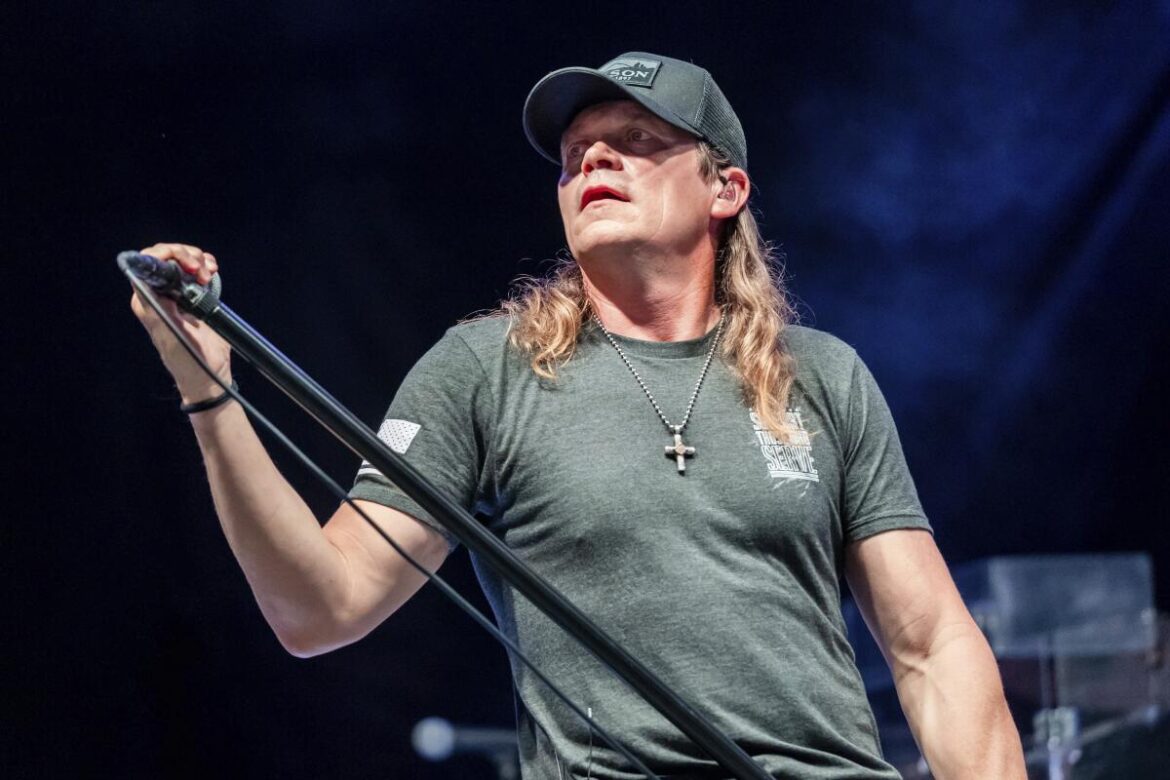
Brad Arnold was an American singer-songwriter and musician best known as the co-founder and longtime lead vocalist of the rock band 3 Doors Down.
From small-town beginnings on Mississippi’s Gulf Coast to global radio dominance at the turn of the millennium, Arnold’s voice and songwriting helped define a generation of post-grunge and alternative rock. His journey, marked by early ambition, meteoric success, personal trials, and enduring influence, reflects both the promise and pressures of modern rock stardom.
Early Life and Musical Roots
Brad Arnold was born Bradley Kirk Arnold in Escatawpa, Mississippi, a small community near the Alabama border on September 27, 1978. Raised in a working-class family, Arnold absorbed the rhythms of the South: gospel harmonies from church, country storytelling, and the gritty edge of classic rock. He showed an early fascination with music, singing in school and church and teaching himself guitar. By his early teens, he was already writing songs, sketching ideas in notebooks and refining melodies in his bedroom.
What distinguished Arnold from many aspiring musicians was not only his drive but his instinct for hooks, choruses that felt instantly familiar and emotionally direct. At fifteen, he penned the song that would later become “Kryptonite,” a reflective anthem about vulnerability and identity. The lyrics captured teenage anxieties with surprising maturity, and the melody had the kind of gravitational pull that begged to be sung by crowds.
Arnold’s youth in Escatawpa also grounded him. He worked part-time jobs, spent evenings rehearsing with friends, and dreamed of something bigger without losing the humility of his hometown. Those roots would remain central to his persona even as success arrived.
Founding 3 Doors Down
In 1996, Brad Arnold teamed up with bassist Todd Harrell and guitarist Matt Roberts to form 3 Doors Down. The name came from a local building with three closed doors, a simple image that fit the band’s unpretentious beginnings. At first, Arnold played drums while singing, a setup that forced him to be both rhythmic anchor and frontman. Their early rehearsals were raw but energetic, fueled by ambition and the belief that their songs could travel beyond Mississippi.
The band honed its sound in small venues along the Gulf Coast, playing bars, local festivals, and any place that would have them. Word of mouth spread quickly. Audiences responded to Arnold’s voice, raspy yet warm, capable of grit and tenderness in equal measure, and to the band’s knack for blending heavy guitar riffs with melodic accessibility.
As “Kryptonite” became a centerpiece of their set, listeners began asking for it by name. Local radio picked up the track, and soon the buzz expanded beyond state lines. 3 Doors Down signed with Republic Records, setting the stage for their national debut.
Breakthrough with The Better Life
In 2000, 3 Doors Down released their first major-label album, The Better Life. “Kryptonite” exploded on radio, climbing the charts and becoming one of the most recognizable rock songs of the era. The track’s introspective lyrics, questioning what it means to be strong, to feel “less than,” and to hide behind masks, resonated with listeners navigating the uncertainties of youth and adulthood.
Brad Arnold’s vocal performance was central to the song’s impact. His delivery balanced vulnerability with resolve, turning private doubt into a shared anthem. As the single dominated airwaves, the band followed with hits like “Loser” and “Be Like That,” further cementing their place in mainstream rock.
The Better Life went multi-platinum, and 3 Doors Down suddenly found themselves headlining tours, appearing on television, and reaching audiences around the world. For Arnold, the whirlwind was exhilarating but also disorienting. The kid from Escatawpa was now the voice of a generation of rock fans.
Songwriting Style and Themes
Brad Arnold’s songwriting was characterized by emotional clarity and relatability. He wrote about insecurity, longing, resilience, and the desire for connection, universal themes that cut across age and background. Unlike some of his contemporaries who leaned into cynicism or abstraction, Arnold favored directness. His lyrics often read like conversations with the listener, inviting them into his internal world.
Musically, he blended post-grunge heaviness with pop sensibility. Big, open chords, memorable melodies, and dynamic builds defined many of his songs. He understood how to pace a track, starting with restraint and rising toward catharsis, mirroring the emotional arc of the lyrics.
Arnold also had a knack for collaborative writing. While he was a principal songwriter, he valued the input of his bandmates and later co-writers, shaping songs through collective refinement. This openness helped keep 3 Doors Down’s sound accessible without sacrificing depth.
Continued Success and Evolution
Following their debut, 3 Doors Down released Away from the Sun (2002), which produced hits like “When I’m Gone” and “Here Without You.” These songs showed Brad Arnold’s growth as a lyricist. “When I’m Gone” tackled the strain of life on the road and the fear of losing touch with loved ones, while “Here Without You” offered a tender, piano-driven meditation on separation and devotion.
The band continued with albums such as Seventeen Days (2005), 3 Doors Down (2008), and Time of My Life (2011). Each release balanced radio-friendly rock with moments of introspection. Arnold’s voice matured, gaining a weathered quality that suited themes of perseverance and reflection.
Throughout the 2000s, 3 Doors Down became a fixture of American rock radio. They toured extensively, sharing stages with major acts and headlining arenas. Arnold’s presence as a frontman, engaged, earnest, and vocally commanding, was a key element of their live appeal.
Personal Struggles and Resilience
Behind the success, Brad Arnold faced significant challenges. Life on the road, the pressures of fame, and personal issues took their toll. He was open about struggles with anxiety and the difficulty of balancing public expectations with private reality. Yet he also demonstrated resilience, channeling hardship into his music and advocacy.
In later years, Arnold spoke candidly about health issues, including his diagnosis with kidney cancer in the mid-2020s. Rather than retreating from the public eye, he used his platform to raise awareness about the importance of early detection and mental health. Fans responded with an outpouring of support, a testament to the connection he had built over decades.
Philanthropy and Community Engagement
Brad Arnold and 3 Doors Down were known for their involvement in charitable efforts. The band supported causes related to children’s hospitals, disaster relief, and military families. Arnold, in particular, felt a strong connection to his roots and frequently gave back to communities in Mississippi and beyond.
Whether performing benefit concerts or lending his voice to awareness campaigns, he approached philanthropy with the same sincerity that defined his music. For Arnold, success carried responsibility, the responsibility to help others navigate hardship with hope.

Influence and Legacy
Brad Arnold’s influence can be felt in the wave of early-2000s rock that blended emotional openness with mainstream appeal. He helped bridge the gap between the rawness of grunge and the melodic sensibility of pop-rock. Many younger artists cited 3 Doors Down as an inspiration, pointing to Arnold’s voice and songwriting as examples of how to balance vulnerability with strength.
“Kryptonite” alone remains a cultural touchstone, still played on radio stations and in sports arenas decades after its release. Its staying power speaks to Arnold’s gift for writing songs that feel both specific and universal.
Beyond any single hit, Arnold’s legacy lies in the consistency of his work and the authenticity he brought to it. He never chased trends, instead, he trusted his instincts and wrote from the heart. That honesty earned him a loyal fan base and respect from peers.
Final Years and Passing
In his final years, Brad Arnold continued to create music and connect with fans despite health challenges. He remained grateful for the journey that had taken him from Escatawpa to stages around the world.
Brad Arnold died on February 7, 2026, aged 47.
Brad Arnold’s life and career embody the power of music to transform both the artist and the audience. From a teenager writing songs in a small Mississippi town to a global rock frontman, he followed a path shaped by talent, perseverance, and emotional honesty. His voice gave expression to the doubts, hopes, and resilience of millions, and his songs continue to resonate long after his passing.
In the end, Arnold’s story is not just about fame or hits, it is about connection. Through his music, he invited listeners into his world and, in doing so, helped them better understand their own. That enduring bond between artist and audience is his greatest legacy.
Check out Brad Arnold on Amazon by clicking here.
Check out 3 Doors Down on Amazon by clicking here.
If you found this interesting please share it with your friends and family, and check out some of our other articles on Musicians who Died in 2026.
.
