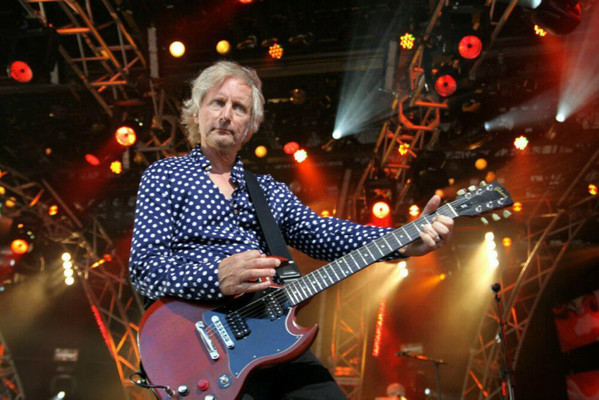
Parthenon Huxley was an American musician, singer, songwriter, and producer whose career bridged power-pop craftsmanship with the grand, symphonic ambitions of Electric Light Orchestra’s extended family.
Over four decades, Huxley carved out a dual identity: a meticulous solo artist with a gift for melody and harmony, and a dependable frontman and collaborator in latter-day ELO offshoots, notably ELO Part II and later The Orchestra. His work revealed a musician who understood both the intimacy of the three-minute pop song and the spectacle of arena-scale rock, blending classic songwriting sensibilities with modern production polish. He also ventured beyond music into brief cameo appearances in film, including Dragon: The Bruce Lee Story and The Flintstones, adding another facet to a varied creative life.
Early Life and Musical Foundations
Parthenon Huxley was born Richard Willett Miller on January 19, 1956, Huxley grew up during a fertile period for popular music. The airwaves of his youth were filled with British Invasion harmonies, American folk-rock, and the emergent psychedelia and progressive rock that would define the late 1960s and early 1970s. He absorbed these influences intuitively: the melodic economy of the Beatles, the studio experimentation of the Beach Boys, and the orchestral sweep that Electric Light Orchestra would later epitomize.
As a teenager, Huxley gravitated toward the guitar and the piano, learning not only to play but to write. Friends and early collaborators often remarked on his ear for harmony and his instinct for arrangement—skills that would become central to his identity. While many young musicians chased virtuosity, Huxley focused on songs. He studied how chord changes could lift a chorus, how counter-melodies could deepen a verse, and how production choices could serve emotion rather than ego.
By his late teens and early twenties, he was already performing and recording, experimenting with home studios and local bands. The discipline he developed in these formative years, rewriting lyrics, refining melodies, and learning the mechanics of recording, prepared him for a career that would span genres and contexts.
The Birth of “Parthenon Huxley”
Adopting the name Parthenon Huxley was both a creative declaration and a practical decision. “Parthenon” evoked classical grandeur and architectural symmetry; “Huxley” suggested a lineage of intellectual curiosity. Together, the name captured his aspiration to merge craft and ambition. Under this moniker, he launched a solo career rooted in power pop, a style defined by bright guitars, tight rhythms, and hooks that felt timeless.
His early solo albums established his reputation as a songwriter with a knack for melody and a producer who prized clarity. Tracks were built on layered vocals, chiming guitars, and concise structures. Huxley’s voice, warm, earnest, and flexible, carried both vulnerability and confidence. Critics and fans alike noted his ability to balance retro influences with contemporary sound, avoiding nostalgia while honoring the past.
Solo Albums and Songcraft
Across his solo discography, Parthenon Huxley demonstrated consistency and evolution. The records showcased an artist refining his palette: early releases leaned into jangly guitars and classic pop forms; later ones explored richer textures and more reflective themes. His lyrics often centered on relationships, time, and the search for meaning in ordinary moments. There was an accessible sincerity in his writing, never overly abstract, yet never simplistic.
As a producer, Huxley was hands-on. He layered harmonies meticulously, tuned the rhythm sections for feel rather than flash, and paid close attention to sonic space. The result was music that sounded immediate and intimate even when the arrangements were complex. This approach endeared him to fellow musicians, who found in him a collaborator with both vision and patience.
Joining the ELO Lineage: ELO Part II
Parthenon Huxley’s career took a significant turn when he became involved with ELO Part II, a band formed by former members of Electric Light Orchestra who sought to carry forward the symphonic rock tradition in the absence of Jeff Lynne. For Huxley, joining ELO Part II meant stepping into a legacy with devoted fans and high expectations. It required not only musical competence but respect for a distinctive sound characterized by strings, layered vocals, and cinematic arrangements.
As a frontman and guitarist, Huxley brought both reverence and freshness. He honored the original ELO repertoire with fidelity while contributing his own sensibility to new material. Onstage, he navigated the dual role of interpreter and innovator, delivering classic songs with authenticity and introducing newer compositions that fit seamlessly into the setlists.
His tenure with ELO Part II helped expand his audience internationally. Tours across North America and beyond placed him before crowds who came for the ELO legacy and stayed for the musicianship. Huxley’s rapport with fans, humble, articulate, and enthusiastic, strengthened his reputation as not just a performer but a steward of the music.
The Orchestra: Continuing the Tradition
When ELO Part II evolved into The Orchestra, Huxley remained central to the project. The Orchestra aimed to preserve the symphonic rock spirit while adapting to changing times. Parthenon Huxley’s songwriting and production experience proved invaluable as the band recorded and toured. He understood how to balance nostalgia with relevance, how to make orchestral rock feel vibrant rather than museum-like.
In The Orchestra, Huxley’s role expanded beyond the stage. He contributed to arrangements, vocal production, and the overall sonic direction. His harmonies blended seamlessly with the band’s multi-vocal approach, and his guitar work provided both rhythmic drive and melodic color. Fans recognized in him a link between the classic ELO sound and contemporary musicianship.
Film Cameos and Broader Creative Life
While music remained his primary vocation, Huxley occasionally stepped into the world of film. His cameo appearances in Dragon: The Bruce Lee Story and The Flintstones were brief but memorable, placing him within the pop-culture tapestry of the 1990s. These appearances reflected his openness to creative experiences beyond the studio and stage.
Though he did not pursue acting as a full-time career, these moments underscored his versatility and his comfort in varied artistic environments. For fans, seeing him in films added another dimension to his persona, a reminder that musicians often live multifaceted creative lives.
Style, Influences, and Aesthetic
Parthenon Huxley’s style was defined by melody first. Whether in a three-minute power-pop song or a seven-minute orchestral suite, he prioritized hooks and emotional resonance. His influences were broad: the Beatles’ songwriting discipline, the Beach Boys’ vocal arrangements, ELO’s orchestral ambition, and the concise storytelling of American pop.
Visually and sonically, he favored clarity. His productions avoided clutter; every instrument had a purpose. This aesthetic extended to his live performances, where the emphasis was on musicianship and connection rather than spectacle alone. Even within the grandeur of symphonic rock, Huxley’s presence felt grounded and human.
Collaboration and Mentorship
Throughout his career, Parthenon Huxley was known as a generous collaborator. He wrote and produced with a variety of artists, sharing techniques and encouraging younger musicians. Those who worked with him often spoke of his patience in the studio and his ability to articulate ideas without ego. He believed in the power of collective creativity and how different perspectives could elevate a song beyond what any single person might achieve.
In workshops, interviews, and informal sessions, he emphasized the fundamentals: listen deeply, serve the song, and respect the audience. These principles shaped not only his work but the work of those he mentored.
Touring Life and Connection with Fans
Touring was central to Parthenon Huxley’s identity. He thrived on the road, drawing energy from nightly performances and the ritual of soundchecks, meet-and-greets, and late-night bus rides. For him, concerts were not merely promotional obligations but communal experiences. He often spoke about the magic of shared attention, hundreds or thousands of people focused on the same melody at the same time.
Fans responded to his authenticity. He took time to sign records, answer questions, and listen to stories. This connection built a loyal following that supported both his solo work and his band projects. Even as musical trends shifted, his audience remained steady, anchored by trust in his artistry.
Later Years and Continued Creativity
In his later years, Huxley continued to write and record, adapting to new technologies and distribution models. Home studios became more powerful; collaboration across distances became easier. He embraced these changes without abandoning his core values. The songs still began with melody and emotion; the production still served the narrative.
He also reflected more openly on time and legacy. Interviews from this period reveal an artist conscious of his place in a continuum, grateful for the past, engaged with the present, and hopeful for the future of music. He remained active with The Orchestra and in solo projects, balancing touring with periods of focused writing.
Passing and Legacy
Richard Willett Miller, known to the world as Parthenon Huxley, died on January 30, 2026. His death marked the end of a career that had quietly but profoundly influenced the landscape of melodic rock and power pop.
His legacy lives on in recordings that continue to resonate, songs that feel as fresh today as when they were first released. In the broader ELO lineage, he stands as a vital bridge between eras, helping to keep a symphonic rock tradition alive for new generations. In the world of power pop, he remains a model of how craft and heart can coexist.
Conclusion
Parthenon Huxley’s life and work illustrate the enduring power of melody and collaboration. From his early days as a young songwriter absorbing the sounds of a changing world, through his solo albums and his pivotal roles in ELO Part II and The Orchestra, to his later years of reflection and continued creativity, he remained faithful to the idea that music is both art and service.
He served the song, the band, and the audience. In doing so, he built a career not defined by fleeting trends but by lasting connection. Richard Willett Miller may have been known professionally as Parthenon Huxley, but to those who heard his music and felt its warmth, he was simply a voice and a melody that made the world a little brighter.
Check out Parthenon Huxley on Amazon by clicking here.
Check out ELO on Amazon by clicking here.
If you found this interesting please share it with your friends and family, and check out some of our other articles on Musicians who Died in 2026.
.
