
Rob Hirst stands as one of the most respected and influential drummers in Australian rock history. Best known as a founding member of the iconic band Midnight Oil.
Hirst’s driving, tribal-influenced rhythms became inseparable from the group’s sound and political identity. For more than four decades, his work on drums, percussion, and backing, and at times lead, vocals helped define a band that was as much a force for social change as it was a musical powerhouse.
Rob Hirst was born Robert George Hirst on September 3, 1955, in Camden, New South Wales, and grew up in a part of Australia that balanced rural calm with proximity to Sydney’s emerging cultural life. From an early age, he showed a fascination with rhythm and movement. Music became a natural outlet, but so did sport, especially swimming, a discipline that shaped his physical endurance and mental toughness. That stamina would later become essential during Midnight Oil’s famously intense live performances.
Early Life and Musical Formation
Rob Hirst’s path to music was not instant fame or overnight success. Like many musicians of his era, he honed his craft in garages, small halls, and community spaces. He studied at Sydney University, where he met Peter Garrett, a towering presence both physically and intellectually. Garrett, Hirst, guitarist Jim Moginie, and bassist Andrew “Bear” James formed the nucleus of what would become Midnight Oil.
Originally performing under the name Farm, then The Oils, the band soon became known for their raw energy and uncompromising attitude. Hirst’s drumming was central from the beginning. He played with a muscular, rolling style influenced by punk, reggae, and indigenous rhythms, favoring tom-heavy patterns that gave Midnight Oil its distinctive, pounding drive.
Unlike many rock drummers who aim for flash, Hirst focused on groove, tension, and emotional weight. His parts didn’t just keep time — they pushed songs forward with urgency and purpose.
Midnight Oil: Sound, Message, and Identity
By the late 1970s and early 1980s, Midnight Oil were forging a reputation as one of Australia’s most exciting live bands. Their commitment to independence — releasing music on their own label at first and avoiding mainstream compromises — set them apart.
Rob Hirst’s drumming became the backbone of classic albums such as:
- 10, 9, 8, 7, 6, 5, 4, 3, 2, 1 (1982)
- Red Sails in the Sunset (1984)
- Diesel and Dust (1987)
- Blue Sky Mining (1990)
- Earth and Sun and Moon (1993)
On tracks like “Beds Are Burning,” “The Dead Heart,” “Power and the Passion,” and “Blue Sky Mine,” Hirst’s rhythmic force gave urgency to lyrics about land rights, environmental destruction, and political hypocrisy. His drumming didn’t merely accompany protest — it sounded like protest.
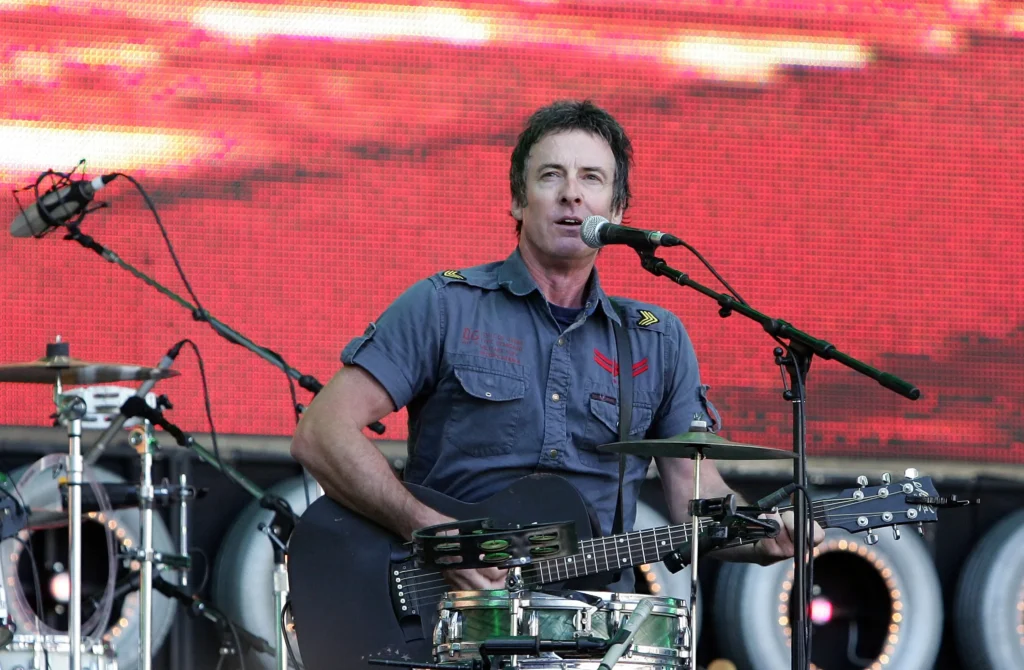
Live, Midnight Oil were volcanic. Garrett’s wild, angular dancing and towering presence grabbed attention, but it was Hirst who anchored the chaos. His physical style — arms lifting high, toms booming like thunder — created a hypnotic pulse that turned concerts into rallies.
Vocals and Songwriting Contributions
Although primarily known as the drummer, Rob Hirst was also a capable vocalist and songwriter. He often provided harmonies and backing vocals, and on occasion stepped into the spotlight as lead singer. Songs like “Short Memory” and “When the Generals Talk” carry his imprint, both musically and thematically.
Hirst was deeply engaged in the band’s political vision. He shared Garrett’s concern for Indigenous rights, nuclear disarmament, workers’ justice, and environmental protection. His lyrics were direct but poetic, grounded in empathy and historical awareness.
He also co-wrote many of the band’s most powerful tracks, shaping not only how Midnight Oil sounded but what they stood for.
Hiatus and Side Projects
In 2002, after decades of relentless touring and recording, Midnight Oil went into hiatus. Garrett stepped into politics, eventually becoming Australia’s Minister for the Environment. For Hirst, this period became one of exploration and artistic freedom.
He immersed himself in other projects, including:
- Ghostwriters – A roots-based band blending Americana, blues, and Australian storytelling.
- Backsliders – A country-rock outfit focused on earthy narratives and stripped-back arrangements.
- The Angry Tradesmen – A gritty collaboration emphasizing garage rock energy.
- The Break – An instrumental surf-influenced project that allowed Hirst to explore rhythm in cinematic, wordless ways.
These bands showed different sides of his musicianship: subtlety, swing, restraint, and texture. Free from the political weight of Midnight Oil, Hirst explored mood and melody in ways that surprised fans and critics alike.
Author: Willie’s Bar & Grill
In 2010, Rob Hirst published Willie’s Bar & Grill, a memoir chronicling Midnight Oil’s tour of the United States shortly after the September 11, 2001 terrorist attacks.
The book is intimate, reflective, and humane. Rather than focusing solely on fame or music, Hirst writes about fear, uncertainty, compassion, and the strange experience of performing in a nation grieving and reeling from trauma. He reflects on the role of artists during times of crisis — not as saviors, but as witnesses and comforters.
Willie’s Bar & Grill was widely praised for its honesty and warmth. It showed Hirst as more than a drummer: he was a thoughtful observer of people and politics, capable of deep emotional insight.
The Return of Midnight Oil
In 2017, Midnight Oil reunited, not for nostalgia but with purpose. The band released new music and toured globally, proving they still had relevance in a fractured, uncertain world.
Rob Hirst returned to the stage with the same intensity that had defined his earlier years. Though older, he lost none of his fire. His drumming remained muscular, precise, and passionate — a reminder that conviction doesn’t fade with age.
The reunion albums and tours reaffirmed Midnight Oil’s role as Australia’s most politically articulate rock band. Hirst’s rhythms once again carried the weight of protest, hope, and resistance.
Style and Legacy as a Drummer
Rob Hirst is often described as one of the great tribal drummers of rock. He rarely relied on cymbal-heavy flash. Instead, he built grooves from toms and snare, creating rolling, earthbound patterns that sounded almost ceremonial.
Key elements of his style included:
- Heavy use of floor and rack toms
- Strong, deliberate accents
- A sense of forward motion rather than technical showmanship
- Emotional intensity over precision perfection
His playing influenced generations of Australian drummers who saw in him a model of power with purpose.
Character and Reputation
Those who knew Hirst describe him as thoughtful, principled, and quietly humorous. While Garrett was the public firebrand, Hirst was often the steady moral compass inside the band. He listened carefully, spoke thoughtfully, and believed deeply in art as a tool for social good.
He never chased celebrity. Instead, he stayed focused on collaboration, creativity, and conscience.
Passing and Remembrance
Rob Hirst was diagnosed with pancreatic cancer in April 2023 and died on January 20, 2026, at the age of 70. His death marked the end of an era in Australian music.
He is remembered not just for the songs he played on, but for the values he stood for:
- Integrity
- Empathy
- Courage
- Artistic honesty
Conclusion: The Beat That Endures
Rob Hirst was never just the drummer in Midnight Oil. He was its pulse, the heartbeat behind a band that dared to tell the truth, confront power, and demand justice.
From small halls in Sydney to massive global stages, from protest anthems to quiet reflections in print, Hirst lived a life where art and ethics walked hand in hand. His rhythms still echo in the songs of Midnight Oil, in the work of the musicians he inspired, and in the hearts of fans who found strength in his music.
Rob Hirst didn’t just keep time. He gave it meaning.
Check out Midnight Oil on Amazon by clicking here.
If you found this interesting please share it with your friends and family, and check out some of our other articles on Musicians who Died in 2026.
.
