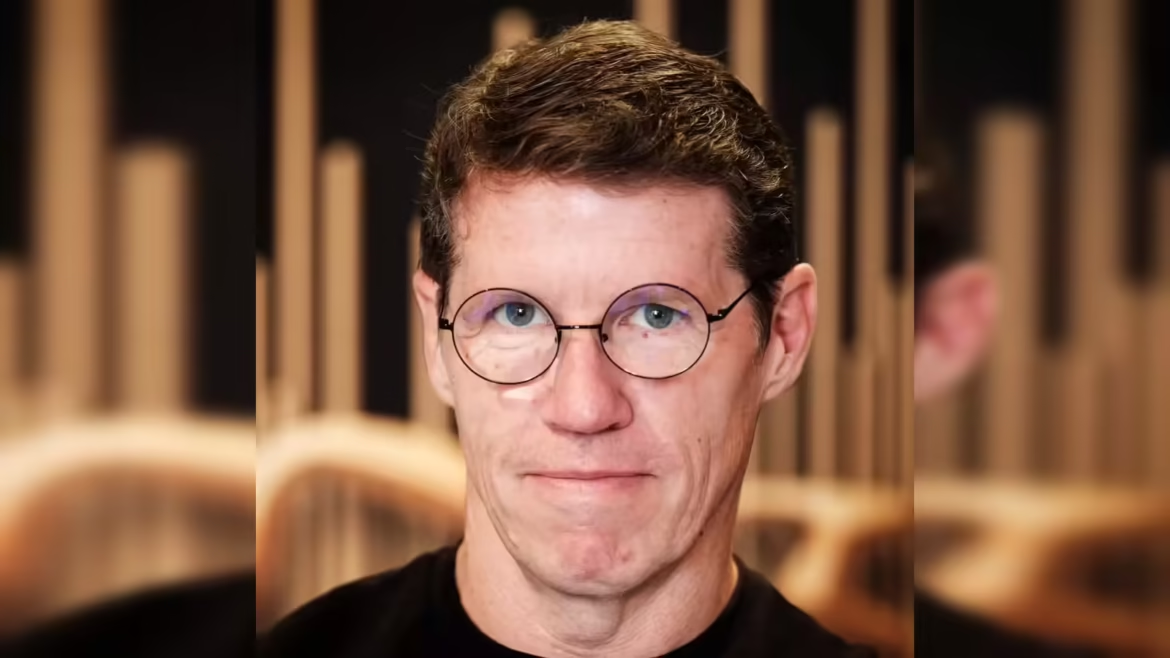
Guy Moon was an American composer whose work helped define the sound of late-1990s and early-2000s children’s animation. Best known for his energetic, melodic, and emotionally expressive music on some of the most influential animated television series of the era, including The Fairly OddParents, Danny Phantom, Cow and Chicken, and Johnny Test.
His music blended classical training with modern cartoon sensibilities, creating scores that were playful yet sophisticated, comedic yet heartfelt. Over the course of his career, Moon became especially noted for his close collaboration with animator and showrunner Butch Hartman, and his work earned four Emmy Award nominations. Though often working behind the scenes, Moon’s contributions shaped the emotional rhythm and identity of several beloved animated franchises.
Guy Moon was born on February 7, 1962, in the United States. From an early age, he showed a deep interest in music, gravitating toward piano and composition rather than simply performance. While many children enjoy music casually, Moon exhibited an unusual attentiveness to how music worked—how harmony, rhythm, and melody could convey emotion and story. This early curiosity laid the foundation for what would become a lifelong dedication to musical storytelling.
Moon went on to study music formally at the University of Arizona, where he refined his technical skills in composition, orchestration, and theory. The university environment gave him access to both classical traditions and modern approaches to music production. He learned not only how to write for live ensembles but also how to think like a dramatist—how music interacts with character, pacing, and narrative. These skills would prove invaluable when he later transitioned into scoring for animation, where timing and tone are everything.
Entering the World of Animation
After graduating from the University of Arizona, Guy Moon began his professional career as a composer. The animation industry, particularly in the 1990s, was experiencing a renaissance. Cartoon Network and Nickelodeon were producing original content at a rapid pace, and studios were looking for composers who could deliver bold, flexible, and expressive music. Moon found his niche in this world.
Unlike film composers who often write sweeping, long-form scores, television animation composers must be nimble. They need to support jokes, action scenes, emotional beats, and absurdist humor—sometimes all in the same episode. Moon’s background made him perfectly suited for this. His music could turn on a dime: from zany slapstick to heartfelt warmth in seconds. This ability made him an ideal collaborator for creators who wanted their shows to have both comedic punch and emotional depth.
Collaboration with Butch Hartman
The most defining professional relationship of Guy Moon’s career was his long-running collaboration with animator Butch Hartman. Hartman, known for creating some of Nickelodeon’s most successful shows, valued music as a storytelling tool rather than mere background noise. Moon, in turn, understood Hartman’s visual language and narrative instincts. Together, they formed a creative partnership that elevated the tone and identity of multiple series.
.
Their first major collaboration came with The Fairly OddParents. The show, which followed a boy named Timmy Turner and his fairy godparents, required music that could be whimsical, fast-paced, and emotionally sincere. Moon’s score delivered exactly that. He developed recognizable musical motifs for characters and situations, helping viewers subconsciously connect with the story. The music didn’t just accompany the action—it enhanced it, often serving as an emotional guide for the audience.
Moon and Hartman continued their partnership on Danny Phantom, a series that blended superhero action with teen drama and supernatural elements. Here, Moon’s versatility truly shone. The score needed to balance suspense, humor, romance, and danger. Moon crafted music that felt darker and more cinematic than typical children’s animation, giving the show a distinct tone that set it apart from its peers.
Defining Shows and Musical Style
Beyond Hartman’s projects, Guy Moon also contributed to other major animated series, including Cow and Chicken and Johnny Test. Each show had a unique style, and Moon adapted his musical voice accordingly.
Cow and Chicken was surreal and anarchic, demanding exaggerated musical cues that could heighten absurdity. Moon’s work on the series embraced cartoon tradition—sharp stings, playful melodies, and sudden shifts that matched the show’s bizarre energy.
Johnny Test, on the other hand, leaned into fast-paced action and sci-fi parody. Moon’s music there was more propulsive, often incorporating driving rhythms and heroic themes that both celebrated and spoofed action-adventure tropes.
Across all his projects, Moon’s style remained recognizable. His melodies were clear and character-driven, his orchestrations colorful and expressive. He understood how to make music “speak” in the language of animation—where timing, emotion, and comedy must align precisely with visual storytelling.
Emmy Recognition and Industry Respect
Guy Moon’s work did not go unnoticed by the industry. Over the course of his career, he received four Emmy Award nominations, a significant achievement in the competitive world of television music. While he did not win an Emmy, the nominations themselves reflected the respect he earned among his peers.
These nominations highlighted not just individual episodes or moments but the consistency of Moon’s craftsmanship. He was recognized for his ability to elevate children’s programming through music that was intelligent, emotionally resonant, and technically strong. In an industry where composers often remain invisible, Moon’s recognition stood as a testament to the impact of his work.
The Importance of Music in Children’s Animation
Guy Moon’s career illustrates how vital music is to children’s animation. In shows aimed at young audiences, music must do more than decorate—it must teach emotional cues. Children often learn how to interpret scenes through sound: when to feel excited, sad, scared, or hopeful. Moon understood this responsibility.
His music helped define character identities and emotional arcs. Timmy Turner’s longing, Danny Phantom’s heroism, and Johnny Test’s bravado were all reinforced by musical themes that gave depth to the animation. Moon’s work subtly taught audiences how to feel along with the characters, strengthening the connection between viewer and story.

Later Career and Legacy
In the later years of his life, Guy Moon remained a respected figure in animation music circles. Even as the industry shifted toward digital production and new platforms, the principles he embodied—strong melody, emotional clarity, and narrative sensitivity—remained essential.
Guy Moon died on January 8, 2026, at the age of 63, after being hit by a vehicle while riding a scooter in Wilmington, Los Angeles.
Cultural Impact and Enduring Influence
Though not a household name like some directors or voice actors, Guy Moon’s influence is deeply embedded in modern animation. His scores helped define the tone of an era when television cartoons were becoming more emotionally layered and stylistically ambitious. He demonstrated that children’s entertainment could have musical sophistication without losing accessibility.
Young composers entering the animation industry continue to study the techniques Moon used—his character motifs, his timing with visual gags, and his ability to balance humor with sincerity. In this way, his legacy lives on not only through the shows themselves but also through the craft he passed forward indirectly.
Conclusion
Guy Moon’s life and career reflect the power of music as a storytelling force. From his early education at the University of Arizona to his defining collaborations with Butch Hartman and his Emmy-nominated work, Moon consistently demonstrated that music in animation is not secondary—it is essential. He gave emotional depth to fantastical worlds and helped create some of the most memorable animated television of his generation.
While audiences may remember The Fairly OddParents, Danny Phantom, Cow and Chicken, and Johnny Test for their characters and humor, those shows would not be the same without Moon’s music guiding their emotional pulse. His work remains a testament to the idea that behind every great animated moment is a composer who understands how to make stories sing.
Check out The Fairly OddParents on Amazon by clicking here.
If you found this interesting please share it with your friends and family, and check out some of our other articles on Musicians who Died in 2026.
.
