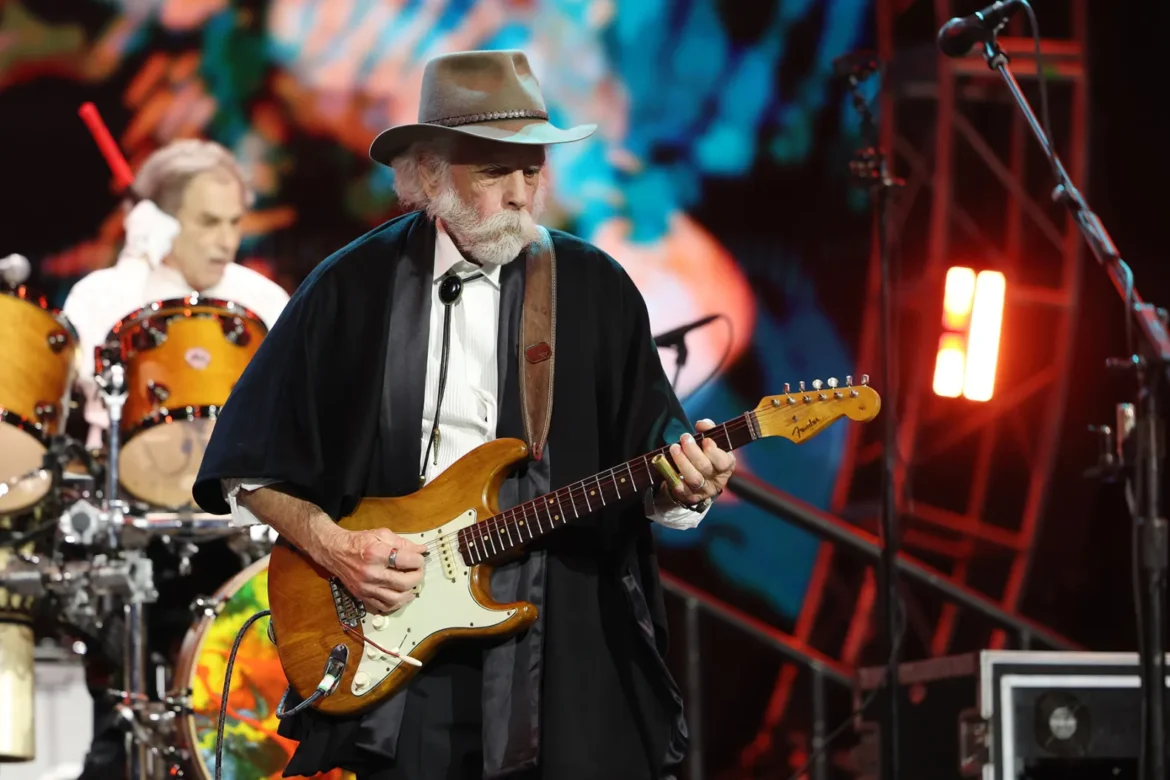
Bob Weir was an American musician, singer, and songwriter whose work reshaped the sound and spirit of American rock music, best known as a founding member of the Grateful Dead.
Weir’s career spanned more than six decades and helped define an entire musical culture rooted in improvisation, community, and artistic freedom.
Early Life and Musical Awakening
Bob Weir was born Robert Hall Weir on October 16, 1947, in San Francisco, California. Shortly after his birth, he was adopted and raised by Frederick and Eleanor Weir in the San Francisco Bay Area. Though his early life was marked by academic struggles and restlessness, music became a stabilizing and defining force. He experimented with several instruments in childhood, including piano and trumpet, before settling on the guitar as a teenager.
The Bay Area of the early 1960s was a melting pot of musical styles—folk, blues, early rock and roll, and jazz—and Weir absorbed them all. His path changed decisively when he met Jerry Garcia, another young musician with a deep love for American roots music. The two bonded quickly, sharing influences and ideas that would soon evolve into something far larger than either could have imagined.
In 1964, Weir and Garcia began playing together in informal folk and jug band settings. Their chemistry was immediate, built on mutual curiosity rather than rigid structure. This openness to exploration would become a hallmark of Weir’s musical identity and the foundation of his life’s work.
The Birth of the Grateful Dead
In 1965, Weir, Garcia, Phil Lesh, Bill Kreutzmann, and Ron “Pigpen” McKernan formed a band initially called The Warlocks. Soon after, they adopted the name Grateful Dead, a phrase that reflected the mysterious, folkloric quality they wanted their music to embody. At just 17 years old, Weir became the band’s rhythm guitarist and one of its primary vocalists.
The Grateful Dead emerged during a time of profound social and cultural change, particularly in San Francisco’s Haight-Ashbury district. Their music reflected the era’s experimentation, blending rock, blues, folk, country, jazz, and psychedelia into a sound that resisted categorization. Unlike most rock bands of the time, they emphasized live performance over studio recordings, treating concerts as living, evolving conversations between musicians and audience.
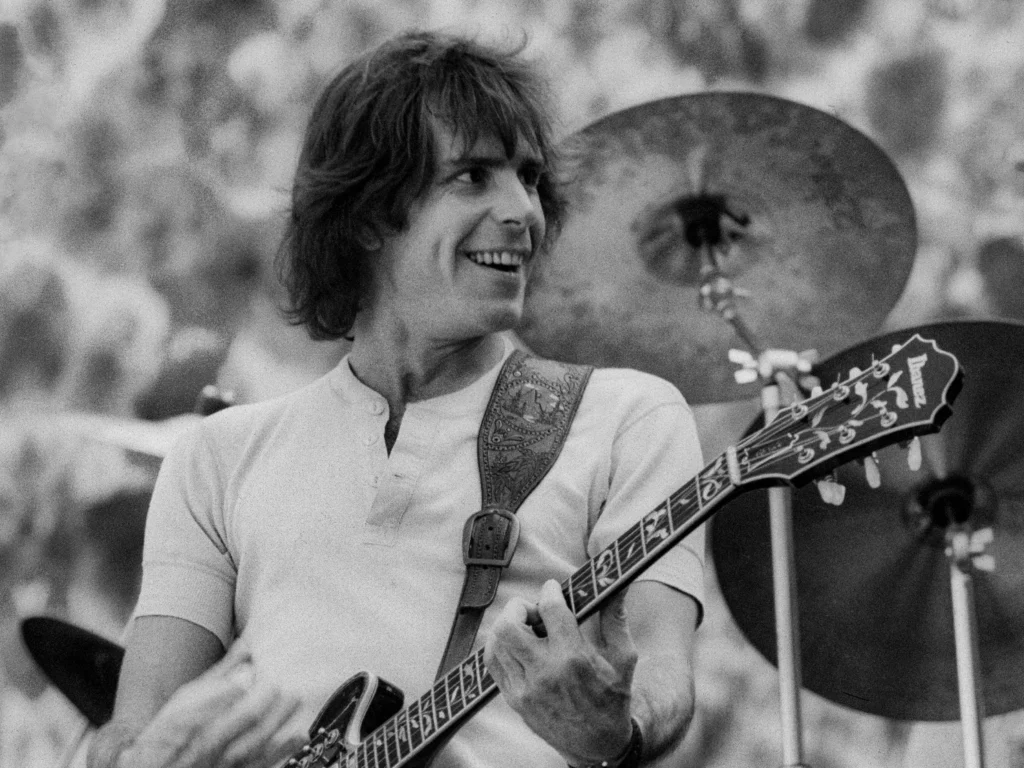
Weir’s role in the band was unique. Rather than playing traditional rhythm guitar, he developed a highly intricate, syncopated style that functioned almost like a second lead instrument. His playing left space, responded dynamically to others, and allowed the music to breathe. This approach became essential to the Grateful Dead’s improvisational sound and distinguished Weir as one of rock’s most innovative rhythm guitarists.
Songwriting and Musical Identity
As a songwriter, Weir brought a distinctive voice to the Grateful Dead’s catalog. Often collaborating with lyricists such as Robert Hunter and John Perry Barlow, he helped craft songs that were poetic, enigmatic, and deeply American in tone. His compositions ranged from jubilant anthems to reflective narratives, frequently touching on themes of time, travel, love, and transcendence.
Songs such as “Sugar Magnolia,” “Playing in the Band,” “One More Saturday Night,” “Cassidy,” “Estimated Prophet,” and “The Music Never Stopped” became staples of the band’s live repertoire. These songs were rarely performed the same way twice, evolving through extended improvisation and reinterpretation over years of touring.
Weir’s songwriting often reflected his philosophical curiosity. His lyrics and melodies conveyed a sense of wonder and acceptance, embracing uncertainty rather than resisting it. This outlook resonated deeply with fans and reinforced the Grateful Dead’s reputation as a band that valued experience over perfection.
The Live Experience and the Deadhead Community
By the late 1960s and throughout the 1970s, the Grateful Dead had developed a reputation for marathon live performances that defied conventional concert norms. No two shows were alike, and setlists were rarely repeated. Fans began following the band from city to city, forming a decentralized but deeply committed community known as Deadheads.
Bob Weir was central to this experience. His rapport with audiences, playful stage presence, and willingness to take musical risks helped foster a sense of inclusion and shared ownership. The concerts became communal events, blurring the line between performer and listener.
This touring-based culture influenced countless bands and helped establish the modern jam-band tradition. Weir’s belief that music should be fluid, participatory, and ever-changing became one of the Grateful Dead’s most enduring legacies.
Solo Work and Side Projects
While the Grateful Dead remained Bob Weir’s primary artistic outlet, he pursued numerous side projects that expanded his musical horizons. In 1972, he released his first solo album, Ace, which featured songs that later became Grateful Dead classics. Though credited as a solo effort, the album reflected the collaborative spirit that defined his career.
Over the decades, Weir formed and led several bands, including Kingfish, Bobby and the Midnites, the Bob Weir Band, RatDog, and later Wolf Bros. These projects allowed him to explore different arrangements, genres, and songwriting approaches while continuing to tour extensively.
Weir was never content to simply repeat past successes. Each new project represented a desire to keep learning, adapting, and challenging himself as a musician.
Life After the Grateful Dead
The death of Jerry Garcia in 1995 marked the end of the Grateful Dead as a full-time touring band. For Weir, the loss was both personal and professional, but it did not signal an end to the music. Instead, he became one of its most dedicated stewards.
In the years that followed, Weir participated in various post-Dead projects, including The Other Ones, The Dead, Furthur, and eventually Dead & Company. These groups reunited surviving members with new collaborators, bringing the music to younger audiences while honoring its roots.
Dead & Company, in particular, demonstrated Weir’s openness to evolution. By collaborating with musicians from a different generation, he ensured that the Grateful Dead’s music remained vibrant rather than frozen in time.
Later Years and Continued Creativity
Even into his seventies, Bob Weir remained remarkably active. He continued touring, recording, and experimenting with new formats and ensembles. His performances with Wolf Bros showcased stripped-down arrangements that highlighted the emotional depth of his songwriting.
In his later interviews, Weir spoke candidly about aging, mortality, and the rewards of a life devoted to music. He approached these topics with the same curiosity and acceptance that characterized his art, viewing life as an ongoing improvisation rather than a fixed narrative.
Passing
Bob Weir died in January 2026 at the age of 78.
Legacy
Bob Weir’s legacy is immeasurable. As a musician, he redefined the role of rhythm guitar and helped pioneer a form of live performance that prioritized exploration over repetition. As a songwriter, he contributed timeless compositions that continue to inspire reinterpretation. As a cultural figure, he helped build a community that transcended music, rooted in shared experience and mutual respect.
More than anything, Weir embodied the idea that music is a living force—something to be shaped collectively, experienced fully, and passed on. Though he is gone, the music he helped create continues to evolve, carried forward by new generations of listeners and performers.
Conclusion
Bob Weir was not simply a founding member of the Grateful Dead; he was one of the architects of a musical philosophy that reshaped American culture. His life’s work demonstrated that creativity thrives in openness, that community can form through shared sound, and that art is most powerful when it remains unfinished.
With his passing in 2026, the world lost a singular voice—but the echo of that voice, carried through countless songs, performances, and memories, will endure. The music never stopped, and because of Bob Weir, it never will.
Check out Bob Weir on Amazon by clicking here.
Check out the Grateful Dead on Amazon by clicking here.
If you found this interesting please share it with your friends and family, and check out some of our other articles on Musicians who Died in 2026.
.
